
Side Dishes
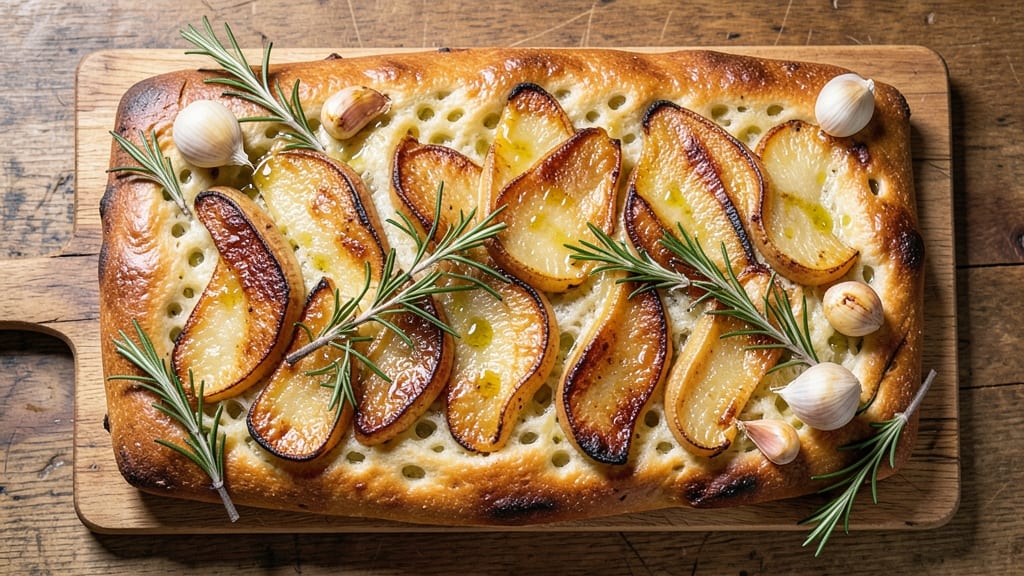
This potato focaccia recipe transforms humble potatoes into a showstopping side dish with crisp edges and aromatic herbed crust. The secret lies in poaching potatoes in olive oil until tender, then pressing them into a rich focaccia dough for a golden, flavorful finish.
I perfected this technique after years of experimenting with Italian-inspired breads, and it never fails to impress—whether served at holiday dinners or casual family meals.
The process begins with a simple yet flavorful dough, infused with garlic and rosemary, then topped with olive oil-poached potatoes that caramelize beautifully in the oven. Unlike traditional focaccia, this version incorporates potatoes directly into the crust, creating a satisfying texture contrast between the soft dough and crispy potato bites.
The result is a bread that's both rustic and refined, with layers of savory flavor from the herbs and potatoes.
What makes this recipe truly special is the combination of techniques: dimpling the dough for that classic focaccia look, brushing with olive oil for crisp edges, and baking until the crust turns golden and aromatic.
The potatoes absorb the olive oil and herbs, infusing every bite with rich, earthy flavor. This dish is perfect for those who love hearty, flavorful sides that double as an appetizer or light main course.
Ready in about 2 hours (including proofing time), this potato focaccia is ideal for meal prep or last-minute gatherings. The dough can be made ahead and refrigerated, while the potatoes can be poached in advance, making this a flexible yet impressive recipe.
Let’s get started on creating your own Italian-inspired masterpiece.
Ingredients for potato focaccia
Simple ingredients with Italian flair create this showstopping potato focaccia with crisp edges.
| Ingredient | Amount | Notes |
|---|---|---|
| All-Purpose Flour 🌾 | 4 cups | Sifted for light texture |
| Active Dry Yeast 🍞 | ¼ oz | Or 2 1/4 tsp packet |
| Extra-Virgin Olive Oil 🫒 | ¾ cup | High quality, fruity |
| Russet Potatoes 🥔 | 2 lbs | Medium size, peeled |
| Garlic Cloves 🧄 | 4 cloves | Minced for dough infusion |
| Fresh Rosemary 🌿 | ¼ cup | Finely chopped, stems removed |
| Sea Salt 🧂 | 1 ½ tsp | Fine grain preferred |
| Ground Black Pepper 🌶️ | ½ tsp | Freshly ground preferred |
| Granulated Sugar 🍚 | 1 tbsp | For yeast activation |
| Warm Water 💧 | 1 cup | 110°F for yeast activation |
| Flaky Sea Salt 🧂 | 1 tbsp | For final crust sprinkle |
| Coarse Kosher Salt 🧂 | 2 tbsp | For dimpling and crust |
The potatoes are the star here—Russet potatoes have the perfect balance of starch and moisture for this recipe. Buy them fresh from a local market or grocery store's produce section, ideally within a week of baking. Look for firm potatoes with smooth skin and no sprouts. For the olive oil, Italian extra-virgin varieties like Bertolli or Filippo Berio elevate the flavor, but any high-quality olive oil will work. The rosemary should be vibrant green and fragrant—fresh is non-negotiable for that authentic Italian aroma. If you can't find fresh rosemary, dried will work in a pinch, but reduce to one-third the amount.
No extra-virgin olive oil? Light olive oil works for poaching, but save the good stuff for brushing. Running short on rosemary? Fresh thyme or marjoram add a lovely complement. For the yeast, if your kitchen is cold, warm the water to 110°F before activating—this is crucial for proper rising. The sugar can be swapped for honey, but it won't dissolve as easily. For the potatoes, if you prefer a creamier texture, parboil them for 5 minutes before poaching. And if you're feeling adventurous, add 1/4 tsp of smoked paprika to the dough for a subtle smoky depth.
This dough keeps beautifully—refrigerate for up to 24 hours before baking for deeper flavor. The poached potatoes can be prepped a day ahead and stored in the fridge, covered with their poaching oil. For best results, bake immediately after shaping, but if you need to delay, cover and let sit at room temperature for 30 minutes before baking. Leftovers? Wrap tightly in foil and store at room temperature for 2 days. Toast slices for a quick appetizer—worth every crispy bite.
Why You'll Love This Recipe
- No Yeast Stress: Honestly, the dough comes together faster than my coffee brews—just mix, let it rise once, and you’re done. No kneading, no waiting hours, just 20 minutes of hands-off magic while you chop potatoes or throw together a salad.
- Crispy-Garlicky Magic: That first bite? The golden, shatteringly crispy top with the soft, fluffy inside—plus the potatoes add this perfect creamy texture. The garlic-infused olive oil? It’s like a hug for your taste buds, especially when you tear off a warm piece straight from the oven.
- Lunchbox Hero: Between us, this focaccia is my go-to for packed lunches. Slice it up, add a smear of hummus or a few olives, and it’s a satisfying meal that keeps well for days. (Yes, even on a Tuesday night when you’re too tired to think.)
- Pantry Stretch: Russets are cheap, flour doesn’t break the bank, and a little yeast goes a long way. I’ve made this for under $5 per loaf, and it feeds four—so it’s basically free carbs that make everyone happy. Leftovers? Toast them up the next day, and no one will complain.
Step-by-step instructions for olive oil-poached potato focaccia
This method transforms simple russet potatoes into a luxurious, herbed focaccia with a crispy crust and tender interior.
Prepare the Olive Oil-Poached Potatoes
Peel the 2 lbs russet potatoes and cut them into ½-inch thick slices. Place them in a large bowl and cover with 1 cup warm water and 1 tbsp granulated sugar. Let them soak for 15 minutes—this draws out excess starch for a lighter texture. Drain thoroughly and pat completely dry with paper towels.
Heat ½ cup extra-virgin olive oil in a large skillet over medium heat. Add the potato slices in a single layer and cook for 8-10 minutes, turning occasionally, until they're golden brown and tender when pierced with a fork. Transfer to a plate and set aside. Save the rendered oil in the pan for later.
Mix the Dough and First Rise
In a large bowl, combine 4 cups sifted all-purpose flour, 1.5 tsp sea salt, and 0.5 tsp ground black pepper. Make a well in the center and add the 0.25 oz active dry yeast, 1 tbsp granulated sugar, and the 4 minced garlic cloves. Pour in the remaining ½ cup extra-virgin olive oil and the 1 cup warm water. Mix with a wooden spoon until a shaggy dough forms.
Knead the dough on a lightly floured surface for 8-10 minutes until smooth and elastic. Place it in a lightly oiled bowl, cover with a damp towel, and let it rise in a warm place for 1-2 hours or until doubled in size. The dough should feel light and springy when pressed gently.
Shape and Second Rise with Potatoes
Punch down the dough to release air, then transfer it to a 9x13-inch baking pan. Stretch the dough to fit the pan, pressing it gently into the corners. Arrange the cooked potato slices in a single layer over the dough, leaving ½-inch borders around the edges. Drizzle the reserved potato oil evenly over the potatoes.
Cover the pan loosely with plastic wrap and let the dough rise for another 30-45 minutes until it puffs slightly. Preheat your oven to 425°F during the final 15 minutes of rising. This ensures the focaccia bakes at the perfect temperature for a crispy crust.
Dimple, Season, and Bake
Use your fingers to dimple the dough all over, pressing down gently to create deep indentations. Sprinkle evenly with the 2 tbsp coarse kosher salt and 0.25 cup finely chopped fresh rosemary. Drizzle the remaining ¼ cup extra-virgin olive oil over the top and press it lightly into the dough.
Bake in the preheated oven for 25-30 minutes until the crust is deep golden brown and the focaccia sounds hollow when tapped on the bottom. For extra crispiness, broil for 1-2 minutes at the end, watching closely to avoid burning. Let it cool for 10 minutes before slicing.
Finish with Flaky Sea Salt
While still warm, sprinkle the focaccia generously with 1 tbsp flaky sea salt. This final touch enhances the herbed crust and balances the richness of the olive oil and potatoes. Serve immediately with additional fresh rosemary sprigs for garnish and a side of whipped ricotta or roasted vegetables.
Pro Tips For Making Potato Focaccia
- Boil Potatoes Until Fork-Tender: Don’t cut corners with the potatoes—boil them until they’re so soft a fork slides in like butter. Overcooked spuds mash easily, which means your focaccia will have a mushy, sad texture instead of that creamy, clingy potato goodness you’re aiming for. (And yes, even if you’re impatient like me.)
- Dissolve Yeast in Warm Water: Skip the dry yeast straight into flour—it’s a recipe for uneven rising. Mix the yeast with warm water (not hot) and a pinch of sugar first, then wait 5 minutes for it to get bubbly before adding anything else. This guarantees your focaccia won’t turn out dense because the yeast was too lazy to activate properly.
- Dimple the Dough Early: Press those dimples into the focaccia dough before it goes into the oven—not after. The heat will help them hold their shape, giving you those classic air pockets instead of a sad, flat loaf. Use your fingers or the tines of a fork, but do it while the dough is still loose, not rock-hard.
- Roast Potatoes First: I used to mash boiled potatoes straight into the dough, and the texture was always off—too watery, too grainy. Instead, roast the boiled potatoes at 400°F (200°C) for 15 minutes until they’re crispy in spots. Mash them while still warm, and your focaccia will have that perfect balance of creamy and slightly crispy potato bits. (Trust me, it’s worth the extra 15 minutes.)
Perfect pairings for these flavors
Herb-Infused Olive Oil
This extra-virgin olive oil is the secret weapon for elevating your potato focaccia. I recommend using a high-quality Italian olive oil like Bertolli or Filippo Berio—their fruity, peppery notes complement the potatoes beautifully.
Before baking, drizzle generously over the dough and potatoes, then press it in gently to infuse every bite. For extra depth, mix 1 tbsp finely chopped rosemary and 1 minced garlic clove into ¼ cup olive oil and let it steep for 10 minutes before using. 🫒
Whipped Ricotta Dip
Pair your focaccia with a simple yet luxurious whipped ricotta dip that balances the richness. Mix 1 cup whole-milk ricotta, 1 tbsp lemon juice, 1 tbsp honey, 2 tbsp chopped fresh dill, and a pinch of flaky sea salt.
Whip until smooth and serve at room temperature. This dip adds a creamy contrast to the crispy focaccia and soaks up beautifully. For extra flair, drizzle with olive oil and sprinkle with black pepper.
Roasted Garlic Vegetables
Roasted vegetables add a hearty, savory element that pairs perfectly with the herbed focaccia. Toss 2 cups chopped seasonal veggies (like zucchini, bell peppers, or asparagus) with 1 tbsp olive oil, 1 tsp garlic powder, and ½ tsp smoked paprika.
Roast at 400°F for 20-25 minutes until tender and caramelized. The smoky, sweet flavors complement the focaccia’s herbed crust. 🌱
Aged Balsamic Glaze
Add a touch of sophistication with a homemade balsamic glaze. Simmer ½ cup aged balsamic vinegar in a small saucepan over medium heat for 8-10 minutes until reduced by half. Let it cool slightly, then drizzle over slices of focaccia before serving.
The tangy-sweet glaze cuts through the richness and adds a restaurant-worthy finish. For extra depth, add 1 tsp honey or 1 crushed black peppercorn while reducing.
Crispy Prosciutto Wraps
For a protein-packed pairing, wrap slices of thinly sliced prosciutto around focaccia pieces to create crispy, savory bites. Place the focaccia on a baking sheet, top with prosciutto, and broil for 2-3 minutes until the prosciutto crisps.
The salty, umami flavor of the prosciutto contrasts beautifully with the herbed focaccia. Serve with a side of arugula salad for a complete meal. 🍖
Sparkling Lemonade
Balance the richness of the focaccia with a refreshing sparkling lemonade. Mix 1 cup sparkling water, ½ cup fresh lemon juice, 2 tbsp honey, and ice cubes. Garnish with a lemon wheel and fresh mint.
The effervescence and citrus notes cleanse your palate between bites of focaccia. For a non-alcoholic twist, add 1 tbsp elderflower liqueur (like St-Germain) for floral depth. 🍋
Nutrition facts
Frequently asked questions
Can I use sweet potatoes instead of russet potatoes?
Sweet potatoes work but will change the flavor profile significantly. They're naturally sweeter and less starchy, which may make the focaccia denser. If you prefer them, try roasting them first to concentrate their flavor, then proceed with the recipe—but expect a slightly different texture and taste compared to traditional russet potatoes.
How do I fix dough that didn't rise properly?
If your dough didn't rise enough, check these first: 110°F water for yeast activation and a warm spot (like a turned-off oven with light on). If it's still flat, let it rise another 30-60 minutes. For stubborn cases, add 1 tsp sugar and 1 tsp yeast, then cover and wait another hour. Over-kneading or cold dough are common culprits.
Can I make this focaccia without a baking pan?
Yes! Use a large baking sheet or even a pizza stone. For best results, shape the dough into a rectangle on parchment paper, then transfer to your baking surface. The edges may spread more, so preheat your oven to 425°F and bake for 25-30 minutes, rotating halfway for even browning.
What's the best way to reheat leftovers?
For crispy texture, wrap slices in foil and heat at 375°F for 5-7 minutes. To revive completely, place the whole focaccia in a 350°F oven for 10 minutes—this restores the crust's crispness. Avoid microwaving; it makes the bread gummy. Store leftovers in an airtight container for up to 2 days.
Can I add cheese to this focaccia?
Try feta (crumbled) or pecorino romano (shaved) for salty contrast. Sprinkle cheese over the potatoes before the final rise, then bake as directed. For extra richness, add 1/2 cup shredded mozzarella during the last 5 minutes of baking. Avoid soft cheeses like ricotta—they'll make the focaccia soggy.