Why I started Potato Recipes Wedge
I was twenty-four, living in a studio apartment with a stove that hissed like a dying dragon every time I turned it on.
That morning, I’d promised my roommate a lasagna for dinner—something ‘easy,’ I’d said, because the takeout menu had closed at midnight and neither of us could afford delivery.
Three hours later, the cheese was burnt to the point of toxicity, the noodles were mushy, and the sauce had separated into a sad, oily puddle in the corner of the pan. My roommate took one bite, handed me the plate, and said, *‘This isn’t cooking.
This is chemistry gone wrong.’*
That was the day I realised most recipes were written for people who already knew how to cook—or at least how to fake it. No one explained *why* the pasta needed to be salted before boiling, or how long to let the sauce rest off the heat.
So I started writing the instructions I wished I’d had: the ones that didn’t assume you had a perfect stove, infinite patience, or a grandmother standing over your shoulder.
This site is for the rest of us—the people who want food that tastes good, but don’t have time for a masterclass.
Meet the founder

The person who taught me how to cook was my uncle Vic, a man who once deep-fried a turkey in a kiddie pool because ‘the oven was acting up.’ He’d hand me a knife at age ten and say, *‘Cut it like you’re mad at it,’* then watch to make sure I didn’t sever any fingers.
His kitchen was a war zone of sticky counters and half-empty beer bottles, but the food was always right. The first time I burned garlic, he didn’t scold me—he just showed me how to scrape the black bits off the oil and start over.
That’s the method I still use: fix it, don’t throw it out.
The object I still own is a cast-iron skillet with a handle so warped it looks like it was bent by a blacksmith who’d had one too many.
I bought it at a flea market for three dollars, and the first time I tried to sear a steak, the thing nearly tipped over. Now it’s my go-to for everything from eggs to caramelised onions, because once you’ve wrestled it into submission, it does the work for you.
The warped handle is a reminder: good food isn’t about perfect tools, it’s about making imperfect ones work.
The failure that changed everything was a batch of homemade pasta that turned out like shoelaces. I’d followed a recipe to the letter—resting the dough, rolling it thin—but when I boiled it, the strands stuck together in a single, sad knot.
That’s when I realised most recipes treated dough like it was magic. So I started testing: how long to rest it, how thin to roll it, what happens if you skip the egg wash. The shoelace pasta ended up in the compost, but the lessons didn’t.
The habit I can’t shake is tasting everything raw. I’ll sniff a spice blend, lick a pinch of sugar, or bite into a tomato to check its ripeness—even when the people I’m cooking for are staring at me like I’ve lost my mind.
My uncle Vic did it too, and his rule was simple: *‘If it doesn’t taste good going in, it sure as hell won’t coming out.’* I still break that rule sometimes (looking at you, raw onion), but I can’t stop.
Someone once told me it was ‘gross.’ I told them it was research.
Meet the mascot
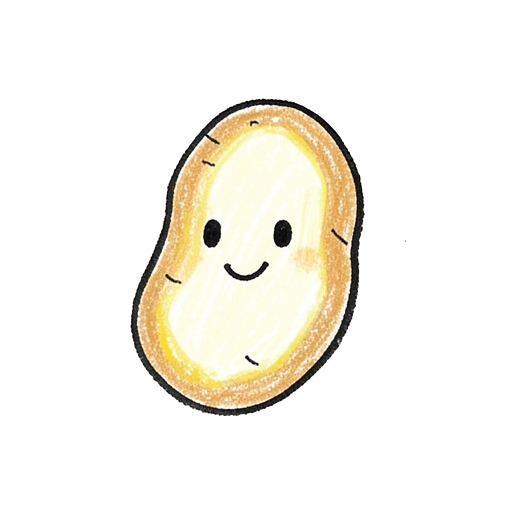
The mascot started as a scribble on a napkin at a diner in Portland, where I was waiting for a table and my pen ran out of ink halfway through drawing a spatula.
The first version had six legs, a spatula handle for a neck, and what I thought was a chef’s hat—turns out, it was just a lopsided triangle. I showed it to the waitress, who laughed and said, *‘That’s not a spatula.
That’s a spatula that’s been in a fight.’* That’s when I knew it had to stay.
The proper drawn version came later, on a legal pad in my apartment. I simplified the legs to four (because three looked drunk, and five looked like a spider), gave it a proper chef’s hat, and added a tiny apron string that kept coming undone.
The diner scribble had been too chaotic, so I made the eyes bigger—because if this thing was going to judge my cooking, I wanted it to at least *look* at me while doing it.
The final version lost the apron string (too distracting), the hat’s brim got shorter (so it’d fit in the browser tab without getting cut off), and the spatula’s prongs turned into little claws—because if you’re going to be a mascot for a cooking site, you might as well be able to grab things.
I named it *Pip*, after the spatula my uncle Vic swore by. It’s not fancy, but it’s the closest I’ve got to a kitchen spirit.
What I promise you
This site exists to cut through the noise. If a recipe here says ‘simmer for 20 minutes,’ it means exactly that—not ‘until it looks done,’ not ‘adjust to taste,’ but a number you can set a timer for.
The same goes for temperatures, measurements, and every other step that usually gets hand-waved away.
What you can hold me to
- Every recipe has a ‘realistic time’ that includes prep, cooking, and cleanup—not just the fun part.
- If a technique is tricky (like making hollandaise), I’ll tell you what to do if it goes wrong—and how to tell it has.
- The ingredient list matches what you’ll actually use. No ‘to taste’ unless I’ve tested it and can tell you exactly how much.
- The photos are taken in a real kitchen, with real light, and no Photoshop tricks beyond cropping.
How I create a recipe
A recipe starts with a question: *‘What’s the one thing that always goes wrong with this dish?’* For a pie crust, it’s the butter melting too fast. For a risotto, it’s letting it dry out. For a vinaigrette, it’s guessing the ratios.
I don’t pull recipes from cookbooks—I make them from the mistakes I’ve already made, or the ones my testers bring back to me.
The first cut

The first stage is always about control. If you’re searing meat, that means watching the pan until the oil shimmers but doesn’t smoke—usually around 350°F (175°C), give or take 25°F (15°C) depending on your stove.
If you’re chopping onions, it’s cutting them small enough so they cook down evenly, but not so fine that they turn to mush.
The rule is simple: *pay attention to the first five minutes, or everything after will be a mess.* That’s when flavors build, textures set, and mistakes become permanent.
The moment it goes wrong is usually quiet. A steak that’s supposed to be medium-rare ends up gray in the middle because you walked away to answer the door. A roux turns nutty instead of blond because you didn’t stir it often enough.
I’ve ruined more pans than I can count, but the ones that stick with me are the silent failures—the ones where nothing *looks* off, but the taste is all wrong. That’s when you know you’ve lost control, and it’s time to start over.
The fix
The fix is where the real work begins. If your steak is underdone, it’s not about slapping it back on the grill—it’s about slicing it thin, searing the cut sides, and serving it with a sauce that’ll carry the flavor.
If your roux is burnt, you don’t scrap it; you scrape off the black bits, thin it with cold liquid, and use it as a base for something that won’t need a smooth finish. The key is knowing which mistakes can be saved and which ones require a do-over.
I keep a notebook of fixes, because every dish has at least one.
Time is the only variable you can’t cheat. A sauce needs to rest off the heat for at least 10 minutes, or the flavors won’t marry. A cake needs to cool completely before slicing, or it’ll fall apart.
I’ve seen people rush these steps, and every time, the result is the same: food that’s *almost* good. Patience isn’t just a virtue in cooking—it’s the difference between a meal and a science experiment.
How a page gets onto this site
A recipe page starts on a legal pad at the stove, where I scribble notes while the food’s still warm. I’ll write things like *‘stir every 30 seconds’* or *‘don’t skip the salt’* in the margins, because those are the steps people forget.
Then I type it up, let it sit for a week, and test it again—this time with someone who’s never cooked the dish before. If they get stuck, I rewrite the instructions. If they burn it, I add a warning. The goal isn’t perfection; it’s clarity.
Write to me
I love hearing about the dishes that went right—and the ones that didn’t. Did a recipe here work for you? Did you try a substitution and it came out better? Did you follow the steps exactly and still end up with a disaster? Send it to the contact page.
The best stories (and the worst failures) often end up on the site, because someone else will have the same problem. And if you’re willing to test a recipe for me, I’ll send you a thank-you gift: a handwritten note and a recipe that’s never been published anywhere else.
This site is for the people who cook because they want to, not because they have to.
So if you’re here because you’re tired of recipes that don’t work, or because you just wanted to know how to make a decent omelet without burning the pan, you’re in the right place. Now go make something—even if it’s just toast.
The recipes are grouped by category: Appetizers, Beverages, Breakfast & Brunch, Desserts, Main Courses and Salads.