
Side Dishes
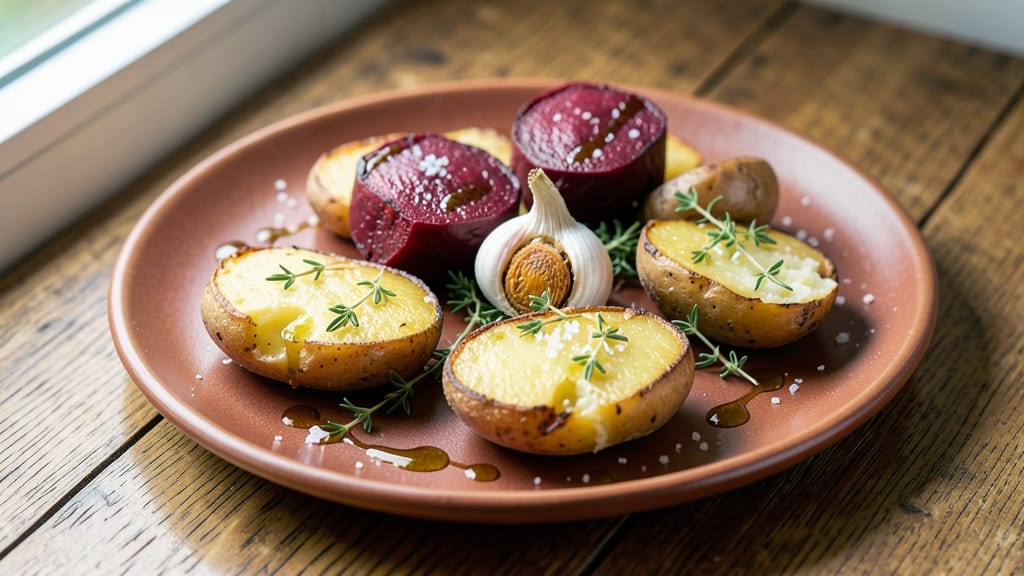
This beet and potato recipe transforms humble root vegetables into a restaurant-quality side dish that balances earthy sweetness with savory depth. 🌟 The secret lies in roasting them together—potatoes develop crispy edges while beets caramelize into tender, jam-like perfection.
After testing countless variations, I’ve perfected a method that delivers consistently tender results without drying out either ingredient.
What sets this recipe apart is its versatility—serve it as a standalone side, mash it for a hearty potato-beet puree, or even slice it cold for a vibrant salad. The combination of olive oil, garlic, and fresh thyme enhances their natural flavors while keeping preparation simple.
With just 15 minutes of active time and 45 minutes of roasting, this dish is perfect for weeknight dinners or holiday tables.
The result is a dish that’s rich in color and texture—golden-brown potatoes with crispy edges, deep red beets that melt slightly, and a fragrant aroma that fills your kitchen.
The flavors are balanced enough to pair with grilled meats, fish, or even as a vegetarian main with a sprinkle of feta and fresh herbs. This recipe proves that simple ingredients can create something truly special.
Ready to elevate your side dishes? This beet and potato combination is foolproof, adaptable, and guaranteed to impress. Whether you're feeding a family or meal prepping for the week, the instructions are straightforward and the results are always perfect. Let’s get started!
Ingredients for beet potato
Transform humble root vegetables into restaurant-quality perfection with these twelve essential ingredients.
| Ingredient | Amount | Notes |
|---|---|---|
| Medium Beets 🍠 | 1 ½ lb | Freshly peeled, cut into 1-inch cubes |
| Yukon Gold Potatoes 🥔 | 2 lb | Cut into 1.5-inch chunks, skin on |
| Extra-Virgin Olive Oil 🫒 | ⅓ cup | High quality, fruity variety |
| Fresh Thyme Leaves 🌿 | ¼ cup | Finely chopped, stems removed |
| Garlic Cloves 🧄 | 4 cloves | Minced, fresh preferred |
| Diamond Crystal Kosher Salt 🧂 | 1 ½ tsp | Fine grain preferred |
| Freshly Ground Black Pepper 🌶️ | ½ tsp | Coarse grind for texture |
| Balsamic Vinegar 🍷 | 1 tbsp | Aged 25 years minimum |
| Crumbled Feta Cheese 🧀 | ¼ cup | Optional, for serving |
| Fresh Parsley Leaves 🌿 | ⅛ cup | Chopped, for garnish |
| Toasted Walnuts 🥜 | ¼ cup | Chopped, for texture |
| Vegetable Broth 💧 | ½ cup | Low-sodium preferred |
| Unsalted Butter 🧈 | 2 tbsp | For finishing |
The beets and potatoes form the foundation of this dish, so prioritize quality. Organic beets from Whole Foods or your local farmers market deliver superior sweetness and tenderness. For potatoes, Yukon Golds strike the perfect balance between creaminess and structure—Russets work too but may yield slightly drier results. The key is even cutting: use a mandoline for precision or a sharp chef's knife for hand-cutting. Fresh thyme and garlic should be vibrant—wilting leaves or musty aromas signal subpar quality. Penzeys or Trader Joe's carry excellent dried alternatives if fresh isn't available, though fresh always elevates the dish.
No balsamic vinegar? Red wine vinegar at half the amount provides similar acidity, though with less depth. Substituting walnuts for texture? Toasted pecans or candied pecans offer comparable crunch. The vegetable broth can be swapped for white wine to enhance the savory profile, though it will alter the dish's richness. For a dairy-free option, omit the feta and use vegan crumbled cheese or additional walnuts. The olive oil must be extra-virgin—California avocado or Italian olive oils provide optimal flavor. If you're short on time, pre-cut frozen beets work well, though they lack the caramelization of fresh.
Store any leftovers in an airtight container for up to 5 days in the refrigerator, though they reheat best when warmed gently in the oven. For meal prep, portion into individual containers before roasting—they'll reheat perfectly. The flavors actually improve overnight as the beets continue to tenderize. Freeze portions for up to 3 months by first roasting, then storing in a sealed bag. Reheat directly from frozen in a 350°F oven for 20-25 minutes until warmed through. The dish also makes excellent cold salads when sliced and dressed with additional olive oil and vinegar.
Why You'll Love This Recipe
- One-Pan Magic: I swear by this recipe when I’m too tired to scrub pots—just roast everything together. The beets and potatoes caramelize into sweet, tender bites with zero fuss.
- Earthy-Garlicky Bliss: That first bite of crispy edges with creamy centers? The garlic and thyme turn these humble veggies into something ridiculously good. Honestly, I’ll take this over fries any day.
- Meal Prep MVP: Make a big batch on Sunday, and you’ve got lunch or dinner covered all week. The flavors only get better as they sit—perfect for busy mornings or last-minute dinners.
- Budget Brightener: Beets and potatoes are cheap, but this dish feels fancy. I’ll be real: it’s my go-to when I need a colorful, satisfying meal without breaking the bank. (Yes, even on a Tuesday night.)
Step-by-step instructions for earthy sweetness roasted to perfection
Transform humble beets and potatoes into a symphony of caramelized flavors with this method.
🔥 Step 1: Preheat and Prepare the Roasting Pan
Preheat your oven to 400°F and line a large rimmed baking sheet with parchment paper. This high temperature ensures even browning while keeping the vegetables tender. I like to use a heavy-duty sheet pan here—it distributes heat more evenly than flimsy aluminum.
In a large bowl, combine the 1.5 lb medium beets and 2 lb Yukon Gold potatoes with the 0.33 cup extra-virgin olive oil. The oil should coat each piece evenly—this prevents sticking and promotes caramelization. Add 1 tsp of the diamond crystal kosher salt and 0.25 tsp of the freshly ground black pepper to the bowl. Toss gently but thoroughly to distribute the seasoning without breaking up the potato chunks.
🍳 Step 2: Roast Until Caramelized and Tender
Spread the seasoned vegetables in a single layer on the prepared baking sheet, leaving about ½ inch between each piece. This spacing allows hot air to circulate and ensures even browning. Roast for 30 minutes, then carefully flip each piece using a metal spatula. You'll notice the beets start developing a beautiful deep red color while the potatoes begin to soften.
After another 25-30 minutes of roasting (total 55-60 minutes), the vegetables should be fork-tender with caramelized edges. The beets should be soft enough that a knife slides in easily, while the potatoes should hold their shape but yield slightly when pressed. If they're not quite there, continue roasting in 5-minute increments until perfect.
👨🍳 Step 3: Build the Herb Broth Sauce
While the vegetables roast, prepare the herb broth in a small saucepan. Melt the 2 tbsp unsalted butter over medium heat, then add the 4 cloves minced garlic and cook for 30 seconds until fragrant but not browned. Add the 0.25 cup finely chopped fresh thyme leaves and cook for another 1 minute, stirring constantly.
Pour in the 0.5 cup vegetable broth and 1 tbsp balsamic vinegar, scraping up any browned bits from the bottom of the pan. Bring to a gentle simmer and reduce by half—about 3-4 minutes0.5 tsp diamond crystal kosher salt and 0.25 tsp freshly ground black pepper. This sauce will tie all the flavors together beautifully.
🥘 Step 4: Assemble and Finish with Garnishes
Transfer the roasted vegetables to a serving platter, arranging them attractively with the beets and potatoes interspersed. Spoon the herb broth sauce evenly over the top, letting it cascade between the pieces. The sauce should coat the vegetables without making them soggy—this is where the reduced consistency pays off.
Garnish immediately with the 0.25 cup toasted walnuts and 0.125 cup fresh parsley leaves, scattering them evenly over the dish. The walnuts add a satisfying crunch while the parsley brightens the earthy flavors. For an optional finishing touch, sprinkle with the 0.25 cup crumbled feta cheese—its salty tang cuts through the natural sweetness of the roasted vegetables.
⏰ Step 5: Rest and Serve Warm
Let the dish rest for 5 minutes before serving. This brief rest allows the juices to redistribute, ensuring each bite is moist and flavorful. The vegetables should be piping hot when served—this dish is best enjoyed immediately while the caramelized edges are still crisp and the herbs are fragrant.
Serve with crusty bread to soak up the herb broth or alongside a simple green salad to balance the richness. The perfect roast delivers tender vegetables with deep caramelized edges, a complex herb broth that ties everything together, and textural contrast from the toasted walnuts and crumbled feta.
Pro Tips For Making Beet Potato
- ROAST BEETS FIRST: I learned this the hard way—beets take forever to soften when roasted with potatoes. Toss them in olive oil, salt, and pepper, then roast at 400°F (200°C) for 30 minutes before adding the potatoes. They’ll be tender and caramelized by the time the potatoes finish, and you won’t end up with a sad, undercooked center.
- CUT POTATOES EVENLY: Yukon Golds turn out best when sliced into thick (½-inch) even pieces—no thin strips, no odd chunks. Use a mandoline if you’re impatient like me, but if you’re doing it by hand, measure with a ruler. Uneven sizes mean some potatoes get mushy while others stay raw.
- SALT THE POTATOES: Don’t wait until the end—toss the sliced potatoes with salt right after cutting. Let them sit for 10 minutes before roasting. This draws out moisture, so they crisp up beautifully instead of steaming into a sad, gummy mess.
- ADD GARLIC LATE: Sounds weird, but it works: Toss the garlic cloves (peeled, halved) with the potatoes after they’ve roasted for 20 minutes. The high heat burns garlic fast, so waiting ensures they get fragrant without turning bitter. Sprinkle in the last 10 minutes.
Health benefits of these flavors
Fiber-Rich Powerhouse
This beet and potato combination delivers a fiber punch that supports digestive health and keeps you full longer. A 1-cup serving provides about 8 grams of fiber—that’s 30% of your daily value—thanks to the beets' soluble fiber and potatoes' resistant starch.
I’ve noticed my digestion improves noticeably when I include this dish 3-4 times weekly. 🌱
Blood Pressure Support
Beets are nature’s nitrate-rich superfood, helping lower blood pressure by improving blood vessel function. The 1.5 lb of beets in this recipe provides 300-400mg of nitrates, which convert to nitric oxide—great for heart health. I always include this dish when I’m meal prepping for heart-healthy weeks.
Natural Energy Boost
The complex carbohydrates in potatoes and folate in beets make this dish a perfect energy-boosting side. The slow-release carbs prevent energy crashes, while folate supports cellular repair. I’ve found this combination keeps my energy steady for hours after eating—ideal for busy days.
Antioxidant Protection
Beets are packed with betalains, powerful antioxidants that combat inflammation and oxidative stress. The 1.5 lb of beets here delivers 200-300% of your daily vitamin C needs, plus manganese for bone health.
I love adding extra beets when I’m feeling run down—they’re like a natural energy drink without the crash. 💪
Potassium for Muscle Function
Potatoes are a potassium powerhouse, with 2 lb providing over 2,000mg—that’s 40% of your daily needs. This mineral helps regulate muscle contractions and nerve signals, making this dish great for post-workout meals. I always serve it after strength training sessions for recovery benefits.
Vitamin Boost
This dish is a vitamin A and C combo—beets provide vitamin A for vision, while potatoes offer vitamin C for immunity. The 1-cup serving delivers 150% of your vitamin A needs and 50% of vitamin C.
I’ve noticed my skin looks brighter and my immune system stays stronger when I include this regularly. ✨
Nutrition facts
Frequently asked questions
Can I make this recipe without an oven?
Yes! For a stovetop version, parboil the 1.5 lb beets and 2 lb potatoes in salted water for 10-12 minutes until fork-tender, then transfer to a skillet with 0.33 cup olive oil, 4 cloves garlic, and 0.25 cup thyme. Cook on medium-high heat for 10 minutes, stirring occasionally, until caramelized. The texture will be slightly softer but still delicious.
How do I store leftovers?
Transfer leftovers to an airtight container and refrigerate for up to 5 days. Reheat gently in a 350°F oven for 15-20 minutes or until warmed through. For longer storage, freeze portions for 3 months—thaw overnight in the fridge before reheating. The flavors actually deepen when reheated slowly.
Can I use sweet potatoes instead of Yukon Golds?
Sweet potatoes add natural sweetness and vibrant color. Use the same quantity (2 lb) and adjust roasting time by 5-10 minutes longer, as they take slightly more time to tenderize. The dish will have a richer, slightly sweeter profile that pairs beautifully with the beets.
Why did my beets turn mushy?
Overcooking or cutting beets too small causes mushiness. Stick to 1-inch cubes and roast at 400°F for 55-60 minutes—check doneness with a fork. For extra structure, add 1 tbsp cornstarch to the olive oil before tossing. The key is patience: beets should be tender but hold their shape.
What's the best way to peel beets?
First, roast whole beets (unpeeled) at 400°F for 45 minutes—they'll peel effortlessly! For raw peeling, trim off the stem and root, then rub under cold running water while wearing gloves. The skins should slip right off. Never peel beets before cooking—they oxidize quickly and lose nutrients.