Sauces & Condiments
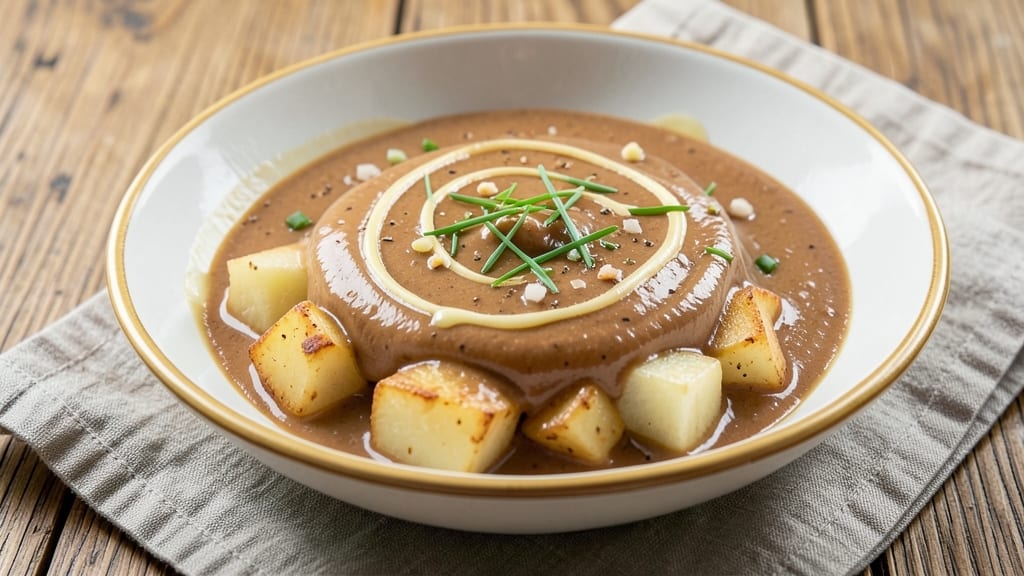
This potato sauce recipe transforms humble potatoes into a velvety, restaurant-quality sauce that elevates everything from mashed potatoes to steak. The secret lies in perfectly cooked and mashed potatoes that blend seamlessly with butter and cream, creating a smooth yet rich consistency that's impossible to resist.
What sets this sauce apart is its balance of simplicity and depth. You'll start with starchy potatoes that thicken naturally as they cook, eliminating the need for flour or cornstarch.
A touch of garlic and onion powder adds subtle flavor without overpowering the potato's natural sweetness, while a splash of cream at the end creates that signature velvety texture.
The result is a sauce that's creamy yet light, with just enough body to cling beautifully to any dish. It's the kind of sauce that makes weeknight dinners feel special without requiring fancy ingredients or techniques.
Ready in about 30 minutes, it's perfect for serving alongside roasted meats, mashed potatoes, or even as a dipping sauce for burgers.
This recipe has become a staple in my teaching kitchen because it demonstrates how simple ingredients can create something extraordinary. The first time a student tasted this sauce, they immediately asked for the recipe—now it's a regular request in my classes. Let's make this sauce together!
Ingredients for potato sauce
Eight simple ingredients transform humble potatoes into restaurant-quality sauce with velvety texture.
| Ingredient | Amount | Notes |
|---|---|---|
| Russet Potatoes 🥔 | 2 ½ lbs | Peeled and cubed evenly |
| Unsalted Butter 🧈 | ¾ cup | Full-fat for creaminess |
| Heavy Cream 🥛 | ½ cup | Whole milk works in pinch |
| Whole Milk 🥛 | ½ cup | For thinning consistency |
| Garlic Powder 🧄 | 1 tsp | Fresh garlic for stronger flavor |
| Onion Powder 🧅 | 1 tsp | Adds subtle depth |
| Salt 🧂 | ½ tsp | Diamond Crystal preferred |
| Black Pepper 🌶️ | ¼ tsp | Freshly ground for best flavor |
| Fresh Parsley 🌿 | 2 tbsp | Chopped for garnish |
The potatoes are the foundation—Russet potatoes work best because of their high starch content, which creates that signature thickness. Buy a 2.5 lb bag from the grocery store's produce section, where they're typically sold pre-washed. Look for firm potatoes with smooth skins and no sprouts. If you can't find Russets, Yukon Golds are a good substitute, though they'll yield a slightly lighter sauce. Peel and cut them into even 1-inch cubes for consistent cooking. The even size ensures they'll all cook through at the same time, preventing a gummy texture. For a shortcut, Costco or Walmart bulk bins often have pre-peeled potatoes, though you'll still need to cube them yourself.
Butter and cream are non-negotiable for that velvety finish, but there's room for flexibility. European-style butter from brands like Plugrá or Kerrygold adds extra richness, but regular unsalted butter works perfectly fine. Need to cut costs? Half-and-half can replace the heavy cream at a 1:1 ratio, though the texture will be slightly lighter. The garlic and onion powders are where you can get creative—fresh minced garlic (about 1 clove) or even asafetida powder for a vegetarian option both work beautifully. Salt is the final touch, so taste as you go. Diamond Crystal kosher salt is ideal because it dissolves completely, but any fine sea salt will do. Fresh parsley isn't essential but adds a bright finish—dried parsley works in a pinch, though fresh is always better.
This sauce keeps beautifully, making it perfect for meal prep. Store leftovers in an airtight container in the fridge for up to 5 days, though it's best used within 3 days for peak texture. For longer storage, portion into ice cube trays, freeze, and transfer to a bag—perfect for quick additions to future meals. The sauce reheats wonderfully on the stovetop over low heat, stirring frequently to prevent scorching. If it thickens too much, simply whisk in a splash of whole milk or water to reach your desired consistency. The sauce also freezes well for up to 3 months, though some texture separation may occur upon thawing—just stir vigorously to restore smoothness.
Why You'll Love This Recipe
- Foolproof Mash: I swear by this method—just boil, mash, and blend. No lumps, no stress, and the Russets break down into that velvety texture that’s actually worth the effort.
- Garlic Butter Magic: That moment when you fold in the warm butter and garlic powder? The whole kitchen smells like a cozy diner, and every bite tastes like you slaved over it (even though you didn’t).
- Weeknight to Dinner Party: Thick enough for gravy, smooth enough for dipping—it’s my go-to for roasted chicken, mashed potato bar nights, or even a fancy brunch when I’m feeling fancy. (Yes, even on a Tuesday night.)
- Leftovers That Don’t Suck: Unlike store-bought, this sauce actually improves the next day—creamy, rich, and still packed with flavor. I make a double batch because I’ll always find a reason to use it up.
Step-by-step instructions for creamy potato sauce
This method transforms humble russet potatoes into a rich, velvety sauce with perfect texture every time.
Parboil the Potatoes for Maximum Creaminess
Place the 2.5 lbs of peeled and evenly cubed russet potatoes in a large pot and cover them with cold water by about 1 inch. Add 1 teaspoon of salt to the water to enhance flavor penetration. Bring to a boil over medium-high heat, then reduce to a gentle simmer for 10 minutes. You want the potatoes to be partially cooked but still firm to the touch when pierced with a fork.
The parboiling step is crucial—it softens the potatoes just enough to break down their structure while maintaining their ability to thicken the sauce later. If you skip this step, your sauce will be watery and lack body. Drain the potatoes thoroughly in a colander, shaking them gently to remove excess water, as any remaining moisture will dilute your final sauce.
Cook the Potatoes Until Fork-Tender
Return the drained potatoes to the same pot and add the 0.75 cup of unsalted butter. Cook over medium heat for 10-12 minutes, stirring occasionally, until the potatoes are completely tender and begin to break down into a thick mash. You'll notice the butter melting and creating a rich, golden coating on the potatoes—this is where the sauce's velvety texture begins to develop.
Here's the thing—don't rush this step. You're looking for a smooth, almost paste-like consistency where the potatoes can be easily mashed with a wooden spoon. If you see the butter starting to brown too quickly, reduce the heat slightly to prevent burning. The potatoes should be completely dry by the end of this step, with all moisture absorbed by the butter.
Build the Sauce with Cream and Milk
Once the potatoes are fully cooked, reduce the heat to low and gradually whisk in the 0.5 cup of heavy cream and 0.5 cup of whole milk. Start with small amounts to prevent curdling, and continue whisking until the sauce is completely smooth. The sauce should begin to thicken almost immediately as the starches from the potatoes absorb the liquid. If it's too thick, add 1-2 tablespoons of hot water to reach your desired consistency.
This is where the magic happens—the combination of cream and milk creates that signature velvety texture while keeping the sauce light enough to coat foods beautifully. Keep the heat at a gentle simmer for 5-7 minutes, stirring occasionally, until the sauce is fully integrated and no potato lumps remain. The sauce should coat the back of a spoon smoothly without being gluey.
Season and Finish with Fresh Herbs
Remove the sauce from heat and stir in the 1 teaspoon of garlic powder, 1 teaspoon of onion powder, 0.5 teaspoon of salt, and 0.25 teaspoon of freshly ground black pepper. Taste and adjust the seasoning if needed—potato sauces can vary in saltiness depending on how much you parboiled them. The flavors should be well-balanced with a subtle garlic and onion presence that complements rather than overpowers the creamy base.
Garnish with the 2 tablespoons of chopped fresh parsley just before serving. The parsley adds a bright, fresh note that cuts through the richness of the sauce. For best results, serve immediately while the sauce is still warm, as it will thicken slightly as it cools. This sauce pairs beautifully with roasted meats, mashed potatoes, or even as a creamy dip for vegetables.
Pro Tips For Making Potato Sauce
- Boil Potatoes Whole: I learned this the hard way—peeling and chopping Russets first makes them turn to mush when boiling. Keep them whole until the very end, then slice them thin in the hot cream. The starch stays contained, and your sauce won’t turn gluey.
- Use Cold Cream: Heavy cream straight from the fridge won’t curdle like warm cream will. Add it slowly to the hot potatoes, and stir constantly—this keeps the sauce silky instead of breaking apart. (Yes, even if you’re impatient like me.)
- Salt the Butter First: Toss a pinch of salt into the butter before melting it. This way, the butter’s flavor gets fully incorporated, and you won’t end up guessing how much extra salt to add later. Trust me, your sauce will taste more balanced.
- Strain the Starch: After boiling the potatoes, drain them but don’t rinse—let them sit in the colander for 30 seconds. Then, give them a gentle squeeze to release some starch into the colander. Mix that back into the sauce for a richer, thicker texture. (Does it look weird? Yes. Does it work? Every single time.)
Creative variations of potato sauce
Classic German Kartoffelsauce
For a heartier version, try this German-inspired adaptation where you swap cream for ½ cup sour cream and add 1 small diced onion sautéed in 2 tbsp butter before cooking the potatoes.
After mashing, stir in 1 tbsp apple cider vinegar and 1 tsp caraway seeds for that authentic tangy depth. Serve this version over bratwurst or schnitzel—it’s a game-changer for German nights. 🌶️
Creamy Garlic-Herb Variation
Take this sauce to the next level by infusing the butter with 3 minced garlic cloves and 1 tsp fresh rosemary while melting it with the potatoes. After adding cream, stir in 2 tbsp chopped chives and 1 tbsp Dijon mustard for a bright, herby twist.
This version pairs perfectly with roasted chicken thighs or as a dip for crudité platters. I first tried this at a dinner party and it became an instant favorite—guests kept asking for seconds!
Spicy Cajun Potato Sauce
Add a Louisiana kick by sautéing ½ cup diced bell peppers and ½ cup diced onions in 2 tbsp olive oil until soft before adding the potatoes. After cooking, stir in 1 tbsp Cajun seasoning (I love Tony Chachere’s) and ½ tsp smoked paprika.
Finish with a splash of hot sauce to taste. This version is a crowd-pleaser with blackened redfish or Cajun-style shrimp and grits. 🔥
Cheesy Potato Sauce
For a comforting twist, fold in 1 cup shredded sharp cheddar or Gruyère while the sauce is still warm. If using cheddar, add it gradually to avoid clumping, and stir until fully melted. For Gruyère, the sauce will develop a luxurious, nutty flavor.
Top with crispy fried onions or crumbled bacon for extra indulgence. This version is perfect for weeknight dinners when you want something extra cozy. 🧀
Lighter Greek-Inspired Version
Swap heavy cream for ½ cup Greek yogurt and add 1 tsp dried oregano, ½ tsp lemon zest, and 1 tbsp chopped dill after cooking. Thin with ¼ cup warm lemon-infused water if needed.
This version is lighter but still creamy, and it pairs beautifully with grilled lamb chops or Mediterranean-style roasted vegetables. It’s a great way to use up leftover potatoes from a Greek salad night!
Smoky BBQ Potato Sauce
For a smoky twist, stir in 2 tbsp BBQ sauce (I recommend St. Louis-style) and ½ tsp smoked salt after adding the cream. Top with crumbled bacon and pickled jalapeños for a sweet, smoky, spicy kick.
This version is perfect as a dipping sauce for burgers or pulled pork sandwiches. It’s a fun way to repurpose leftover BBQ sauce into something entirely new. 💨
Nutrition facts
Frequently asked questions
Can I make this potato sauce ahead of time?
This sauce actually tastes better the next day as the flavors meld. Store it in an airtight container in the fridge for up to 5 days. The texture will thicken slightly when chilled, so simply whisk in 1-2 tablespoons of warm milk or water when reheating. For longer storage, freeze in ice cube trays for easy portioning—just thaw overnight in the fridge.
Why did my potato sauce turn out watery?
Watery sauce usually means the potatoes weren't cooked long enough to release enough starch. Make sure to parboil them for the full 10 minutes and cook them until completely tender in the butter (10-12 minutes). Also, drain them thoroughly after parboiling—any extra water will dilute your sauce. If it's still too thin, simmer uncovered for 5 extra minutes to evaporate excess moisture.
Can I substitute Yukon Gold potatoes?
Yes, you can use Yukon Golds, but expect a slightly lighter, less starchy sauce. For best results, use 3 lbs instead of 2.5 lbs since Yukons have more moisture. They'll give your sauce a creamier, almost custard-like texture. If you want to maintain the original thickness, add 1 tablespoon of cornstarch mixed with 1 tablespoon water at the end and simmer for 2 minutes.
What's the best way to reheat leftover potato sauce?
Reheat gently on the stovetop over low heat, stirring frequently to prevent scorching. For best results, add 1 tablespoon of milk or water per ½ cup of sauce to restore creaminess. If using the microwave, cover with a damp paper towel and heat in 30-second intervals, stirring between each. Never reheat to a boil—this can make the sauce separate. For extra richness, stir in 1 tablespoon of butter at the end.
How can I make this sauce dairy-free?
Swap the butter for vegetable oil or olive oil and use full-fat coconut milk instead of heavy cream. Add ½ cup unsweetened almond milk for thinning. For extra creaminess, stir in 2 tablespoons of nutritional yeast after cooking. The sauce will have a slightly different texture but still be rich and flavorful. This version works beautifully with roasted vegetables or vegan meat dishes.