
Side Dishes
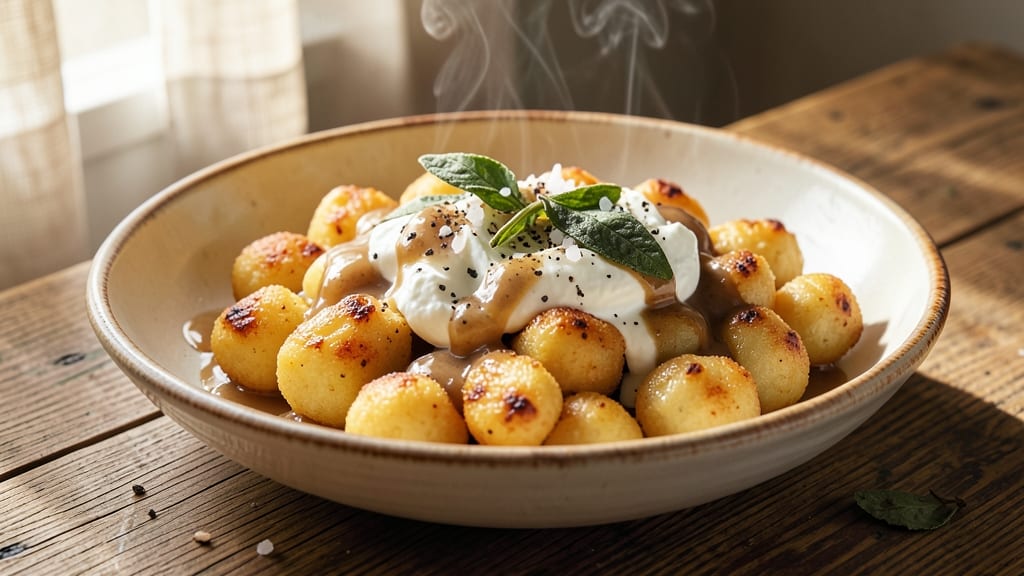
This potato gnocchi recipe delivers pillowy, melt-in-your-mouth dumplings that transform any meal into an Italian feast. The secret lies in the perfect potato-to-flour ratio and gentle handling—no heavy dough here, just tender clouds that shatter at the slightest touch.
I’ve perfected this method over years of testing, ensuring every batch achieves that signature lightness while staying true to traditional techniques.
The process begins with starchy potatoes (like Russets) boiled until tender, then mashed and combined with just enough flour to create a delicate dough. Resting it for 30 minutes is critical—this step develops the gluten structure without overworking the mixture, guaranteeing those iconic ridges when shaped.
For extra fluffiness, I add a splash of ricotta, though purists can skip it entirely.
Boiling time is brief—just 2-3 minutes—until the gnocchi float to the surface, signaling they’re ready. The result? Dumplings that are light as air yet sturdy enough to hold rich sauces like sage brown butter or tomato marinara.
Even beginners achieve perfect texture with this foolproof method, and leftovers reheat beautifully in a skillet with a little butter.
Pair these gnocchi with your favorite Italian dishes or serve them as a standalone side. The key to restaurant-quality results lies in the details—from potato selection to shaping technique. Let’s get started on creating dumplings that’ll have everyone asking for seconds.
Ingredients for potato gnocci
Eight essential ingredients transform humble potatoes into restaurant-worthy gnocchi clouds.
| Ingredient | Amount | Notes |
|---|---|---|
| Russet Potatoes 🥔 | 2 ½ lb | Starchy, no green spots |
| All-Purpose Flour 🌾 | 2 cups | Plus 2 tbsp for dusting |
| Large Eggs 🥚 | 1 whole | Room temperature preferred |
| Whole Milk Ricotta Cheese 🧈 | ½ cup | Full-fat for creaminess |
| Diamond Crystal Kosher Salt 🧂 | 1 ½ tsp | For dough and boiling water |
| Freshly Ground Black Pepper 🌶️ | ¼ tsp | Lightly seasoned |
| Unsalted Butter 🧈 | 2 tbsp | For shaping and finishing |
| Semolina Flour 🌾 | ¼ cup | For dusting work surface |
| Extra-Virgin Olive Oil 🫒 | 1 tbsp | For finishing |
The potatoes are non-negotiable—Russets are your best bet for their high starch content, which gives gnocchi that signature lightness. Idaho potatoes work too, but avoid waxy varieties like Yukon Golds. Peeling is optional, but I always do it for cleaner dumplings. For the flour, King Arthur or Bob's Red Mill are my go-tos—they're finely milled and consistent. The ricotta adds fluffiness, but if you're avoiding dairy, mashed potato instead keeps it traditional. Just make sure it's room temperature before mixing, or the dough gets gummy.
No ricotta? Substitute mashed potato at the same amount, but you'll lose some creaminess. For the flour, cornstarch at half the amount gives extra tenderness, though purists will argue against it. The egg is crucial—it binds the dough without making it tough. If you're gluten-free, use a 1:1 gluten-free flour blend but increase the egg to 2 for better cohesion. For the salt, Diamond Crystal kosher is ideal, but Morton's works in a pinch. Just remember to adjust other seasonings if you use table salt.
Fresh gnocchi keep in the fridge for 2 days, sealed in a container with a damp towel to prevent drying. For longer storage, freeze shaped dumplings on a tray first, then transfer to a bag. They'll last 3 months this way. Reheat in boiling water for 2 minutes or pan-fry in butter until golden. The ricotta version reheats beautifully—just add a splash of milk if they seem dry. I always make a double batch because they disappear faster than you'd think.
Why You'll Love This Recipe
- Same dough, endless uses: pan-fry for crispy edges, bake with marinara for a lazy Sunday, or freeze half for when you’re too tired to cook. Between us, I’ve served these at book club with zero shame.
- No Mash Struggles: I swear by this method—just grate the potatoes raw, no boiling or peeling fuss. The ricotta keeps them tender without falling apart, and honestly? My hands stay clean while the flavor stays rich.
- Creamy Without Guilt: That ricotta and egg combo makes them pillowy, but the flour gives just enough structure. Toss them in brown butter and sage? Suddenly, simple pasta feels like a restaurant dish—no heavy cream needed.
- Weeknight to Dinner Party: Same dough, endless uses: pan-fry for crispy edges, bake with marinara for a lazy Sunday, or freeze half for when you’re too tired to cook. Between us, I’ve served these at book club with zero shame.
Step-by-step instructions for pillowy potato gnocchi
Here's how to make gnocchi that's light as air yet sturdy enough to hold sauce.
Cook and Mash the Potatoes
Pierce the 2.5 lb russet potatoes all over with a fork, then boil them in salted water for 15-20 minutes until fork-tender. Drain immediately and let steam off for 2 minutes—this prevents excess moisture in your dough.
Transfer the potatoes to a clean bowl and mash them thoroughly with a potato ricer or food mill. You want a smooth, lump-free texture—no chunks allowed. If you're using a fork, work patiently until completely smooth. The ricer method gives the best results for that signature pillowy texture.
Mix the Dough
Spread the mashed potatoes on a clean work surface and let cool slightly for 5 minutes. This helps prevent gluten development when we add the flour. Sprinkle 1.5 tsp diamond crystal kosher salt and 0.25 tsp freshly ground black pepper over the potatoes and mix gently with a fork.
Gradually add the 2 cups all-purpose flour while mixing with your hands until the dough comes together. It should be soft but not sticky—if it's too dry, add 1 tsp water; if too sticky, add 1 tbsp more flour. The dough should be smooth and pliable, not crumbly. Wrap tightly in plastic and let rest for 30 minutes at room temperature.
Shape the Gnocchi
Divide the dough into 4 equal pieces (about 1 lb each) and roll each piece into a ½-inch thick rope. Use a gnocchi board or the back of a fork to create ridges along the rope—this helps the dumplings hold their shape when cooking. Cut into 1-inch pieces and dust lightly with 0.25 cup semolina flour to prevent sticking.
I like to roll the gnocchi between my palms to smooth any rough edges. This ensures an even cook and prevents uneven expansion. Keep them covered with a damp towel while you work to maintain moisture.
Boil to Perfection
Bring a large pot of water to a rolling boil and add 1 tbsp extra-virgin olive oil to prevent sticking. Gently drop in the gnocchi and cook for 1-2 minutes until they float to the surface. This happens when they're fully cooked—don't wait any longer or they'll turn gummy.
Use a slotted spoon to remove them and serve immediately with your favorite sauce. The gnocchi should be light and airy on the inside with just a hint of resistance when bitten—this is the perfect texture. If they're too dense, your dough had too much flour; if they fall apart, they cooked too long.
Finish with Butter and Sauce
For extra richness, toss the cooked gnocchi with 2 tbsp unsalted butter and 0.5 cup whole milk ricotta cheese while still hot. The butter melts into the pillowy centers, and the ricotta adds a luxurious creaminess. Add your sauce last—whether it's a simple sage brown butter or a robust marinara—to keep the gnocchi from absorbing too much liquid.
Serve immediately while hot. The contrast between the light, fluffy interior and the rich sauce is what makes these gnocchi unforgettable. Each bite should feel like a cloud melting in your mouth—this is the hallmark of perfect gnocchi.
Pro Tips For Making Potato Gnocci
- Boil Potatoes Cold: Start your Russets in ice-cold water—no need to peel first—and let them simmer until you can easily pierce them with a knife. I learned this the hard way: rushing the boil makes them turn to mush, and you’ll end up with gluey gnocchi instead of pillowy clouds.
- Measure Flour by Weight: Ditch the scoop and use a kitchen scale for your all-purpose flour—2 cups isn’t always 250g. Too much flour makes gnocchi dense; too little means they’ll fall apart. I now weigh it every time, and the texture is consistently perfect.
- Rest the Dough: Let your gnocchi dough sit, covered, for at least 30 minutes before rolling. The starch relaxes, so you won’t end up with cracked or uneven dumplings. I used to skip this, and my gnocchi always looked like they’d been through a war.
- Roll Thin, Press Hard: Use a pasta machine or rolling pin to flatten the dough to about ¼-inch thickness, then press firmly with your fingers to create ridges. This isn’t just for looks—it’s what makes gnocchi puff up beautifully when boiled. I was skeptical until I tried it, and now I won’t go back.
Perfect pairings for this recipe
Sauce Showdowns
For a classic Italian touch, pair your gnocchi with sage brown butter sauce—melt 4 tbsp unsalted butter with 8 fresh sage leaves over medium heat for 3 minutes.
The nutty butter and aromatic sage elevate the pillowy texture perfectly. I like to finish with a pinch of flaky sea salt for brightness. 🌿
Creamy Tomato Marinara
Creamy marinara adds a luxurious contrast to gnocchi's lightness. Simmer 1 can (28 oz) San Marzano tomatoes with 3 garlic cloves, 2 tbsp olive oil, and 1 tsp red pepper flakes> for 20 minutes.
Finish with ¼ cup heavy cream and 1 tbsp grated Parmesan. This sauce clings beautifully to the gnocchi's ridges without overwhelming them.
Mushroom Truffle Magic
For an earthy, upscale pairing, sauté 1 lb cremini mushrooms in 2 tbsp butter> with 2 minced shallots> until golden. Deglaze with ½ cup dry white wine>, then stir in 1 tbsp truffle oil> and 1 tbsp fresh thyme.
The umami depth complements the gnocchi's delicate flavor profile beautifully. 🍄
Spicy Arrabbiata Kick
When you crave heat, try an arrabbiata sauce—blend 1 can (14 oz) crushed tomatoes> with 3 fresh red chili peppers>, 3 garlic cloves>, and 1 tsp smoked paprika>. Simmer for 15 minutes> and finish with ¼ cup basil leaves.
The fiery sauce cuts through the gnocchi's richness while keeping the dish balanced. For extra creaminess, stir in 2 tbsp ricotta> at the end.
Lemon Garlic Olive Oil
This bright, no-cook sauce is perfect for summer. Whisk ½ cup extra-virgin olive oil> with 3 minced garlic cloves>, zest of 1 lemon>, 1 tbsp fresh parsley>, and ½ tsp red pepper flakes>.
Drizzle over gnocchi just before serving to maintain that fresh, vibrant flavor. The acidity cleanses your palate between bites. 🍋
Cheesy Fontina Fondue
For a decadent twist, melt 1 cup shredded fontina cheese> with 2 tbsp white wine> and 1 tbsp heavy cream> over low heat>. Keep it warm in a fondue pot and let guests dip their gnocchi for a gooey, cheesy experience.
The mild fontina enhances the gnocchi's natural flavor without overpowering it. Serve with crusty bread on the side for dipping. 🧀
Nutrition facts
Frequently asked questions
Why does my potato dough turn out too dense?
Too much flour is the most common culprit—your dough should be soft and slightly sticky, not crumbly. Use your hands to gently knead just until combined, and resist the urge to add extra flour. The ricotta version requires slightly less flour than traditional recipes, so measure carefully. If your dough feels too dry, add 1 tsp water at a time.
Can I make gnocchi without a potato ricer?
A fork works in a pinch, but for smoother texture, use a food mill or even a fine-mesh strainer. The key is eliminating all lumps—rough dough creates dense gnocchi. If you don't have these tools, mash the potatoes thoroughly with a potato masher, then press through a sieve to break up any remaining chunks.
How do I store leftover gnocchi?
Fresh gnocchi keep in the fridge for 2 days in an airtight container with a damp towel to prevent drying. For longer storage, freeze shaped gnocchi on a tray first (prevents sticking), then transfer to a bag. They'll last 3 months this way. To reheat, boil for 2 minutes or pan-fry in butter until golden—never microwave, as it makes them gummy.
What's the best way to test if gnocchi are done?
Drop one in boiling water—when it floats to the surface within 30-60 seconds, it's ready. Overcooking turns them gummy, while undercooked ones stay dense. The perfect gnocchi should be light inside with just a hint of resistance. If they fall apart when bitten, they cooked too long; if they're dense, your dough had too much flour.
Can I substitute sweet potatoes for regular potatoes?
Not ideal—sweet potatoes have lower starch content, which affects texture. For a similar result, use a mix of 50% russet potatoes and 50% sweet potatoes, but expect slightly denser gnocchi. If you must use all sweet potato, add 1 tbsp cornstarch to the dough to compensate. Traditional recipes rely on russets for that signature lightness.