Side Dishes
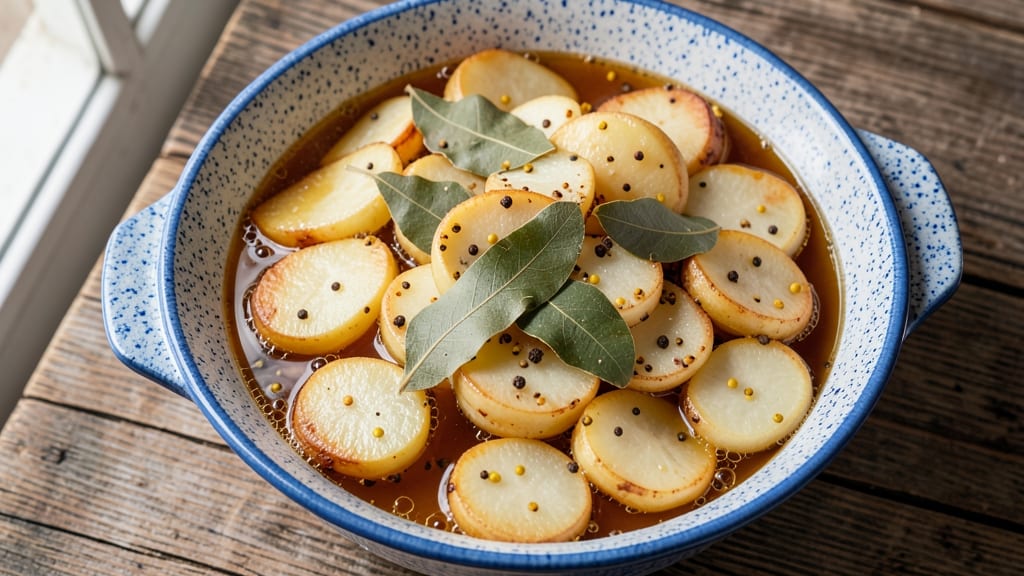
This old-fashioned pickled potatoes recipe brings a tangy, vinegar-kissed crunch that elevates any charcuterie board or rustic meal. The method is rooted in tradition—thinly sliced potatoes simmered in a bright vinegar brine with aromatic spices—creating a dish that’s both nostalgic and irresistibly crisp.
I first discovered this recipe while researching classic Southern preservation techniques, and it’s become a staple in my kitchen for its simplicity and bold flavor.
The beauty of these pickled potatoes lies in their versatility—they’re perfect as a side dish, a snack, or even a topping for burgers and sandwiches. The key to success is using thin, even slices and a well-balanced brine of vinegar, water, and spices like mustard seeds and bay leaves.
Once pickled, they develop a satisfying crunch while absorbing the tangy, herby flavors of the brine.
What makes this recipe truly special is its ability to transform simple potatoes into a dish that’s both vibrant and complex. The vinegar-kissed crunch pairs beautifully with rich meats, creamy cheeses, or even as a standalone snack.
The process is straightforward—boil the potatoes, slice them thin, and let them soak in the brine for at least 24 hours—but the result is a dish that feels like a homemade treasure.
Once prepared, these pickled potatoes keep well in the refrigerator for up to two weeks, making them an ideal make-ahead dish for gatherings or meal prep.
Serve them chilled alongside your favorite charcuterie board or use them to add a tangy crunch to salads and wraps. Here’s how to make them!
Ingredients for old fashioned pickled potatoes
Simple potatoes, bold vinegar, and aromatic spices transform into nostalgic pickled crunch perfect for any charcuterie spread.
| Ingredient | Amount | Notes |
|---|---|---|
| Russet Potatoes 🥔 | 2 lb | Yukon gold or red preferred |
| White Vinegar 💧 | 2 cups | Distilled preferred for clarity |
| Water 💧 | 2 cups | Filtered or spring water |
| Granulated Sugar 🍚 | ½ cup | Light brown sugar for depth |
| Mustard Seeds 🌶️ | 1 tbsp | Yellow seeds preferred |
| Bay Leaves 🌿 | 2 whole | Fresh or dried, organic |
| Black Peppercorns 🌶️ | 10 whole | Lightly crushed preferred |
| Celery Seeds 🌿 | 1 tsp | Toasted for aroma |
| Salt 🧂 | 1 ½ tsp | Kosher or sea salt |
| Red Wine Vinegar 🍷 | ½ cup | For depth of flavor |
| Fresh Dill 🌿 | ¼ cup | Chopped, for garnish |
The potatoes are the foundation, so choose firm, starchy varieties like Russets—they hold their shape better during slicing and pickling. Organic potatoes from local farmers markets or the produce section at Whole Foods tend to have better texture. For even slices, use a mandoline (about 1/8-inch thick) or a sharp chef's knife. If you're short on time, pre-boiled potatoes work perfectly—just slice them thin while still warm. The key is uniformity; thicker slices stay soft while thinner ones crisp up beautifully.
No white vinegar? Apple cider vinegar or rice vinegar work in a pinch, though they may alter the color slightly. Swap the mustard seeds for 1/2 tsp ground mustard if needed, but the seeds add that classic crunch. Penzeys Spices or bulk bins at natural grocery stores offer high-quality seeds—avoid pre-ground spices if possible. For a deeper flavor, add 1 tsp smoked paprika to the brine. Fresh dill is ideal, but 1/2 tsp dried dill will do in a bind. The red wine vinegar adds complexity, but if you're out, extra balsamic vinegar works well.
These pickles develop their best flavor after 48 hours in the fridge, but they'll keep for up to 2 weeks stored in an airtight jar. For longer storage, transfer to sterilized jars and refrigerate for up to 3 months. The brine can be reused for a second batch if strained and reheated. Serve chilled alongside charcuterie, sandwiches, or as a tangy topping for burgers. The longer they sit, the more vibrant their flavor becomes—worth the wait.
Why You'll Love This Recipe
- Just Four Ingredients: I swear, this recipe only needs five things—potatoes, vinegar, water, sugar, and mustard seeds. That’s it. No fancy spices, no hunting for obscure jars. Honestly, I keep a bag of Russets and a bottle of vinegar in my pantry just for this.
- Tangy Crunch Magic: The vinegar and sugar work together to give these potatoes that perfect balance—sharp but sweet, with a satisfying bite from the mustard seeds. Not too sour, not too bland—just that old-school, old-fashioned tang that makes every bite feel like a little victory.
- Potluck Hero: Between us, these are my go-to for picnics, church dinners, or any time someone says, “Bring a side.” They hold up for days in the fridge, travel well, and even kids will eat them straight from the jar. (Yes, even on a Tuesday night.)
- Dollar Stretch: A single bag of potatoes and a vinegar bottle last me months—this recipe costs pennies per serving. I’ll be real: I’ve made this during grocery budget crunches, and it’s always saved me. Plus, the leftovers? Still delicious a week later if you keep them submerged.
Step-by-step instructions for vinegar-kissed pickled potatoes
Transform simple russet potatoes into tangy, crunchy bites perfect for charcuterie displays.
Prepare and Slice the Potatoes
Begin by thoroughly washing the 2 lb russet potatoes under cold water to remove any dirt. Using a sharp chef's knife, peel the potatoes if desired, then cut them into ½-inch thick slices. For even cooking, aim for uniform thickness throughout. Place the sliced potatoes in a large mixing bowl and immediately toss them with the 1.5 tsp salt. This salting step draws out excess moisture, which prevents the potatoes from becoming soggy during pickling.
Let the salted potatoes sit for 15 minutes while you prepare the pickling liquid. This resting period allows the salt to work its magic, creating a better texture in the final product. After 15 minutes, give the potatoes a quick rinse under cold water to remove any surface salt crystals, then drain them completely in a colander.
Combine the Pickling Ingredients
In a medium saucepan, combine the 2 cups white vinegar, 2 cups water, 0.5 cup granulated sugar, 0.5 cup red wine vinegar, 1 tbsp mustard seeds, 2 whole bay leaves, 10 whole black peppercorns, and 1 tsp celery seeds. Bring the mixture to a gentle boil over medium heat, stirring occasionally until the sugar has completely dissolved. This should take about 3-4 minutes.
Once boiling, reduce the heat to low and let the mixture simmer for 5 minutes. This simmering process helps infuse the flavors into the liquid and ensures the spices are fully aromatic. Remove the pan from heat and let the pickling liquid cool to room temperature. This cooling step is crucial—adding hot liquid to cold potatoes can cause uneven cooking and affect the texture.
Pack and Preserve the Potatoes
Sterilize a quart-sized mason jar by running it through a dishwasher cycle or boiling it in water for 10 minutes. While the jar is sterilizing, transfer the drained potatoes to the cooled pickling liquid using a slotted spoon, packing them tightly into the jar. Leave about ½ inch of headspace at the top to allow for expansion.
Using a clean spoon, remove any foam or bubbles from the surface of the liquid in the jar. This ensures the potatoes are fully submerged in the flavorful brine. Seal the jar tightly with the sterilized lid and let it cool completely to room temperature before refrigerating.
Cure and Serve
Refrigerate the sealed jar of pickled potatoes for at least 24 hours to allow the flavors to fully develop. The longer they sit, the more pronounced the tangy, crunchy texture becomes. After 24 hours, open the jar and check the potatoes. They should be tender yet still hold their shape with a satisfying crunch.
Garnish with the 0.25 cup chopped fresh dill just before serving to add a bright, herby finish. These pickled potatoes will keep in the refrigerator for up to 2 weeks, making them an excellent make-ahead option for parties or charcuterie boards. Serve them chilled alongside cured meats, cheeses, and crusty bread for a classic appetizer.
Pro Tips For Making Old Fashioned Pickled Potatoes
- Boil Until Fork-Tender: Russets stay stubbornly hard if you rush them—test with a knife at 12-15 minutes. Overcooked spuds turn to mush, but undercooked ones taste like regret. Aim for slices that collapse just when pierced, not before.
- Peel After Pickling: I used to peel first, but the skin holds flavor. Instead, blanch the whole potatoes 2 minutes in boiling water, then shock in ice. Peel after—the skins slide off clean, and you keep the texture intact.
- Toast the Mustard Seeds: Dry-toast the seeds in a pan for 30 seconds until they smell nutty. Skipping this makes them taste raw and bitter. A quick step, but it adds depth the recipe doesn’t need otherwise.
- Use 1:1 Vinegar-to-Water: The classic ratio is 50/50, but I’ve found 60% vinegar (3 cups vinegar, 2 cups water) for sharper flavor. Adjust sugar to 1/4 cup per 4 cups liquid—too much sweetness dulls the tang.
Flavor customization for this dish
Spicy Kick
For a bold, heat-loving twist, add 1 tbsp red pepper flakes or 1-2 slices of fresh jalapeño to the brine. Thinly slice the jalapeños and pack them into the jar alongside the potatoes for an extra layer of spice.
I like to add ½ tsp cayenne pepper to the brine for a slow-building heat that pairs perfectly with charcuterie boards. 🌶️
Herb Infusions
Swap out the bay leaves for ½ cup fresh thyme sprigs or ¼ cup fresh rosemary for an earthy, aromatic profile. The herbs release their oils into the vinegar, creating a fragrant, complex flavor.
I also add 1 tbsp whole coriander seeds for a citrusy note that brightens the tangy vinegar. Toast the coriander seeds in a dry pan for 1 minute before adding them to the brine.
Citrus Zest
Brighten the flavor profile by adding 1 tbsp orange zest or 1 tbsp lemon zest to the brine. The citrus zest infuses the vinegar with a refreshing, slightly sweet note that cuts through the acidity.
I like to add 1 tbsp fresh orange juice to the cooled brine just before packing the potatoes. This works especially well if you’re serving the pickles with spicy dishes or grilled meats.
Smoky Depth
For a smoky twist, replace ½ cup of the white vinegar with ½ cup apple cider vinegar> and add 1 tsp smoked paprika to the brine. The smoky notes complement the vinegar beautifully and add a rustic, barbecue-like depth.
I also like to add 2-3 slices of cooked bacon to the jar for an extra layer of richness. Remove the bacon before serving if you prefer a meat-free option.
Sweet & Tangy
Balance the acidity with extra sweetness by increasing the sugar to ¾ cup> and adding 1 tsp vanilla extract to the brine. The vanilla adds a subtle floral note that pairs wonderfully with the vinegar’s sharpness.
This version is perfect for those who prefer a sweeter, more dessert-like pickle. Garnish with a sprinkle of turbinado sugar before serving for added crunch.
Garlic & Umami
Infuse the brine with umami by adding 4-5 peeled garlic cloves and 1 tsp fish sauce> (optional but highly recommended). The garlic softens during pickling, releasing its aromatic oils, while the fish sauce adds a savory depth.
This version is especially delicious when served with rich, fatty meats like duck or pork. For a vegetarian option, substitute the fish sauce with 1 tsp soy sauce.
Nutrition facts
Frequently asked questions
Why do I need to salt the potatoes before pickling?
The salting step is crucial for texture control. The salt draws out excess moisture from the potatoes, preventing them from turning soggy in the vinegar brine. This creates that classic crisp-tender bite that makes these pickles so satisfying. Skip it, and you'll end up with mushy potatoes instead of the perfect crunch.
Can I use waxy potatoes like red or Yukon gold instead of russets?
While russets are traditional, waxy potatoes like red or Yukon gold work beautifully too. They hold their shape well and develop a lovely firm texture. Just be sure to slice them 1/8-inch thick for even cooking. The starch content in russets gives them that extra crispiness, but waxy potatoes still deliver fantastic results.
How do I fix potatoes that turned out too soft?
If your pickled potatoes are too soft, it's likely because they weren't sliced thin enough or weren't salted properly. For next time, try slicing them 1/8-inch thick and salting them for 20 minutes before rinsing. You can also try adding 1 extra tablespoon of vinegar to the brine for more acidity, which helps preserve firmness.
Can I make this recipe without a mason jar?
Yes! Any clean, airtight container will work—glass jars, plastic containers with tight lids, or even a sterilized ceramic bowl with plastic wrap. Just ensure the potatoes are fully submerged in the brine and the container seals properly. For best results, use a container that's at least quart-sized to allow room for the potatoes to expand slightly.
What's the best way to store these pickled potatoes long-term?
For storage beyond 2 weeks, transfer the pickled potatoes to sterilized mason jars and refrigerate for up to 3 months. The brine can be reused for a second batch if strained and reheated. For freezing, pack the potatoes in their brine in freezer-safe bags, leaving 1-inch headspace. They'll keep for up to 6 months but may lose some crunch when thawed.