
Side Dishes
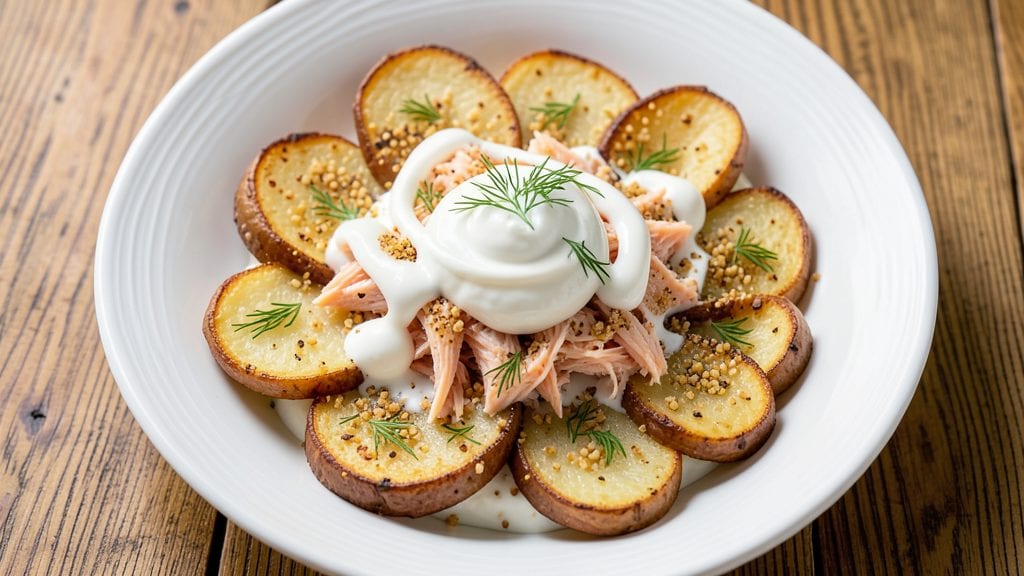
This canned salmon potato recipe delivers a perfect balance of crispy cornmeal topping and flaky potato layers, transforming simple ingredients into a hearty, protein-rich dish. The secret lies in the cornmeal crust, which adds texture while keeping the potatoes tender inside.
I developed this recipe after realizing how versatile canned salmon can be beyond salads—it’s a game-changer for weeknight dinners.
The beauty of this dish is its simplicity: just a few pantry staples and 15 minutes of prep work before baking. The cornmeal topping creates a golden, slightly crunchy finish that contrasts beautifully with the creamy potatoes underneath.
It’s a foolproof method that works whether you’re feeding a family or meal prepping for the week.
What you’ll end up with is a dish that’s rich in flavor and texture—crispy on top, flaky in the middle, and packed with the savory taste of salmon. The potatoes absorb the seasoning perfectly, while the cornmeal adds a satisfying crunch that keeps everyone reaching for seconds.
This is comfort food at its best, with minimal effort.
Serve it as a standalone dish or pair it with a simple green salad for a complete meal. The recipe scales easily, making it ideal for leftovers or batch cooking. Let’s get started on creating this satisfying, restaurant-quality side.
Ingredients for canned salmon potato
Pantry staples meet protein-packed flakiness in this crispy, flaky salmon potato masterpiece.
| Ingredient | Amount | Notes |
|---|---|---|
| Russet Potatoes 🥔 | 2 ½ lb | Medium size, cut into 1/4-inch slices |
| Canned Salmon 🐟 | 1 can | Wild-caught, drained and flaked |
| Cornmeal 🌽 | ½ cup | Fine grind for crispy texture |
| Unsalted Butter 🧈 | 4 tbsp | Melted, full-fat preferred |
| Sour Cream 🥛 | ¼ cup | Full-fat for creaminess |
| Plain Greek Yogurt 🍶 | ¼ cup | For extra protein and tang |
| Fresh Dill 🌿 | 2 tbsp | Chopped, or 1 tsp dried |
| Lemon Zest 🍋 | 1 tbsp | From 1 small lemon |
| Garlic Cloves 🧄 | 2 cloves | Minced, or 1 tsp garlic powder |
| Eggs 🥚 | 1 whole | Beaten, for binding |
| Shallots 🧅 | 1 whole | Finely minced, or 1 tbsp onion powder |
| Salt 🧂 | 1 ½ tsp | Kosher or sea salt |
| Black Pepper 🌶️ | ½ tsp | Freshly ground preferred |
| Paprika 🌶️ | ½ tsp | Smoked for depth of flavor |
| Olive Oil 🫒 | 2 tbsp | For greasing baking dish |
The potatoes are the foundation, so Russet potatoes are your best bet—they hold their shape and create those signature flaky layers. Trader Joe's or Costco often have pre-sliced potatoes if you're short on time, but cutting them yourself ensures even cooking. For the canned salmon, wild-caught brands like Wild Planet or Vital Choice deliver the richest flavor without the fishy aftertaste. Look for the ones packed in water, not oil, to keep this dish lighter. Fresh dill is ideal here—it brightens up the salmon flavor—but dried dill works at one-third the amount if you're in a pinch. The cornmeal should be fine-ground for that perfect crispy texture; medium grind won't give you the same satisfying crunch.
No sour cream? Greek yogurt works perfectly—just use the same amount. Short on dill? Substitute with chives or parsley for a milder flavor. The shallots can be swapped for green onions or extra garlic if that's what you have. For the cornmeal topping, if you can't find fine grind, blend regular cornmeal in a food processor for 30 seconds to achieve a similar texture. The smoked paprika adds depth, but if you only have regular paprika, add a pinch of liquid smoke for that smoky touch. The salmon can be drained well and patted dry before flaking to prevent a soggy topping. For extra richness, mix in 1 tbsp of cream cheese with the sour cream and yogurt.
This dish reheats beautifully—just cover with foil and pop in the oven at 375°F for 15 minutes. It keeps well in the fridge for 4 days, though the cornmeal topping loses some crunch after the first day. For best results, make it fresh and serve immediately. The leftovers freeze surprisingly well for up to 3 months—just thaw overnight in the fridge before reheating. Store the potatoes and salmon mixture separately before combining to keep everything fresh. If prepping ahead, assemble the dish and refrigerate uncooked for up to 24 hours before baking, which actually enhances the flavors.
Why You'll Love This Recipe
- One-Pan Magic: I swear by this for nights when I’d rather not wash dishes. Dice those Russets, mix in the salmon and cornmeal crust, and bake—no flipping, no fuss. The butter and sour cream do all the heavy lifting while you sip your wine.
- Rich Without Effort: That canned salmon? It’s the secret weapon—flaky, buttery, and packed with ocean flavor. The cornmeal crust adds a satisfying crunch, while the sour cream ties it all together like a cozy blanket. Honestly, it tastes like a restaurant dish for half the work.
- Lunchbox Hero: Between us, this is my go-to for meal prep. Slice it up, pack it in containers, and you’ve got a protein-rich lunch that’ll keep you full until dinner. My kids actually eat it cold—no complaints, just empty plates.
- Budget-Friendly Luxury: Russets are cheap, canned salmon is a pantry staple, and you’re not buying pre-made anything. The butter and sour cream feel indulgent, but the cost adds up way less than takeout. Plus, leftovers reheat beautifully—just a quick zap in the microwave.
Step-by-step instructions for canned salmon potato recipe
Here's how to create perfectly crispy potato layers with flaky salmon filling using just 15 simple ingredients.
Prepare the Potato Layers
Preheat your oven to 375°F and generously grease a 9x13-inch baking dish with 2 tablespoons olive oil. Peel and slice the 2.5 lb russet potatoes into ¼-inch thick rounds using a mandoline or sharp knife. You should have about 8-10 layers total.
Arrange half the potato slices in a single layer in the prepared dish, overlapping slightly like shingles. Brush each layer lightly with melted unsalted butter using a pastry brush. This butter will create steam during baking, making the potatoes fluffy rather than dry. Season each layer with ½ teaspoon salt and ¼ teaspoon black pepper.
Create the Salmon Filling
In a medium bowl, gently flake the 1 can canned salmon with your fingers, removing any large bones. Add the ½ cup cornmeal, 2 cloves minced garlic cloves, 1 finely minced shallot, 1 tablespoon lemon zest, 2 tablespoons chopped fresh dill, ½ teaspoon paprika, and ½ teaspoon salt. Mix until the salmon is evenly coated.
In a separate small bowl, whisk together the 1 whole egg, ¼ cup sour cream, and ¼ cup plain Greek yogurt until smooth. Pour this mixture over the salmon and cornmeal combination, stirring gently until just combined. The filling should hold together when pressed but remain slightly moist - this ensures it stays tender during baking.
Assemble the Baked Potato Casserole
Spread the salmon mixture evenly over the first layer of potatoes, creating a smooth, even layer. Add the remaining potato slices on top, again overlapping slightly and brushing each layer with more melted butter. Press down gently to ensure good contact between layers.
Cover the entire dish tightly with aluminum foil and bake for 45 minutes. This initial baking time allows the potatoes to soften without browning while keeping the salmon filling moist. After 45 minutes, remove the foil and continue baking for another 15-20 minutes until the top is golden brown and crispy.
Rest and Serve
Remove the casserole from the oven and let it rest for 10 minutes before serving. This resting period allows the juices to redistribute throughout the dish, ensuring each bite is moist and flavorful. The crispy cornmeal topping should hold its shape while still being tender enough to cut through with a fork.
Cut into squares and serve immediately. The contrast between the crispy golden top, flaky potato layers, and tender salmon filling creates a perfect balance of textures. The lemon zest and dill add bright, fresh flavors that complement the richness of the salmon and potatoes.
Pro Tips For Making Canned Salmon Potato
- Boil Potatoes Whole: I learned this the hard way—peeling and chopping Russets first makes them turn to mush when baking. Keep skins on, boil whole for 10 minutes, then slice. The starch stays inside where it belongs, and your potatoes won’t fall apart when mixing with salmon.
- Drain Salmon Well: Canned salmon is packed in water or oil, and that liquid makes your dish soggy. Drain it in a colander, then press it between paper towels to remove every last drop. Wet salmon = wet potatoes = sad texture.
- Bake Cornmeal Crust: Skip the raw cornmeal topping—it just turns into a paste. Instead, mix it with melted butter and sour cream, spread it over the potatoes, and bake it for 10 minutes at 400°F. You’ll get a golden, crispy crust instead of a sad, gummy mess.
- Mix Salmon Last: Fold in the flaked salmon right before serving, not while baking. It reheats faster than the potatoes and keeps its texture. If you mix it in early, you’ll end up with a mushy, overcooked mess—trust me, I’ve done it.
Best sauces and condiments for this recipe
Creamy Dill Sauce
This dish practically begs for a dollop of homemade dill sauce to tie all the flavors together. Whisk together ½ cup sour cream, 2 tablespoons chopped fresh dill, 1 tablespoon lemon juice, 1 teaspoon Dijon mustard, and a pinch of salt.
The tangy, herby sauce cuts through the richness of the salmon and potatoes beautifully. I like to serve it on the side for dipping or spooned directly over each serving. 🌿
Garlic Aioli
For a bold, savory kick, prepare a garlic aioli using ½ cup mayonnaise, 1 minced garlic clove, 1 teaspoon lemon zest, and a pinch of smoked paprika. This sauce adds a creamy, garlicky contrast that pairs perfectly with the crispy cornmeal topping.
I recommend using Hellmann's or Duke's for the best texture. Serve it alongside the dish for dipping or drizzle it over the top before serving. 🧄
Lemon-Herb Butter
Melt 4 tablespoons unsalted butter with 1 tablespoon lemon juice, 1 tablespoon chopped fresh dill, 1 teaspoon chopped fresh parsley, and a pinch of black pepper. Drizzle this fragrant butter over the baked dish just before serving to add a burst of brightness.
The citrusy, herby notes complement the salmon and potatoes while adding a luxurious finish. This is my go-to sauce for special occasions. 🍋
Spicy Yogurt Sauce
For a spicy twist, mix ½ cup plain Greek yogurt, 1 teaspoon lemon juice, ½ teaspoon red pepper flakes, and ½ teaspoon garlic powder. This tangy, slightly spicy sauce is perfect for those who love a little heat.
It balances the richness of the dish while adding a refreshing kick. I often serve it on the side for guests to customize their servings. 🌶️
Classic Tartar Sauce
If you prefer a classic pairing, whip up a traditional tartar sauce using ½ cup mayonnaise, 2 tablespoons finely chopped pickles, 1 tablespoon chopped fresh dill, 1 teaspoon lemon juice, and ½ teaspoon capers.
The briny, tangy flavors enhance the salmon’s natural richness. This sauce is a crowd-pleaser and works beautifully with the crispy potato topping. 🥒
Store-Bought Shortcuts
Short on time? No problem! Store-bought sauces like Hidden Valley Ranch or Sir Kensington’s Honey Mustard work surprisingly well with this dish. A quick drizzle of hot honey or chipotle mayo can also elevate the flavors without extra effort.
Just be sure to choose sauces with bright, fresh flavors to complement the dish’s natural taste. 💡
Nutrition facts
Frequently asked questions
Can I use sweet potatoes instead of russet potatoes?
Sweet potatoes will work, but they have a different texture and moisture content. For best results, stick with russet potatoes—they create those signature flaky layers. If you must use sweet potatoes, reduce the baking time by 10-15 minutes since they cook faster, and add an extra 2 tablespoons of cornmeal to the topping to help absorb excess moisture.
What if I don't have cornmeal for the crispy topping?
You can substitute with crushed cornflakes or panko breadcrumbs for a similar texture. For extra crispiness, mix in 1 tablespoon of baking powder with the substitute. If using panko, reduce the amount to ¼ cup since it expands more than cornmeal.
How do I store leftovers to keep the topping crispy?
Store leftovers in an airtight container with parchment paper between layers. Reheat covered with foil at 350°F for 15 minutes, then uncover and broil for 2-3 minutes to restore crispiness. For maximum crunch, reheat portions in a skillet over medium heat for 3-4 minutes per side.
Can I make this dish ahead of time?
Assemble the dish completely (including the cornmeal topping) and refrigerate uncovered for up to 24 hours before baking. This actually enhances the flavors. When ready to bake, add 10 minutes to the total baking time (55 minutes covered, then 15-20 minutes uncovered).
Why did my salmon filling turn dry?
Overbaking is usually the culprit. The salmon filling should be just moist when it comes out of the oven. To prevent this, remove the foil after 40 minutes instead of 45, and watch closely during the final 10 minutes of baking. If it's still dry, mix in 1 tablespoon of sour cream or yogurt before serving.