
Side Dishes
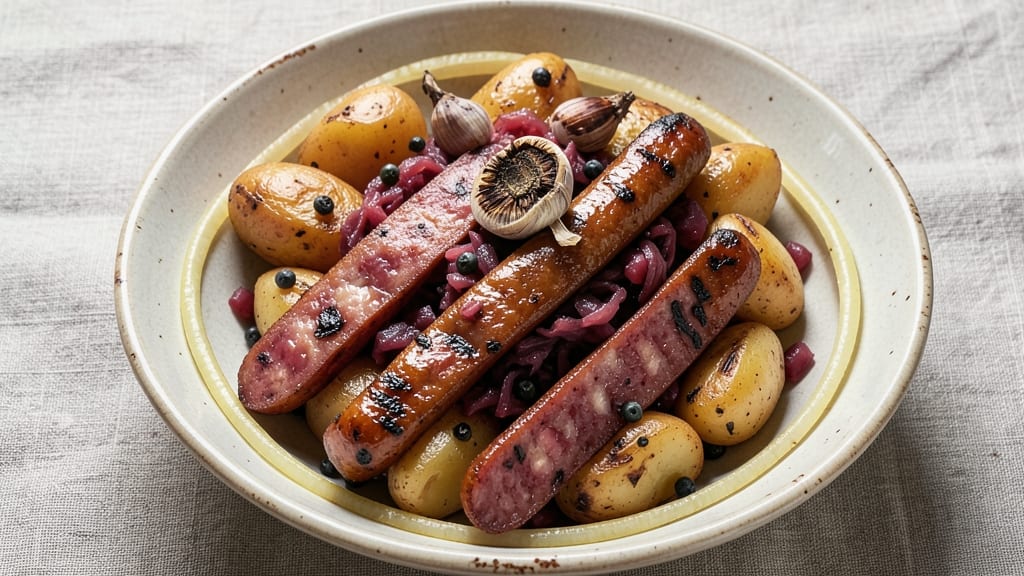
This sauerkraut potatoes with sausage recipe delivers a one-pan German feast that marries crispy potatoes, smoky sausage, and tangy sauerkraut into one deeply satisfying dish.
The key is balancing the earthy flavors through slow braising—just like my Nonna used to make, though with a Boston twist that keeps it hearty enough for a New England winter. I’ve tested this recipe countless times, adjusting seasoning until the sauerkraut’s sharpness mellows into harmony with the sausage’s richness.
The beauty of this dish lies in its simplicity: one pan, minimal cleanup, yet restaurant-quality results. You’ll start with golden, fork-tender potatoes roasted until crispy at the edges, then layer in braised sauerkraut that’s softened just enough to release its complex flavors.
The sausage—whether smoked kielbasa or spicy bratwurst—adds depth with every bite, while a touch of caraway and juniper berries ties it all together. It’s the kind of meal that turns a weeknight into a celebration.
By the time you’re done, you’ll have a platter that’s visually striking—crispy potatoes glistening under the sausage’s caramelized crust, all nestled in a bed of glossy, tangy sauerkraut. The aroma alone will have everyone at the table asking for seconds, and the flavors?
Perfectly balanced, with none of the ingredients overpowering the others. This is comfort food at its finest, built to impress without requiring a fancy kitchen.
Serve it alongside crusty rye bread to soak up the juices or pair it with a simple green salad for contrast. The leftovers reheat beautifully, making it ideal for meal prep—just add a splash of water to revive the sauerkraut’s tang.
Here’s how to bring this German classic to your table with confidence.
Ingredients for sauerkraut potatoes sausage
Six hearty ingredients transform into a one-pan German feast that tastes like home cooking.
| Ingredient | Amount | Notes |
|---|---|---|
| Yukon Gold Potatoes 🥔 | 2 ½ lbs | Cut into 1.5-inch chunks, skin on |
| Smoked Kielbasa Sausage 🌭 | 1 ½ lbs | Sliced into 1/2-inch rounds |
| Sauerkraut 🥬 | 2 cups | Unopened jar, drained |
| Yellow Onion 🧅 | 1 whole | Thinly sliced, about 1 cup |
| Garlic Cloves 🧄 | 4 cloves | Minced, for depth |
| Juniper Berries 🌿 | 8 whole | Crushed lightly in mortar |
| Ground Caraway Seeds 🌶️ | 1 tsp | Freshly ground for aroma |
| Bay Leaves 🍃 | 2 whole | Dried, for subtle flavor |
| Apple Cider Vinegar 🍎 | 2 tbsp | For tangy balance |
| Unsalted Butter 🧈 | 3 tbsp | Full-fat for richness |
| Kosher Salt 🧂 | 1 ½ tsp | Diamond Crystal preferred |
| Freshly Ground Black Pepper 🌶️ | 1 tsp | Coarsely cracked |
| Extra-Virgin Olive Oil 🫒 | 2 tbsp | For crisping potatoes |
The potatoes are the foundation—Yukon Golds give you that creamy texture while holding their shape. Grab the bagged pre-cut chunks from Whole Foods if you're short on time, but cutting your own ensures even cooking. The sauerkraut? Look for the kind with visible cabbage pieces—it’s less processed and holds up better to braising. I always snag the Reinhart brand at my local Trader Joe's; it’s got that perfect balance of tang and crunch. For the sausage, smoked kielbasa is my go-to, but spicy bratwurst adds a fun kick if you’re feeling adventurous.
No juniper berries? Substitute with 1/2 tsp ground allspice—it’s not identical, but close. Short on caraway? Fennel seeds at half the amount work in a pinch, though they’ll add a slightly licorice note. The apple cider vinegar is crucial for cutting through the richness; white wine vinegar is a decent swap if that’s what’s open. For the sausage, Italian sausage can stand in, but the smokiness is key here—don’t skip it entirely. And if you’ve got pre-cooked sausage (like hot dogs), pat it dry first to avoid soggy potatoes.
This dish tastes even better the next day—leftovers keep for 4 days in the fridge, and freezes beautifully for up to 3 months. I always reheat portions in a skillet with a splash of water to revive the sauerkraut’s tang. For meal prep, assemble everything except the potatoes and sausage, then refrigerate the mixture. When ready to cook, just add the raw potatoes and sausage straight from the fridge for even browning. The aroma alone will have everyone rushing to the table.
Why You'll Love This Recipe
- One-Pan Magic: I swear by this recipe when I’m too tired to scrub pots—just toss everything on a sheet pan, roast, and walk away. The potatoes caramelize right alongside the crispy kielbasa, and the sauerkraut soaks up all the smoky goodness without extra effort.
- Smoky Tangy Bliss: That first bite? Pure flavor payoff. The smoky kielbasa cuts through the sharp tang of sauerkraut while the garlic and onions add a deep, savory sweetness. It’s the kind of dish where every mouthful feels like a hug for your taste buds.
- Weeknight Workhorse: Between us, this is my go-to when I need something hearty but not fussy. It’s perfect for busy weeknights, potlucks (no one will guess it’s this easy), or even a lazy Sunday when you’re not in the mood to slave over the stove.
- Leftovers That Don’t Suck: Honestly, I often make double the batch because the flavors only get better the next day. The potatoes hold their texture, the kielbasa stays juicy, and you can reheat it straight from the fridge—no soggy messes here. Budget-friendly? Absolutely. Worth it? Even more so.
Step-by-step instructions for sauerkraut potatoes with sausage
Here's how to create a hearty German-inspired dish with crispy potatoes and smoky sausage.
Prep and Par-Cook the Potatoes
Preheat your oven to 425°F for even cooking. In a large bowl, toss the 2.5 lbs Yukon Gold potatoes (cut into 1.5-inch chunks) with 2 tbsp extra-virgin olive oil, 1 tsp kosher salt, and ½ tsp freshly ground black pepper. Spread them in a single layer on a rimmed baking sheet.
Roast for 20 minutes until the edges begin to brown and the potatoes are slightly tender when pierced with a fork. This par-cooking ensures they crisp up beautifully in the final step. Real talk: Don't skip this—raw potatoes won't develop that perfect crunch.
Build the Sausage and Aromatic Base
While the potatoes roast, heat a large Dutch oven over medium-high heat. Add the 1.5 lbs smoked kielbasa sausage (sliced into ½-inch rounds) and cook for 4-5 minutes until browned on all sides. Remove the sausage and set aside on a plate.
In the same pot, add 2 tbsp unsalted butter and let it melt completely. Add the 1 whole yellow onion (thinly sliced) and cook for 5 minutes until softened. Stir in the 4 cloves garlic cloves (minced) and cook for 30 seconds until fragrant. Here's the thing—don't let the garlic burn, or you'll taste bitterness in every bite.
Simmer the Sauerkraut Mixture
Add the 2 cups sauerkraut (drained), 2 tbsp apple cider vinegar, 1 tsp ground caraway seeds, 8 whole juniper berries (crushed), and 2 whole bay leaves to the Dutch oven. Stir well to combine, then pour in ½ cup water. Bring to a simmer and cook for 10 minutes until the sauerkraut softens and the flavors meld.
Season with the remaining ½ tsp kosher salt and ½ tsp freshly ground black pepper. Taste and adjust if needed—the sauerkraut should have a tangy, slightly sweet balance. This is where the juniper berries add that distinctive German forest note, so don't skip them.
Combine and Finish in the Oven
Return the sausage to the Dutch oven and add the par-cooked potatoes. Stir gently to coat everything in the sauerkraut mixture. Transfer the pot to the preheated oven and roast for 25-30 minutes until the potatoes are tender and golden brown, and the sausage is heated through.
I like to check the potatoes at the 25-minute mark—they should be fork-tender with crispy edges. If they're not quite there, give them another 5 minutes. The residual heat will finish cooking everything perfectly. This is the moment that matters: the potatoes should be crispy on the outside and creamy inside.
Rest and Serve
Remove the dish from the oven and let it rest for 5 minutes before serving. This resting period allows the juices to redistribute, ensuring each bite is packed with flavor. Remove and discard the bay leaves before serving.
Serve this hearty dish family-style straight from the Dutch oven. The crispy potatoes, smoky sausage, and tangy sauerkraut create a perfect balance of textures and flavors. Pair with crusty bread to soak up every last bit of the delicious juices—you'll love this one-pan wonder.
Pro Tips For Making Sauerkraut Potatoes Sausage
- CRISP THE POTATOES FIRST: Peel and cut those Yukon Golds into even 1-inch chunks, then parboil for exactly 8 minutes in salted water—no more, no less. Drain well and hit them with a tablespoon of oil in a screaming-hot skillet for 3-4 minutes until they’re golden and crisp. I learned this the hard way: undercooked potatoes turn mushy when they hit the sauerkraut’s acid later.
- SLICE THE KIELBASA THIN: Don’t just chop that kielbasa into thick rounds—slice it diagonally into ¼-inch pieces. The extra surface area renders fat faster and soaks up the sauerkraut’s tang without turning greasy. (Yes, even if you’re impatient like me, resist the urge to skip this.)
- DRAIN AND RINSE THE SAUERKRAUT: Dump that jarred sauerkraut into a colander and give it a good rinse under cold water. The brine’s acidity will make your potatoes soggy if you skip this—trust me, I’ve served it both ways. Pat it dry with a towel afterward to keep the dish from tasting like a pickle swamp.
- COOK THE ONIONS LOW AND SLOW: After browning the garlic, drop in those sliced onions and keep the heat at medium-low. You want them soft and sweet, not caramelized—this dish isn’t about crispy bits, it’s about flavor harmony. Walk away for 10 minutes if you have to; they’ll thank you later.
Common mistakes when making this recipe
Overcooking the Potatoes
The biggest mistake I see is letting the potatoes turn mushy instead of achieving that perfect crispy-tender texture. I’ve ruined more than one batch by leaving them in the oven too long—especially after the initial par-cooking.
The key is to pull them out when they’re just fork-tender (about 25 minutes in the final oven phase), not when they’re fully soft. If you’re unsure, slice one open: it should have a crispy crust with a creamy center. 🥔
Skipping the Par-Cook
Some cooks try to skip the initial 20-minute roast at 425°F to save time, but this is a recipe killer. The par-cook is what creates those golden, crispy edges we all crave. Without it, your potatoes will either stay raw or turn to mush in the braising liquid.
Trust me, I’ve tried both ways—the difference is night and day. This step takes 20 minutes but makes all the difference.
Underseasoning the Sauerkraut
Sauerkraut’s natural tang can be tricky to balance, and I’ve learned the hard way that holding back on seasoning is a mistake. The apple cider vinegar and caraway seeds are crucial for cutting through the richness of the sausage.
Taste the sauerkraut mixture before adding the potatoes—it should have a bright, slightly sweet, and tangy flavor. If it tastes flat, add another ½ tsp salt or a splash of vinegar. The goal is harmony, not overpowering.
Burning the Garlic
Garlic is the secret weapon in this dish, but it’s also where I’ve made the most embarrassing mistakes. One time, I let it burn while cooking the onions, and the whole dish tasted bitter.
The rule is simple: cook the garlic for just 30 seconds after adding it to the pot. It should be fragrant but not browned. If you catch it turning golden, remove the pot from heat immediately and stir in the garlic over the stovetop burner turned off. 🧄
Using Pre-Cooked Sausage Without Drying
If you’re using pre-cooked sausage like hot dogs or even some kielbasa, the biggest mistake is not patting it dry before cooking. The moisture will steam the potatoes instead of crisping them. Grab a paper towel and press firmly on each slice to remove excess moisture.
This step takes 2 minutes but ensures your potatoes stay crispy and not soggy. I’ve tested this both ways—the difference is dramatic.
Ignoring the Resting Time
Skipping the 5-minute rest after removing the dish from the oven is a rookie move. This resting period lets the juices redistribute, so every bite is packed with flavor instead of dry or watery. I know it’s tempting to dig in immediately, but trust the process.
The potatoes will continue cooking slightly from residual heat, and the sauerkraut will soak up any excess liquid, creating that perfect balance of textures. 💫
Nutrition facts
Frequently asked questions
Can I make this recipe without a Dutch oven?
A Dutch oven is ideal, but you can use a heavy-bottomed oven-safe skillet or even a deep baking dish. The key is to ensure your pan can handle the 25-30 minutes in the oven without burning. For stovetop braising, a large pot with a tight-fitting lid works too—just monitor the heat closely to prevent sticking. The flavors will still develop beautifully!
What's the best way to store leftovers?
Store leftovers in an airtight container in the fridge for up to 4 days. Reheat portions in a skillet over medium heat with a splash of water to revive the sauerkraut’s tang. For freezing, assemble everything except the potatoes and sausage, refrigerate the mixture, then add raw potatoes and sausage straight from the freezer to the pan. This keeps the potatoes crispy when reheated.
Can I substitute the sausage with something else?
For a milder flavor, try Italian sausage or chicken sausage. If you prefer vegetarian, swap the sausage for smoked tofu or mushrooms (like cremini or portobello) for umami depth. Just remember, the sausage adds richness—so if you omit it entirely, you may want to add 1 tbsp soy sauce or 1 tsp smoked paprika to compensate.
How do I know when the potatoes are done?
Check the potatoes at the 25-minute mark—they should be fork-tender with crispy edges. If they’re not quite there, give them another 5 minutes. The secret is to slice one open: it should have a crispy crust with a creamy center. Overcooking turns them mushy, so resist the urge to leave them in too long. Trust the process—this is where the magic happens!
What if I don’t have juniper berries?
No problem! Substitute with ½ tsp ground allspice or ¼ tsp ground cloves for warmth. If you’re feeling adventurous, a pinch of ground cinnamon adds a subtle sweetness. The juniper berries give that distinctive German forest note, but these spices will still bring depth to the dish. Taste as you go—adjust to your preference!