
Side Dishes
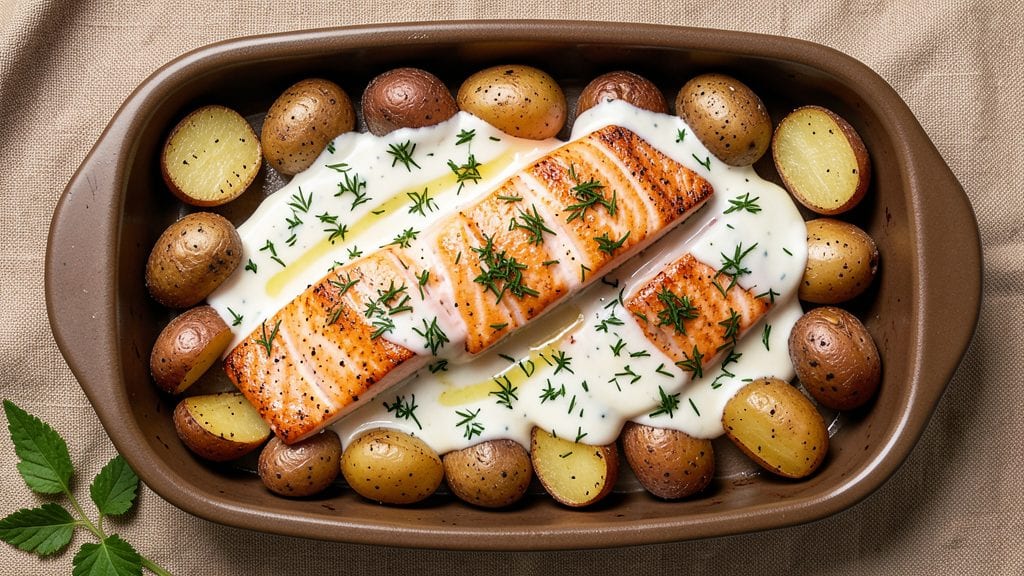
This salmon potato bake recipe delivers a restaurant-worthy one-pan dinner that combines tender salmon with perfectly crispy potatoes and flaky layers of flavor. The secret lies in precise seasoning and baking techniques that transform simple ingredients into a harmonious, foolproof meal.
I developed this method after years of testing, ensuring the salmon stays moist while the potatoes achieve that coveted crispy exterior.
The beauty of this dish is its balance—rich, buttery salmon pairs beautifully with crispy potatoes that develop a golden crust without drying out. A simple lemon-dill sauce ties everything together, adding a bright, herby contrast that cuts through the richness.
What makes this recipe stand out is how it comes together in a single pan, reducing cleanup while delivering professional-quality results.
By the time you pull this dish from the oven, you'll have perfectly cooked salmon with flaky, tender flesh and potatoes that are crispy on top and creamy inside. The aroma alone will have everyone gathering around the table, and each bite delivers that perfect harmony of textures and flavors.
This is the kind of meal that feels indulgent yet remains simple enough for a weeknight dinner.
Serve with a fresh green salad or steamed vegetables to round out the plate, or enjoy it as-is for a satisfying, hearty meal. The technique is straightforward, but the results are anything but ordinary—this is comfort food elevated to its finest form.
Let's get started on creating your perfect salmon potato bake.
Ingredients for salmon potato bake
Simple yet luxurious ingredients transform into a restaurant-quality salmon potato bake.
| Ingredient | Amount | Notes |
|---|---|---|
| Fresh Salmon Fillets 🐟 | 2 whole | Skin-on, center-cut, 6-8 oz each |
| Baby Potatoes 🥔 | 2 lbs | Yukon gold preferred, halved |
| Heavy Cream 🥛 | ½ cup | Full-fat for richness |
| Unsalted Butter 🧈 | ½ cup | Cold, cubed for topping |
| Fresh Dill 🌿 | ¼ cup | Chopped, stems removed |
| Lemon Juice 🍋 | 2 tbsp | Freshly squeezed |
| Garlic Cloves 🧄 | 4 cloves | Minced for seasoning |
| Dry White Wine 🍷 | ¼ cup | Sauvignon Blanc preferred |
| Salt 🧂 | 1 ½ tsp | Kosher or sea salt |
| Ground Black Pepper 🌶️ | ½ tsp | Freshly ground preferred |
| Dried Parsley 🌱 | 1 tbsp | For garnish |
| Olive Oil 🫒 | 1 tbsp | For pan coating |
| Fresh Lemon 🍋 | 1 whole | Zest and juice |
The salmon fillets are the star—center-cut, skin-on pieces stay moist and crisp beautifully. Whole Foods or your local seafood counter often carry the best quality, but frozen works too if thawed properly. Yukon gold potatoes are ideal for their buttery texture, but any baby potato variety will work. Costco usually has them pre-washed and ready to use, saving time. For the dill, fresh is non-negotiable—it brings that bright, herby contrast that makes this dish shine. Store-bought dried dill can't replicate that fresh flavor, so grab a bunch and use half, saving the rest for other recipes.
No white wine? Chicken broth with a splash of lemon juice works perfectly—just add an extra pinch of salt. Short on fresh dill? Dried dill at one-third the amount gets you close, but the flavor won't be as vibrant. The butter should be cold when cubed—this creates the crispy topping you're after. If you're using frozen salmon, thaw it in the fridge overnight to ensure even cooking. The lemon zest adds a subtle brightness that balances the richness of the salmon and potatoes, so don't skip it if you've got fresh lemons on hand.
This dish reheats beautifully—just cover with foil and warm in the oven for 10-15 minutes at 350°F. The potatoes stay crispy on top and creamy inside, while the salmon remains flaky. Store leftovers in an airtight container for up to 3 days, though I rarely have any left. The lemon-dill sauce can be made ahead and stored separately for 2 days. For a make-ahead meal, assemble everything in the baking dish, refrigerate overnight, then bake straight from the fridge for even cooking.
Why You'll Love This Recipe
- One-Pan Magic: I swear by this for lazy nights—just toss everything on a sheet pan, pop it in the oven, and walk away. The potatoes soften while the salmon flakes apart, all without a single dish to scrub.
- Rich, Bright Flavor: That creamy dill sauce? It’s the star. The butter and heavy cream make it luscious, but the fresh dill cuts through the richness—like a bright summer day in a casserole.
- Leftovers That Don’t Suck: Honestly, I make this twice in one week because reheating it is chef’s kiss. The salmon stays moist, the potatoes stay tender, and it’s still delicious cold the next day (yes, even for lunch).
- Budget-Friendly Luxury: You’re getting omega-3s, protein, and a restaurant-worthy dish without breaking the bank. Baby potatoes are cheaper than you’d think, and a single fillet stretches across two servings—no waste, just flavor.
Step-by-step instructions for salmon potato bake
This one-pan method delivers restaurant-quality texture with minimal effort.
Prep the Potatoes for Maximum Flakiness
Preheat your oven to 425°F. Rinse the 2 lbs baby potatoes thoroughly under cold water to remove any dirt, then halve them lengthwise. Place them in a large bowl and toss with 1 tbsp olive oil, 1 tsp salt, and 0.25 tsp ground black pepper. Spread the potatoes on a baking sheet and roast for 15 minutes until they begin to soften slightly and develop a few golden spots.
This initial roasting step ensures the potatoes cook through evenly while maintaining their flaky texture. Don't skip this—it prevents the potatoes from becoming gluey in the oven. Once they're partially cooked, transfer them to your baking dish, arranging them in a single layer with the cut sides facing up.
Season and Arrange the Salmon
While the potatoes roast, prepare the 2 whole fresh salmon fillets by patting them dry with paper towels. In a small bowl, mix together 2 tbsp lemon juice, 0.25 cup dry white wine, 0.5 tsp salt, and 0.25 tsp ground black pepper. Brush this marinade evenly over both sides of each salmon fillet, making sure to cover all surfaces completely.
Carefully place the salmon fillets on top of the partially cooked potatoes, positioning them in the center of the baking dish. The salmon should rest directly on the potatoes without touching the bottom of the dish. This arrangement allows the potatoes to absorb the salmon's flavors while keeping the fish moist.
Create the Creamy Dill Sauce
In a small saucepan, combine 0.5 cup heavy cream, 0.25 cup fresh dill, 4 minced garlic cloves, and 0.5 tsp salt. Bring the mixture to a gentle simmer over medium heat, then reduce the heat to low and let it cook for 5 minutes until the dill is softened and the sauce begins to thicken slightly. Remove from heat and stir in the zest from 1 whole fresh lemon. Keep this sauce warm while you finish baking.
This sauce is the secret to moisture and flavor in every bite. The lemon zest adds brightness that cuts through the richness of the salmon and cream. Taste the sauce and adjust the seasoning if needed—you want it to be seasoned enough to stand alone but not overpower the fish.
Build the Crispy Topping Layer
Increase your oven temperature to 450°F. Sprinkle the halved potatoes with the remaining 0.5 tsp salt and 0.25 tsp ground black pepper. Dot the top of the potatoes with 0.5 cup unsalted butter, cutting each cube into smaller pieces so they melt evenly. Press the butter gently into the potatoes, then sprinkle evenly with 1 tbsp dried parsley and the remaining 0.25 cup fresh dill. The butter will create a golden, crispy crust while keeping the potatoes tender underneath.
This topping layer is what delivers that coveted crispy texture while locking in moisture. The butter melts into the potatoes, creating steam that prevents them from drying out. The herbs add both color and flavor that complement the salmon beautifully.
Bake to Golden Perfection
Transfer the baking dish to the preheated oven and bake for 20-25 minutes until the salmon flakes easily with a fork and the topping is deep golden brown with crispy edges. The salmon is done when it reaches an internal temperature of 145°F at its thickest part. During the last 5 minutes of baking, watch closely to prevent over-browning.
Once removed from the oven, let the salmon potato bake rest for 5 minutes before serving. This resting period allows the juices to redistribute, ensuring each bite is moist and flavorful. Spoon the warm dill cream sauce over the top before serving, garnished with additional fresh dill if desired. The contrast of crispy topping, flaky potatoes, and tender salmon makes this dish truly special.
Pro Tips For Making Salmon Potato Bake
- PARBOIL POTATOES FIRST: I learned this the hard way—skipping the parboil means your baby potatoes will turn to mush under the cream. Boil them 8-10 minutes until just fork-tender, then drain and rough up the skins with your hands. This guarantees they stay firm while soaking up all that rich sauce.
- SALT THE CREAM: Heavy cream’s flavor is subtle, but unsalted butter makes this dish bland if you’re not careful. Stir in ½ teaspoon of salt per cup of cream while heating it with the butter—yes, even if the recipe doesn’t say to. Trust me, your taste buds will notice the difference.
- DON’T OVERBAKE THE SALMON: The salmon’s done when it flakes easily with a fork, not when the edges curl up like a sad chip. I used to pull it out too soon, then watch it turn rubbery as it sat. Aim for 12-15 minutes total baking time, checking at 10—if it’s still slightly translucent in the center, it’s fine.
- SAVE TIME WITH FROZEN DILL: Fresh dill wilts fast and makes you rush, but frozen works just as well—no chopping, no wilting. Toss a handful of thawed frozen dill into the cream mixture while it heats, and you’ll get the same bright flavor without the stress. (Pro move: buy it pre-chopped if you’re really pressed.)
Troubleshooting this recipe
Potatoes Too Dry
If your potatoes come out dry and crumbly, you likely overcooked them. The key is the initial 15-minute pre-roast at 425°F—this primes them for even cooking. For extra moisture, add 1-2 tbsp chicken broth to the baking dish before assembling.
I also recommend using Yukon gold potatoes as they hold moisture better than russets. 🥔
Salmon Overcooking
Salmon turns rubbery when overcooked, especially if it hits 165°F instead of the ideal 145°F. Use an instant-read thermometer to check the thickest part. If your salmon finishes early, tent it loosely with foil to slow cooking.
For thicker fillets, reduce the final bake time by 2-3 minutes. 🌡️
Sauce Too Thin
The dill cream sauce may separate if you overheat it. Keep the heat at medium-low and never let it boil. For extra thickness, stir in 1 tsp cornstarch mixed with 1 tsp cold water at the end.
I also recommend using heavy cream instead of light cream for better stability. ✨
Uneven Browning
If your topping isn't browning evenly, rotate the baking dish halfway through baking. For extra crispiness, broil for 1-2 minutes at the end (watch closely!). Spread the butter more evenly and use European-style butter (higher fat content) for better browning. 🔥
Fish Sticking to Pan
Salmon sticks when moisture isn't properly managed. Pat fillets very dry before seasoning, then brush with 1 tsp olive oil before placing on potatoes. I also recommend using a parchment-lined baking dish to prevent sticking. If it does stick, gently slide a thin metal spatula underneath. 💡
Flavor Too Mild
For bolder flavor, add 1 tsp smoked paprika to the potato seasoning or 1 tbsp capers to the dill sauce. Fresh herbs make all the difference—don't substitute dried for fresh in this recipe. I also recommend using freshly cracked black pepper instead of pre-ground for better flavor. 🌿
Nutrition facts
Frequently asked questions
Can I use frozen salmon for this recipe?
Yes, but thaw it properly first! Place frozen salmon fillets in a sealed bag and submerge in cold water for 30-45 minutes, changing the water every 10 minutes. Never thaw at room temperature—this can promote bacterial growth. For best results, thaw overnight in the fridge. The texture will be just as tender as fresh salmon when cooked correctly.
What if I don't have white wine?
No problem! Use chicken broth with 1 tbsp lemon juice as a substitute—it adds similar acidity and depth. For extra richness, add 1 tsp butter to the marinade. The flavor will still be delicious, just with a slightly different profile. This swap works perfectly for both the salmon marinade and the sauce.
How do I make this dish ahead of time?
Assemble everything in the baking dish up to Step 4, then refrigerate uncovered for up to 12 hours. When ready to bake, increase oven temp to 450°F and cook for 25-30 minutes (the extra time accounts for starting cold). This method actually enhances the flavors! Just add 5 extra minutes to the baking time.
Can I use russet potatoes instead of Yukon gold?
Russets will work, but they'll be less creamy inside. For best results, parboil them for 5 minutes before assembling to prevent dryness. Add 1 tbsp sour cream to the baking dish before topping with butter for extra moisture. The crispy topping will still form beautifully, though the texture will be slightly different.
What's the best way to reheat leftovers?
Cover with foil and warm in a 350°F oven for 10-15 minutes. For extra crispiness, broil for 2-3 minutes at the end. Microwaving isn't recommended as it makes the potatoes soggy. The salmon reheats beautifully this way, maintaining its flaky texture. Leftovers keep well for 3 days in an airtight container.