
Breakfast & Brunch
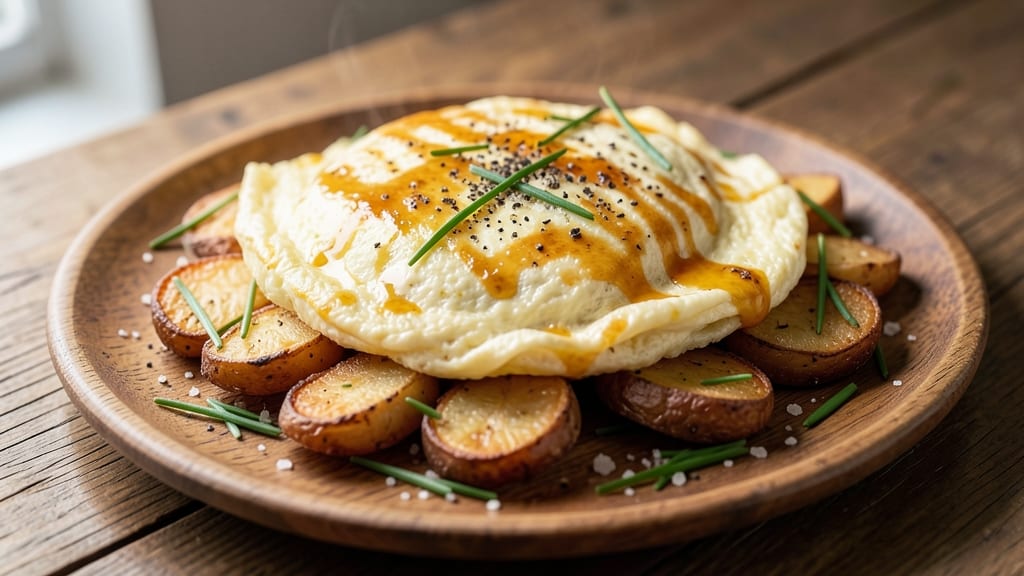
Transforming humble potatoes and eggs into a crispy, golden omelet with hash brown-like texture inside fluffy clouds is the breakfast game-changer I've been perfecting since launching Cooking Vibe. 💛 The secret lies in pre-cooking the potatoes until they're tender and crispy at the edges, then folding them into whisked eggs for a satisfying bite in every forkful.
What makes this recipe stand out is the perfect balance of textures—crispy potato pieces nestled within a light, airy egg cloud. I've tested this with both russet and Yukon Gold potatoes, but russets deliver that classic hash brown crunch.
The method is straightforward: sauté diced potatoes until golden, whisk eggs until frothy, and combine them in a hot pan for a restaurant-quality breakfast.
By the time your omelet emerges from the pan, you'll have a dish that's crispy on the outside, fluffy on the inside, and packed with savory potato flavor in every bite. This isn't your average omelet—it's a hearty, satisfying meal that feels indulgent yet simple to prepare.
The best part? It keeps well for breakfast prep, so you can enjoy this delicious combination all week long.
Pair it with fresh fruit, avocado slices, or a simple green salad for a complete breakfast experience. Here's how to make it perfectly every time.
Ingredients for potato omelet
Six eggs, one crispy potato, and a touch of butter transform into breakfast perfection.
| Ingredient | Amount | Notes |
|---|---|---|
| Large Eggs 🥚 | 6 whole | Room temperature for best whisking |
| Russet Potatoes 🥔 | 1 lb | Diced small, uniform pieces |
| Unsalted Butter 🧈 | 2 tbsp | Cold, for crispy potatoes |
| Salt 🧂 | ½ tsp | Kosher or sea salt |
| Black Pepper 🌶️ | ¼ tsp | Freshly ground preferred |
| Fresh Chives 🌿 | 2 tbsp | Chopped, for garnish |
| Extra-Virgin Olive Oil 🫒 | 1 tbsp | For pan coating |
| Shredded Cheddar Cheese 🧀 | ½ cup | Sharp variety recommended |
| Milk 🥛 | 2 tbsp | For extra fluffy eggs |
| Garlic Powder 🧄 | ¼ tsp | For subtle depth |
Russet potatoes are your best bet for that hash brown crunch—Yukon Golds work too but lack that classic texture. Grab a 2-pound bag from Trader Joe's or your local grocery store's organic section for the freshest cut. Dice them small and even—about 1/4-inch pieces—so they cook through without turning mushy. I usually pre-chop mine the night before to save time in the morning. Look for potatoes that feel firm and heavy for their size, with no soft spots or sprouts.
No fresh chives? Green onions or parsley work just as well for garnish. Short on butter? Olive oil or ghee keeps things crispy, though butter adds that unmatched flavor. The milk in the eggs isn't optional—it makes the omelet lighter and more tender. For extra richness, swap the cheddar for Parmesan or Gruyère. And if you're feeling fancy, add a pinch of smoked paprika to the potatoes for a subtle kick. The garlic powder is non-negotiable though—it's what ties the whole thing together.
Potatoes keep 3-4 days in the fridge once diced, so pre-chop a batch for the week. The whisked egg mixture stays fresh for 24 hours in the fridge—just give it a quick whisk before cooking. For meal prep, cook the potatoes ahead and store them separately, then combine with fresh eggs when ready. This reheats beautifully—just 20 seconds in the microwave or until warmed through in a pan.
Why You'll Love This Recipe
- Here’s what sold me: that buttery crust on the potatoes when you flip the omelet, then the fluffy egg wrapping around tender, warm spuds. It’s the kind of combo that makes you pause mid-bite—like a breakfast-for-dinner revelation.
- Five-Ingredient Magic: I swear by this—just eggs, potatoes, butter, and salt. That’s it. No fancy pantry trips, no last-minute grocery runs. The potatoes roast while you crack eggs, and suddenly you’ve got a meal that feels like a hug.
- Crispy-Creamy Heaven: Here’s what sold me: that buttery crust on the potatoes when you flip the omelet, then the fluffy egg wrapping around tender, warm spuds. It’s the kind of combo that makes you pause mid-bite—like a breakfast-for-dinner revelation.
- Lunchbox Hero: Between us, this is my go-to for meal prep. Slice leftovers into wedges, pack them cold, and they’re still delicious at work. Or reheat with a sprinkle of black pepper—suddenly, it’s dinner again. Versatile enough for a picnic or a lazy Sunday.
Step-by-step instructions for potato and egg omelet
Here's how to achieve that perfect balance of fluffy eggs and crispy potato hash browns inside.
👨🍳 Step 1: Prep the Potatoes for Crispy Perfection
Peel the 1 lb russet potatoes and cut them into ¼-inch dice, keeping the pieces uniform in size. This ensures even cooking and that satisfying crispy texture. Place them in a bowl and toss with 0.5 tsp salt, 0.25 tsp black pepper, and 0.25 tsp garlic powder. The potatoes will absorb these flavors as they cook.
Here's the thing—don't skip the salt at this stage. It draws out moisture from the potatoes, which helps create that golden crust later. Let them sit for 5 minutes while you prep the eggs. This resting time gives the salt time to work its magic.
🔥 Step 2: Cook the Potatoes Until Golden and Tender
Heat a large non-stick skillet over medium-high heat and add 1 tbsp extra-virgin olive oil. Once the oil shimmers, add the seasoned potatoes in a single layer. Don't overcrowd the pan—if you need to work in batches, that's okay, but you'll lose some crispiness.
Let them cook undisturbed for 8-10 minutes until the bottom layer turns golden brown and crispy. You'll notice the potatoes release some moisture—this is normal. Stir gently and cook for another 5-7 minutes until they're tender when pierced with a fork. Remove from heat and set aside, keeping them warm.
🍳 Step 3: Whisk the Eggs for Maximum Fluffiness
In a large bowl, crack the 6 whole large eggs and add the 2 tbsp milk. Whisk vigorously for 1-2 minutes until the mixture is completely smooth and frothy. This step is crucial for those light, airy clouds of egg you want surrounding your crispy potatoes.
Season the eggs with 0.25 tsp salt and 0.25 tsp black pepper. I like to give it a quick taste at this point to adjust seasoning—this is your chance to make sure everything balances perfectly before cooking. The eggs should be well-seasoned but not overwhelming.
🥘 Step 4: Cook the Omelet with Perfect Timing
Wipe out your skillet with a paper towel to remove any potato residue, then return it to medium-low heat. Add 2 tbsp unsalted butter and let it melt completely, coating the pan evenly. Pour in the egg mixture and let it sit for 10-15 seconds until the edges just begin to set.
Here's where it gets fun—use a spatula to gently push the cooked edges toward the center, tilting the pan to let the uncooked egg flow to the edges. Sprinkle the 0.5 cup shredded cheddar cheese and the warm potatoes evenly over one half of the omelet. When the top is mostly set but still slightly runny in the center (2-3 minutes total), carefully fold the omelet in half.
🔪 Step 5: Finish and Garnish for Restaurant-Quality Results
Let the omelet cook for another 30 seconds to 1 minute until the cheese is fully melted and the center is just set. You want it to be tender in the middle—it'll continue cooking slightly off the heat. Slide the omelet onto a warm plate and garnish with the 2 tbsp chopped fresh chives.
Here's the secret to serving—cut it into wedges right on the plate so everyone gets that perfect mix of crispy potatoes and fluffy eggs with every bite. The chives add a fresh finish that cuts through the richness. Serve immediately while the eggs are still warm and the potatoes are crispy.
Pro Tips For Making Potato Omelet
- Grate Potatoes Cold: Skip the warm potato temptation—grate them straight from the fridge. Warm potatoes turn to mush in seconds, and you’ll end up with a gluey omelet. Cold grated potatoes hold their shape better and release starch gradually, giving you that perfect creamy texture without the gloop.
- Cook Potatoes Low and Slow: After grating, cook the potatoes in butter on low heat for 10-12 minutes, stirring often. I learned this the hard way—high heat burns the butter before the potatoes soften, leaving you with a bitter, uneven mess. Patience here guarantees even cooking and a rich, buttery flavor.
- Whisk Eggs Aggressive: Beat those eggs like you’re angry at them—no half-measures. Over-medium whites and yolks blend into a smooth, thick ribbon that coats the potatoes evenly. I used to rush this, and the omelet would split or stay flat. A good whisk (or immersion blender) makes all the difference.
- Salt Eggs Before Mixing: Season the eggs before folding in the potatoes—this ensures even distribution. After mixing, the salt gets lost in the starch, leaving some parts bland. Trust me, your taste buds will notice the difference, especially if you’re using unsalted butter.
Health benefits of potato omelet
Protein Powerhouse
This potato omelet packs a serious protein punch with 6 large eggs providing about 36 grams of complete protein—that's nearly half your daily needs in one meal.
The eggs contain all nine essential amino acids your body can't produce on its own, making this an excellent breakfast for muscle repair and growth. I've noticed my morning energy levels stay steady all day when I start with this protein-rich meal. 💪
Complex Carbs for Sustained Energy
The 1 lb russet potatoes in this recipe deliver 75 grams of complex carbohydrates, which provide long-lasting fuel for your brain and body. Unlike simple carbs that cause energy crashes, these slow-digesting carbs keep you full and focused for hours.
I always make extra because they're perfect for busy mornings when I need to power through my Portland farmers market shopping or gardening sessions.
Vitamin Boost
Potatoes are surprisingly nutrient-dense, offering vitamin C (about 45% of your daily value), vitamin B6 (important for metabolism), and potassium (more than a banana!). The eggs add vitamin D and choline, which supports brain health.
This combination makes it a complete breakfast that covers multiple nutritional bases in one sitting.
Low-Fat, High-Fiber
With only 16 grams of fat (mostly from the eggs and butter) and 8 grams of fiber from the potatoes, this omelet keeps cholesterol in check while providing satisfying texture.
The fiber helps regulate digestion and keeps blood sugar stable. I've found this makes it a great option for my daughter Lily's school mornings—no energy crashes before lunch!
Balanced Micronutrients
Don't overlook the micronutrients here—the potatoes provide iron and magnesium while the eggs contribute selenium and zinc. This combination supports immune function and cell health.
I always add the garlic powder because it boosts the immune-boosting properties even further. It's like getting a little health insurance with every bite! 🌱
Nutrition facts
Frequently asked questions
Can I make this potato omelet without butter?
Swap the 2 tbsp unsalted butter for 2 tbsp olive oil or ghee to maintain crispiness. For extra flavor, use avocado oil—it has a higher smoke point and adds a subtle nutty taste. Just be sure to heat the oil until shimmering before adding the eggs to prevent sticking.
How do I keep the potatoes crispy when reheating?
Reheat in a dry skillet over medium heat for 2-3 minutes per side—no extra oil needed. The residual moisture from the potatoes helps create steam, which keeps them crispy. For microwave reheating, cover with a damp paper towel and heat for 15-20 seconds. Add a pinch of salt afterward to restore flavor.
What's the best way to store leftovers?
Store in an airtight container for up to 3 days in the fridge. Reheat slices in a toaster oven at 350°F for 5 minutes or until warmed through. For longer storage, freeze portions for up to 1 month. Thaw overnight in the fridge before reheating—never microwave directly from frozen.
Can I use sweet potatoes instead of russets?
Yes, but expect a slightly softer texture. Sweet potatoes work best when diced 1/8-inch thinner than russets and cooked for 5-7 minutes less. Add 1/4 tsp cinnamon to the potatoes for a sweet-savory twist. The natural moisture in sweet potatoes means you might need to cook them in batches to maintain crispiness.
Why did my omelet turn out rubbery instead of fluffy?
Overcooking is the most common cause—remove from heat while the center is still slightly runny (1-2 seconds of jiggle). Another culprit? Skipping the milk or whisking eggs too vigorously (which creates bubbles that burst). For extra fluffiness, whisk eggs at room temperature and use a non-stick pan that's properly heated but not smoking hot.