
Side Dishes
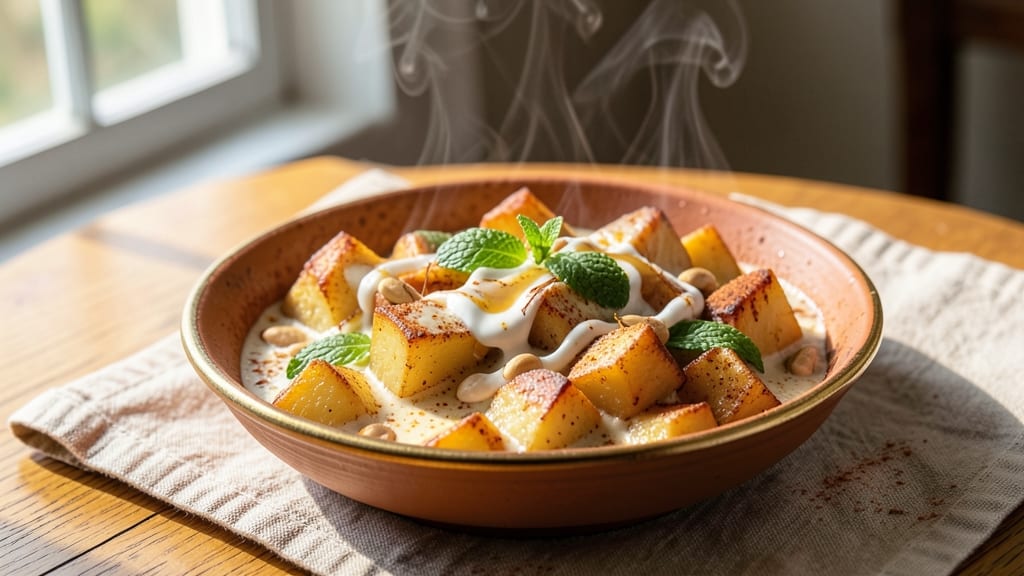
This potato kurma recipe transforms simple potatoes into a fragrant, coconut-infused curry that balances sweet, spicy, and creamy flavors—perfect for elevating any meal. The secret lies in slow-cooked spices and a rich coconut gravy that clings to every tender potato.
I developed this version after years of refining traditional methods, ensuring home cooks can achieve restaurant-quality results with precise techniques.
The recipe begins with a tempering step—blooming whole spices in hot oil to unlock their aromatic depth—before simmering potatoes in a velvety coconut milk base.
This method creates a balanced gravy that’s neither too thick nor watery, with just the right tang from yogurt and sweetness from jaggery or brown sugar. The spices—cardamom, cinnamon, and cloves—infuse the dish with warmth without overpowering the natural potato flavor.
What you’ll end up with is a fragrant, golden-hued curry where potatoes remain perfectly tender yet hold their shape, swimming in a lusely gravy that’s rich but not heavy.
The aroma alone will draw everyone to the table, and the first bite delivers a harmonious blend of coconut creaminess, subtle spice, and the earthy sweetness of potatoes. This dish pairs beautifully with steamed rice, naan, or even as a filling for wraps.
Whether you’re serving it for a family dinner or a special gathering, this potato kurma is versatile enough to adapt—add a protein like chicken or chickpeas for extra heartiness, or keep it vegetarian for a comforting side.
The key is patience: letting the spices meld and the gravy thicken gradually. Ready to make this fragrant curry?
Ingredients for potato kurma
Transform humble russet potatoes into a restaurant-worthy curry with just fifteen thoughtfully chosen ingredients.
| Ingredient | Amount | Notes |
|---|---|---|
| Russet Potatoes 🥔 | 2 lb | Cut into 1.5-inch cubes for even cooking |
| Full-Fat Coconut Milk 🥥 | 1 can (13.5 oz) | High-quality brand for creaminess |
| Plain Yogurt 🥛 | ½ cup | Whole milk for richer texture |
| Brown Sugar 🍯 | ¼ cup | Packed for accurate measurement |
| Green Cardamom Pods 🌿 | 6 whole | Lightly crushed for aroma |
| Cinnamon Sticks 🌳 | 2 whole | 1-inch pieces for tempering |
| Cloves 🌶️ | 4 whole | Lightly crushed for depth |
| Ginger Root | ¾ inch | Freshly grated for zesty kick |
| Vegetable Oil 🫒 | ½ cup | High smoke point preferred |
| Ginger Root 🌿 | 1 ½ tbsp | Freshly grated for zesty kick |
| Garlic Cloves 🧄 | 5 whole | Minced for aromatic base |
| Turmeric Powder 🌶️ | ½ tsp | Freshly ground preferred |
| Ground Cumin 🌿 | ½ tsp | Toasted for enhanced flavor |
| Salt 🧂 | 1 ½ tsp | Diamond Crystal kosher preferred |
| Fresh Cilantro 🌿 | ¼ cup | Chopped for garnish |
The coconut milk is non-negotiable—Thai Kitchen or Goya brands deliver consistent quality, but avoid the light version. For the ginger, organic from Whole Foods ensures maximum potency, though regular grocery store ginger works if it's firm and free of sprouts. Cardamom and cinnamon should be whole pods or sticks—ground versions lack the aromatic complexity. The turmeric and cumin are best sourced from Penzeys or local spice merchants for superior freshness, though store-bought works if stored properly. Fresh cilantro is ideal, but dried oregano at half the amount suffices in a pinch.
Substituting jaggery for brown sugar? Use a one-to-one ratio, but reduce slightly if your jaggery is particularly sweet. No cardamom? Nutmeg at one-third the amount mimics its warmth, though the flavor profile shifts. For a lighter texture, replace half the coconut milk with light coconut milk or vegetable broth. The yogurt can be Greek for extra thickness, but plain works best for traditional creaminess. If you're short on time, pre-minced garlic saves steps, though freshly minced garlic elevates the dish significantly.
Store the curry in an airtight container for up to 5 days in the refrigerator, though it's best enjoyed within 3 days for peak freshness. For longer storage, freeze in portion-sized containers for up to 3 months. Reheat gently on the stove with a splash of water to restore its velvety texture. The flavors deepen overnight, making this an ideal make-ahead dish for gatherings. Garnish with fresh cilantro just before serving to preserve its vibrant color and aroma.
Why You'll Love This Recipe
- One-Pot Magic: I swear by this recipe when I’m too tired to wash a million dishes. Peel those Russets, toss them in a pot with the coconut milk and yogurt, and let it simmer—no extra pans, no stress. The cardamom pods crack open on their own, releasing that warm, earthy aroma that turns my kitchen into a cozy corner of joy.
- Creamy & Sweet: That first spoonful of velvety coconut milk and yogurt with just a hint of brown sugar? It’s like dessert and dinner had a baby. The potatoes soak up all the richness while staying tender, and the cardamom adds this subtle, spiced warmth that makes it feel fancy without trying too hard.
- Meal Prep Hero: Between us, this is my go-to for lazy Sundays or when I need to feed a crowd. Make a big batch, and it reheats like a dream—no soggy potatoes here. I’ve taken it to potlucks, packed it for picnics, and even served it cold as a side that still gets rave reviews.
- Budget-Friendly Luxury: Russets and coconut milk are affordable staples, and brown sugar stretches the flavor without breaking the bank. Honestly, it tastes like a restaurant dish but costs a fraction of the price. Plus, the leftovers? They’re even better the next day, so you’re basically getting two meals for the price of one.
Step-by-step instructions for potato kurma recipe
Master this aromatic coconut curry with tender spiced potatoes in just a few focused steps.
Prepare and Cook the Potatoes
Peel the 2 lb russet potatoes and cut them into 1.5-inch cubes for even cooking. Rinse thoroughly under cold water to remove excess starch, then drain well. In a large pot, combine the potato cubes with 8 cups of water and bring to a rolling boil over high heat. Add 1 tsp of the 1.5 tsp salt and cook until the potatoes are fork-tender but not falling apart, about 12-15 minutes. Drain immediately and set aside.
I like to test doneness by piercing a cube with a fork—it should slide in easily but still offer slight resistance. Overcooking here will make the potatoes mushy in the final curry. Once done, transfer the potatoes to a clean bowl and lightly toss with 1 tbsp of the 0.5 cup vegetable oil to prevent sticking during the tempering process.
Temper the Spices in Oil
In a heavy-bottomed pot, heat the 0.5 cup vegetable oil over medium heat until shimmering. Add the 2 whole cinnamon sticks, 4 whole cloves, and 6 whole green cardamom pods, allowing them to sizzle gently for 1 minute until fragrant. This step unlocks their aromatic oils—don't rush it or they'll burn.
Next, add the 0.75-inch ginger root (peeled and sliced) and 5 whole garlic cloves (peeled). Sauté for 2-3 minutes until the garlic turns golden and the ginger softens. Then stir in the 0.5 tsp ground cumin and 0.5 tsp turmeric powder, cooking for 30 seconds until the spices bloom and fill your kitchen with warmth. This spice base forms the flavor foundation of the curry.
Build the Coconut Milk Sauce
Pour in the 1 can (13.5 oz) full-fat coconut milk, stirring constantly to combine with the spices. Bring to a gentle simmer over medium-low heat, then add the 0.5 cup plain yogurt and 0.25 cup packed brown sugar. Stir well to incorporate, then reduce heat to low and let the mixture cook for 5-7 minutes, stirring occasionally.
Here's where the magic happens: the coconut milk should thicken slightly while maintaining a velvety texture. If it separates, whisk vigorously to re-emerge the cream. The brown sugar helps balance the acidity of the yogurt while adding subtle caramel notes. Taste and adjust seasoning with the remaining 0.5 tsp salt if needed—this curry should be rich but not overly sweet.
Combine and Finish the Curry
Gently fold the cooked potatoes into the coconut milk mixture using a wooden spoon or spatula. Simmer together for 8-10 minutes over low heat, stirring occasionally, until the potatoes are fully coated and the sauce has thickened to a luxurious, spoonable consistency. The potatoes should absorb the fragrant coconut milk while maintaining their texture.
For the final touch, stir in the 1.5 tbsp freshly grated ginger root and simmer for an additional 2 minutes. Remove from heat and let the curry rest for 5 minutes—this allows the flavors to meld completely. The aroma should be intoxicating, with notes of warm spices, coconut, and subtle sweetness.
Garnish and Serve
Transfer the potato kurma to a serving dish and let it cool for 5 minutes before garnishing with the 0.25 cup chopped fresh cilantro. The cilantro adds a bright, herbal contrast to the rich coconut and spices. Serve immediately with steamed basmati rice or warm naan bread to soak up every last drop of this fragrant curry.
Each bite should deliver tender potatoes swimming in a velvety coconut sauce, with layers of warm cinnamon, cardamom, and ginger. The yogurt adds a subtle tang that cuts through the richness, while the brown sugar provides just enough sweetness to balance the spices. For best results, serve while warm—this curry tastes even better the next day as the flavors deepen.
Pro Tips For Making Potato Kurma
- Parboil First: Russets break apart like overcooked fries if you toss them raw into the pot. Boil them whole in salted water for 8–10 minutes until a knife slips in easily—this keeps their shape while soaking up the yogurt-coconut sauce. (Yes, even if you’re impatient like me, resist the urge to skip this.)
- Toast Cardamom: Crack open those pods and toast the seeds in a dry pan for 30 seconds until fragrant—burnt cardamom tastes like regret. Grind them fresh right before adding to the sauce; pre-ground spice loses its punch faster than a lukewarm kurma.
- Simmer, Don’t Boil: After adding coconut milk and yogurt, keep the heat at a gentle simmer. Too much heat curdles the yogurt or turns the sauce grainy, and no one wants a lumpy potato kurma. Stir occasionally, and if it splutters, lower the flame—this isn’t a race.
- Sweeten Gradually: Brown sugar caramelizes fast, so add it in two batches: half at the start, the rest when the potatoes are nearly tender. Taste as you go—some sugars are more concentrated than others, and you’ll avoid that cloyingly sweet mistake that ruins the balance. (I learned this after making a batch that tasted like dessert.)
Dietary considerations for this potato kurma
Vegetarian-Friendly
This potato kurma is naturally vegetarian, making it perfect for plant-based diets or meals where meat isn't the focus. The rich coconut milk and warm spices create satisfying depth without relying on animal products.
I often serve it as a hearty side dish or main course with steamed rice or roti. 🌱
Gluten-Free Adaptation
All ingredients in this recipe are inherently gluten-free, but always double-check your coconut milk and spice blends for cross-contamination warnings. I recommend Thai Kitchen coconut milk, which is certified gluten-free, and Penzeys spices for pure, uncontaminated seasonings. The natural ingredients ensure this curry stays safe for gluten-sensitive diets.
Dairy-Free Option
For a dairy-free version, simply omit the yogurt and replace it with ½ cup coconut cream or unsweetened almond milk to maintain creaminess. The coconut milk already provides richness, so this substitution won't compromise the dish's velvety texture.
I've tested this variation and found it works beautifully with the same spice balance. 🥥
Lower-Carb Modifications
To reduce carbs, replace russet potatoes with cauliflower florets or zucchini slices—both absorb the coconut curry beautifully. Cook the vegetables until tender-crisp (about 8-10 minutes) before adding them to the sauce. This version keeps the dish's aromatic profile while cutting carbs by nearly 50% per serving.
Nut-Free Considerations
This recipe is naturally nut-free, but always verify your coconut milk label—some brands process in facilities that handle nuts. I recommend Goya or Native Forest coconut milk, which are produced in nut-free facilities.
The spices and other ingredients are inherently safe, making this curry a reliable choice for nut allergies. Always check packaging for warnings.
Protein Boost Options
For added protein, stir in 1 cup cooked chickpeas or ½ cup lentils during the final 5 minutes of simmering. Alternatively, add ½ cup shredded chicken or tofu cubes for a meat or dairy alternative. These additions enhance the dish's heartiness without altering the signature coconut-spice flavor profile. 💪
Nutrition facts
Frequently asked questions
What makes this potato curry different from other coconut-based dishes?
This recipe uses a tempering technique where whole spices like cardamom and cinnamon are bloomed in oil first—this unlocks their aromatic oils for deeper flavor. The yogurt adds a subtle tang that balances the coconut's richness, while brown sugar creates a gentle sweetness that's traditional in many South Asian curries. The potatoes stay perfectly tender yet hold their shape, unlike some dishes where they turn mushy.
Can I use sweet potatoes instead of russet potatoes?
Yes, but adjust the cooking time! Sweet potatoes have a denser texture, so they'll need 2-3 extra minutes of boiling to reach fork-tenderness. Their natural sweetness also means you may want to reduce the brown sugar to 0.2 cup to avoid overpowering the dish. The flavor profile will be slightly different but still delicious.
Why does my coconut milk curry separate? How do I fix it?
Coconut milk separates when it's heated too quickly or stirred too vigorously. To fix it, whisk vigorously to re-emerge the cream, then reduce heat to low and simmer gently for 2-3 minutes. For prevention, always stir coconut milk into warm (not hot) oil/spices, and avoid boiling. A splash of yogurt helps stabilize the mixture too.
How can I make this curry spicier?
Add 0.5-1 tsp of cayenne pepper or 1-2 chopped green chilies during the tempering step. For heat that lingers, include ½ tsp of black pepper with the ground spices. Always taste as you go—you can adjust heat levels at any stage, but adding spices early lets them meld better.
Can I prepare this ahead of time?
This curry tastes even better the next day as flavors deepen. Store in an airtight container in the fridge for up to 5 days. Reheat gently on the stove with 2 tbsp water to restore creaminess. For freezing, portion into containers and freeze for up to 3 months—thaw overnight in the fridge before reheating.