
Side Dishes
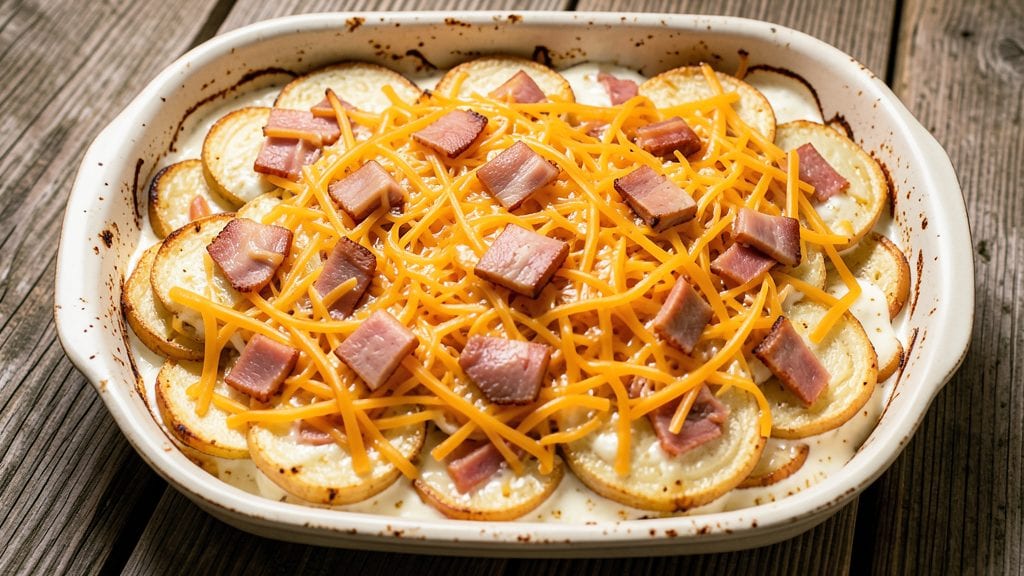
This Pioneer Woman ham and potato casserole recipe delivers the ultimate comfort food experience—crispy vinegar-kissed potatoes layered with melty cheese and savory ham. The secret lies in the tangy vinegar wash that creates that signature crunch while keeping the potatoes tender inside.
I first tried this recipe during a chilly weekend when I needed something hearty enough to feed a crowd but simple enough to prepare ahead.
The beauty of this casserole is its foolproof method: thinly sliced potatoes absorb the flavorful broth while baking, creating fluffy layers that hold together perfectly. A creamy cheese sauce binds everything, and the vinegar wash on top ensures every bite has that satisfying crunch.
It’s the kind of dish that transforms a simple weeknight dinner into a showstopping centerpiece without requiring advanced skills.
What makes this recipe truly special is how it balances textures—crispy edges, creamy potatoes, and tender ham—all while delivering rich, savory flavor. The cheese layers melt into golden perfection, and the vinegar-kissed topping adds a tangy contrast that keeps every bite interesting.
It’s the perfect side for holidays or family gatherings, but it’s simple enough to make for a regular dinner too.
Ready in about 45 minutes with minimal prep, this casserole is ideal for meal preppers or anyone who loves hands-off cooking. The flavors only deepen as it sits, making it even better the next day. Let’s get to the step-by-step instructions so you can experience this classic for yourself.
Ingredients for pioneer woman ham and potato casserole
Thinly sliced potatoes meet melty cheese and tangy vinegar for this crowd-pleasing comfort dish.
| Ingredient | Amount | Notes |
|---|---|---|
| Russet Potatoes 🥔 | 5 lb | Thinly sliced, peeled if preferred |
| White Vinegar 💧 | ½ cup | Distilled for tangy crunch |
| Unsalted Butter 🧈 | ½ cup | Melted for creamy sauce |
| Heavy Cream 🥛 | 1 cup | Full-fat for richness |
| Shredded Sharp Cheddar Cheese 🧀 | 2 cups | Freshly shredded preferred |
| Diced Ham 🥓 | 2 cups | High-quality, low-sodium |
| Chicken Broth 💧 | 2 cups | Low-sodium preferred |
| All-Purpose Flour 🌾 | 2 tbsp | For thickening sauce |
| Salt 🧂 | 1 ½ tsp | Adjust to taste |
| Ground Black Pepper 🌶️ | ½ tsp | Freshly ground preferred |
| Garlic Powder 🧄 | 1 tsp | For savory depth |
| Dried Parsley 🌿 | 1 tbsp | For garnish (optional) |
| Bacon 🥓 | ½ lb | Cooked and crumbled (optional) |
The potatoes are the foundation—Russet potatoes work best for their fluffy texture. Look for firm, unblemished potatoes with no sprouts. Slice them 1/8-inch thick for even cooking; a mandoline makes this job easier. For the vinegar wash, distilled white vinegar delivers the cleanest tang—apple cider vinegar works too but has a slightly sweeter note. The cheese should be freshly shredded; pre-shredded gets clumpy. Kraft or Cabot brands are reliable, but anything labeled 'sharp' will give you that classic cheesy bite.
No bacon? Extra ham or a sprinkle of crispy fried onions adds texture. Running low on heavy cream? Half-and-half works at the same amount, though the sauce will be slightly lighter. The chicken broth can be swapped for beef broth or even extra vegetable broth, but chicken adds a subtle sweetness that pairs perfectly. For a dairy-free option, unsweetened almond milk replaces the heavy cream (though the sauce will be thinner). The flour is just to thicken—if you're gluten-free, cornstarch works 1:1. And if you're short on time, pre-cooked ham saves steps, though fresh ham has better flavor.
This casserole tastes even better the next day—double the batch if you can. Store leftovers in the fridge for 4-5 days or freeze for up to 3 months. For freezing, assemble the casserole in a baking dish, cover tightly with foil, and bake straight from frozen (add 15 minutes to the cooking time). When reheating, cover with foil for the first 10 minutes to prevent over-browning. The vinegar wash keeps best if made fresh, but you can prep the rest of the casserole a day ahead and add the vinegar just before baking.
Why You'll Love This Recipe
- One-Pot Magic: I swear by this when I’m too tired to wash dishes. Slice those potatoes, layer them with ham, and dump the creamy cheese sauce on top—then bake. That’s it. No side dishes, no extra pans, just golden, bubbly perfection with zero fuss.
- Cheesy Crispy Edge: Between us, the vinegar trick in the potatoes makes all the difference. It keeps them fluffy inside while the edges get that addictive, buttery crisp. Top it with sharp cheddar that melts into a gooey blanket—honestly, I’ll take this over fries any day.
- Lunchbox Hero: This casserole reheats like a dream, so I make a big batch on Sundays. Pack it for lunches, bring it to potlucks, or freeze half for when I’m too wiped to cook. My kids actually eat their veggies when they’re hidden in this—no questions asked.
- Budget Stretch: Russets and cheddar are cheap, and a single ham steak stretches across multiple servings. I’ll be real: this feeds six for under $15, and the leftovers? Even better the next day. It’s my go-to when I need to feed a crowd without breaking the bank.
Step-by-step instructions for vinegar-kissed ham and potato casserole
This method delivers crispy vinegar-bathed potatoes with layers of creamy, cheesy ham goodness.
Prepare the Vinegar Potato Base
Preheat your oven to 375°F. Peel and thinly slice the 5 lb russet potatoes into ¼-inch thick rounds. You'll need about 8 cups of sliced potatoes. Toss them immediately with the 0.5 cup white vinegar in a large bowl until evenly coated. This acid treatment creates the signature crispy texture while tenderizing the potatoes.
Spread the vinegar-soaked potatoes evenly across two 9x13-inch baking dishes. Arrange them in a single layer without overlapping, as this prevents proper browning. Let them sit uncovered on the counter for 15 minutes while you prepare the remaining ingredients. This resting period allows the vinegar to work its magic on the potato surfaces.
Create the Creamy Ham and Cheese Mixture
In a medium saucepan, melt the 0.5 cup unsalted butter over medium heat. Once melted, whisk in the 2 tbsp all-purpose flour to create a roux. Cook for 2 minutes until the mixture thickens slightly and loses its raw flour taste. Slowly pour in the 2 cups chicken broth while whisking continuously to prevent lumps.
Reduce heat to low and stir in the 1 cup heavy cream, 2 cups diced ham, 2 cups shredded sharp cheddar cheese, 1.5 tsp salt, 0.5 tsp ground black pepper, and 1 tsp garlic powder. Simmer for 5-7 minutes until the sauce thickens enough to coat the back of a spoon. Remove from heat and stir in the 1 tbsp dried parsley. If using, fold in the 0.5 lb cooked and crumbled bacon at this stage.
Assemble the Casserole Layers
Carefully spoon half of the warm cheese mixture over the vinegar-soaked potatoes in each baking dish. Use a spatula to spread it evenly, making sure each potato slice gets coated with the creamy sauce. The heat from the sauce will begin melting the cheese immediately, creating that perfect pull-apart texture.
Cover both dishes tightly with aluminum foil and bake for 45 minutes. This initial baking time allows the potatoes to soften and the cheese to begin melting completely. Real talk: Don't peek or lift the foil during this time—steam is your friend here, and you want to maintain maximum moisture for tender potatoes.
Finish with Crispy Top and Golden Cheese
Remove the foil and increase oven temperature to 400°F. Return the casseroles to the oven and bake uncovered for 20-25 minutes until the tops are deep golden brown and the cheese has formed a bubbly, crispy crust. You'll notice the edges start to brown first—that's your signal the casserole is nearly done.
Let the casseroles rest for 10 minutes before serving. This resting period allows the layers to set slightly, making it easier to slice through the creamy potato mixture without everything falling apart. The vinegar potatoes should be crispy on the edges and tender throughout, with that signature tangy crunch in every bite.
Serve with Perfect Texture
Slice the casserole into 8 equal portions and serve immediately. Each bite should deliver the contrast of crispy vinegar potatoes at the edges, creamy cheese sauce throughout, and tender ham pieces. The bacon, if used, adds a smoky depth that ties everything together. Garnish with additional dried parsley if desired for a pop of color.
This casserole tastes even better the next day when the flavors have fully melded, but the crispy potato edges are best enjoyed fresh. If making ahead, assemble completely, bake until just set (before the final crisping step), then refrigerate. Reheat covered at 350°F for 30 minutes before finishing under the broiler for 5 minutes to restore crispiness.
Pro Tips For Making Pioneer Woman Ham And Potato Casserole
- Boil Potatoes 10 Minutes: Cut Russets into even ½-inch slices and boil them for exactly 10 minutes before layering—no more, no less. This keeps them tender but still able to hold shape when baked, so they don’t turn to mush under the ham and cheese. (Yes, I’ve learned the hard way that 12 minutes means sad, soggy potatoes.)
- Soak Ham in Vinegar: Toss the ham slices in white vinegar for 10 minutes before assembling—it tenderizes the meat and cuts through any saltiness. Skip this, and the ham stays tougher, especially if it’s thick-cut. (I used to skip it until my first batch tasted like chewy leather.)
- Layer Cheese Lightly: Sprinkle the shredded cheddar in thin, even layers between potato slices—don’t dump it all on top. This prevents a greasy cheese puddle and lets every potato slice get melty, gooey goodness. (My first attempt looked like a cheese avalanche, and it was a mess.)
- Cover with Foil Early: Tent the casserole with foil for the first 45 minutes of baking, then remove it for the last 15 to get a golden crust. This keeps the potatoes from drying out while the top crisps up—no more rubbery tops or undercooked centers. (I used to bake it uncovered the whole time and wondered why it never got that perfect finish.)
Serving suggestions for this recipe
Classic Pairings
This casserole shines alongside roasted green beans tossed with lemon zest and toasted almonds—the bright acidity cuts through the richness beautifully. I like to serve it with a simple side salad of mixed greens, cherry tomatoes, and a red wine vinaigrette for freshness.
For a heartier spread, add buttery dinner rolls or crusty sourdough to soak up the creamy sauce. 🥗
Protein Add-Ons
Boost the meal by serving with grilled chicken thighs or pan-seared pork chops—both pair perfectly with the tangy, cheesy flavors. If you love seafood, baked salmon with a dill sauce adds a light, elegant contrast.
For a vegetarian option, roasted mushrooms with garlic butter bring deep umami notes that complement the casserole. 🍗
Beverage Pairings
A bold red wine like Cabernet Sauvignon or Merlot stands up to the richness, while a crisp white such as Sauvignon Blanc balances the tangy vinegar. For non-alcoholic options, sparkling apple cider or iced hibiscus tea with lemon slices refreshes the palate.
I always keep a pitcher of lemonade on hand—its sweetness contrasts the savory, salty, and tangy layers. 🍷
Make-Ahead Serving
This casserole reheats beautifully, making it perfect for meal prep. Assemble it the night before, refrigerate, and bake straight from the fridge (add 15 minutes to the cooking time). For a buffet-style serving, arrange it on a wooden board with fresh parsley and sliced green onions for color.
Garnish with crumbled bacon or extra sharp cheddar for a restaurant-worthy presentation. 🍽️
Holiday Presentation
For Thanksgiving or Christmas, elevate the dish by adding a sprinkle of smoked paprika to the cheese sauce and topping with crispy fried onions before baking. Serve in a cast-iron skillet for a rustic touch, or transfer to a ceramic platter for a festive look.
Pair with homemade cranberry sauce and roasted Brussels sprouts for a complete holiday spread. 🎄
Kid-Friendly Serving
Cut the casserole into fun shapes with a cookie cutter—kids love the novelty! Serve with carrot sticks and ranch dip for a balanced meal. For picky eaters, offer a small side of plain mashed potatoes alongside to ease into the flavors.
The crispy vinegar potatoes often win over even the most hesitant little diners. 🧒
Nutrition facts
Frequently asked questions
Can I use sweet potatoes instead of russet potatoes?
Sweet potatoes will work, but the texture and flavor will differ. Sweet potatoes have a denser, slightly sweeter taste that won't crisp up as nicely with the vinegar wash. If you prefer them, try slicing 1/4-inch thick and baking at 400°F for 5-10 minutes longer to ensure they're fully tender. The creamy cheese sauce will still bind well, but the vinegar crunch won't be as pronounced.
Why does the vinegar wash make the potatoes crispy?
The vinegar breaks down the potato cell walls slightly, creating a thin, crispy exterior while keeping the inside tender. The acid also helps draw out moisture, which evaporates during baking, leaving you with that signature crunch. For best results, use distilled white vinegar and let the potatoes sit uncovered for 15 minutes before adding the cheese mixture.
Can I make this casserole in a single 9x13-inch dish?
Yes, but you'll need to adjust the baking time. Use a 9x13-inch dish and spread the potatoes in a single layer. After adding the cheese mixture, cover and bake for 35 minutes at 375°F, then uncover and bake 15-20 minutes longer at 400°F. The center may take slightly longer to cook through, so check for doneness with a fork.
How do I fix a soggy casserole?
Soggy casseroles usually happen from overcooking the potatoes before adding the cheese or not baking long enough to crisp the top. To salvage it, preheat the broiler and place the casserole on a baking sheet. Broil for 3-5 minutes until the top is golden and bubbly. If the potatoes are still undercooked, bake at 375°F for 10-15 minutes longer, covered with foil.
Can I freeze this casserole before baking?
Assemble the casserole in a baking dish, cover tightly with foil, and freeze for up to 3 months. When ready to bake, thaw in the fridge overnight, then bake as directed (add 15 minutes to the cooking time). For best results, bake straight from frozen if using a 9x13-inch dish—just increase the time by 20-25 minutes at 375°F.