
Side Dishes
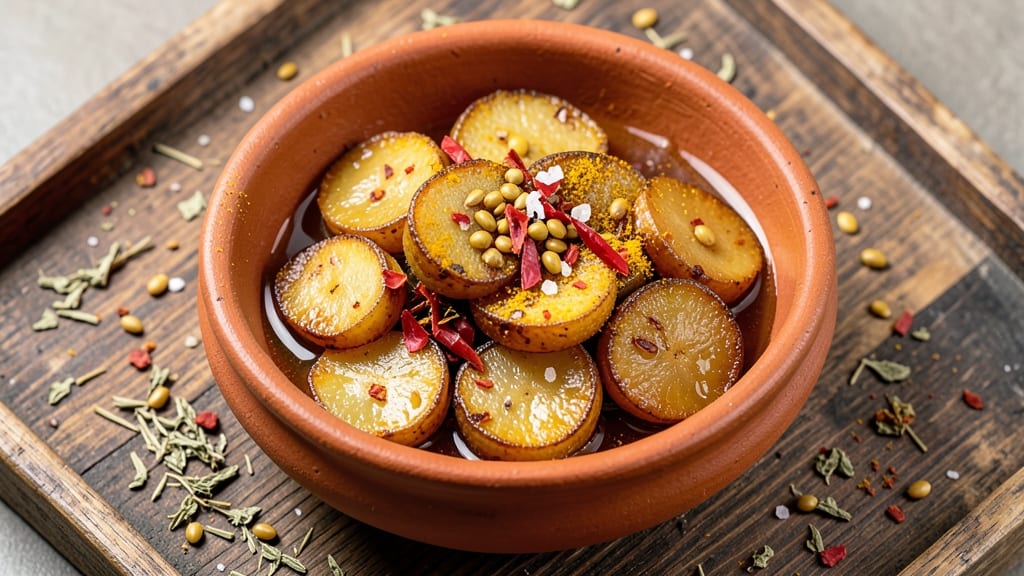
This Nepali potato pickle recipe transforms simple potatoes into a spiced, tangy crunch that pairs perfectly with dal bhat or grilled meats. The traditional method involves fermenting potatoes in a vinegar-mustard-spice blend, creating a dish that balances heat, acidity, and texture.
I first discovered it during a visit to Kathmandu, where it was served as a side that elevated every meal—now I make it at home for that same restaurant-quality depth.
The process begins with thinly sliced potatoes that soak up the aromatic vinegar-mustard marinade while spices like turmeric, mustard seeds, and red chili develop complex flavors over 7-10 days of fermentation.
The result is a pickle with crisp edges and tender centers, where the mustard adds a subtle bite and the vinegar keeps it tangy for months. This isn’t just a side dish—it’s a flavor foundation that transforms ordinary meals into something special.
What makes this recipe work is the patient fermentation, which builds layers of flavor without overpowering the potatoes. The mustard seeds contribute their signature pungency, while the vinegar ensures the pickle stays fresh and vibrant.
Perfect for meal prep, this pickle improves with time—making it ideal for stocking your pantry with authentic Nepali flavors.
Serve it alongside dal, rice, or grilled chicken to experience the full depth of Nepali cuisine. The balance of heat, tang, and crunch makes every bite memorable. Let’s get started on this traditional recipe that brings a taste of Nepal to your kitchen.
Ingredients for nepali potato pickle
Transform humble potatoes into a vibrant Nepali pickle with these carefully balanced ingredients.
| Ingredient | Amount | Notes |
|---|---|---|
| Russet Potatoes 🥔 | 2 lb | Thinly sliced for even pickling |
| White Vinegar 💧 | 1 cup | Distilled preferred for balance |
| Yellow Mustard Seeds 🌶️ | 2 tbsp | Whole seeds for authentic texture |
| Ground Turmeric 🌿 | 1 ½ tsp | Freshly ground preferred |
| Red Chili Powder 🌶️ | 1 tbsp | Adjust for preferred heat level |
| Salt 🧂 | 1 ½ tbsp | Diamond Crystal preferred |
| Fresh Garlic Cloves 🧄 | 6 cloves | Minced for even distribution |
| Fresh Ginger 🌿 | 1 ½ tbsp | Grated for aromatic depth |
| Asafoetida Powder 🌶️ | ¼ tsp | Essential for Nepali authenticity |
| Fenugreek Seeds 🌿 | ½ tsp | Toasted for enhanced flavor |
| Black Salt 🧂 | ½ tsp | Kala namak for signature taste |
| Mustard Oil 🫒 | ½ cup | Traditional but optional |
The potatoes are the foundation—Russet works best for its crisp texture after pickling. For the mustard seeds, Whole Foods or Indian specialty stores carry the highest quality yellow seeds, which are essential for that signature Nepali bite. Fresh turmeric and ginger should be vibrant in color—no graying or wilting. Asafoetida and fenugreek seeds are non-negotiable for authenticity; Spicewalla or Penzeys offer excellent quality. The black salt (kala namak) adds a unique sulfurous note that's characteristic of Nepali cuisine—look for it in Indian grocery sections. For the vinegar, distilled white vinegar is preferred as it won't overpower the delicate spice balance.
No mustard oil? Olive oil or sesame oil works as a substitute, though the flavor profile will differ slightly. Fresh turmeric unavailable? Ground turmeric at double the amount suffices, though texture will vary. The red chili powder can be swapped for fresh red chili minced if you prefer a chunkier texture. For those avoiding vinegar, lemon juice at half the quantity creates a similar tang. All spices should be toasted lightly before grinding to enhance their aromatic qualities. The garlic and ginger should be freshly grated or minced—pre-minced jarred versions lack potency.
Store the completed pickle in sterilized glass jars with a tight seal to maintain crispness. Keeps for 3-4 months in the refrigerator or 6 months in the freezer. The flavor deepens over time, so ferment for at least 7 days before eating. For meal prep, portion into individual containers—this pickle pairs beautifully with dal, rice, or grilled vegetables. The mustard oil, if used, should be added just before serving to preserve its freshness.
Why You'll Love This Recipe
- Here’s what sold me: the vinegar cuts through the richness of the potatoes while the mustard seeds and chili powder deliver a slow-building warmth. It’s not just spicy—it’s layered, with that bright, funky finish that makes every bite irresistible.
- No-Fuss Prep: I swear by this recipe because it’s literally dump-and-wait. Slice the Russets, toss them in vinegar and spices, and let time do the work—no babysitting required. That turmeric and chili powder? They infuse the potatoes in hours, not hours of active cooking.
- Tangy Heat Magic: Here’s what sold me: the vinegar cuts through the richness of the potatoes while the mustard seeds and chili powder deliver a slow-building warmth. It’s not just spicy—it’s layered, with that bright, funky finish that makes every bite irresistible.
- Party-Prep Powerhouse: Between us, this is my secret weapon for gatherings. Serve it with dal or momos, or just pile it on a platter—it’s the kind of dish that disappears fast without needing a fancy presentation. Plus, the flavors deepen the longer it sits, so it’s even better the next day.
Step-by-step instructions for Nepali potato pickle
Master this traditional Nepali recipe with precise techniques for vibrant color and complex flavor layers.
Prepare and Slice the Potatoes
Begin by thoroughly washing the 2 lb russet potatoes under cold running water to remove any dirt or debris. Using a sharp chef's knife, carefully slice the potatoes into ¼-inch thick rounds. For even pickling, maintain consistent thickness throughout—this ensures uniform cooking and texture.
As you slice, arrange the rounds in a single layer on a clean kitchen towel to absorb excess moisture. This step is crucial because residual water dilutes the spice mixture and prevents proper flavor absorption. Once the potatoes are completely dry to the touch, transfer them to a large mixing bowl.
Toast the Spices for Depth
In a small dry skillet over medium heat, toast the 2 tbsp yellow mustard seeds and 0.5 tsp fenugreek seeds until they release their aromatic oils and begin to sizzle—this should take about 1-2 minutes. Immediately transfer them to a spice grinder along with the 0.25 tsp asafoetida powder and grind into a fine powder. This toasting step intensifies their flavors and removes any bitterness.
In the same skillet, add the 6 cloves fresh garlic cloves and 1.5 tbsp fresh ginger (grated), cooking for 30 seconds until fragrant but not browned. Remove from heat and let cool slightly before adding to the potatoes. The garlic and ginger should retain their bright color and sharp aroma—this indicates they haven't overcooked.
Combine Spices and Vinegar Mixture
In a separate bowl, whisk together the 1 cup white vinegar, 1.5 tsp ground turmeric, 1 tbsp red chili powder, 1.5 tbsp salt, 0.5 tsp black salt, and the toasted spice mixture. The turmeric should dissolve completely, turning the liquid a vibrant yellow. If any powder remains undissolved, strain through a fine-mesh sieve to ensure a smooth texture in the final pickle.
Pour this spiced vinegar mixture over the sliced potatoes in the mixing bowl, ensuring every potato slice is fully coated. Add the cooked garlic and ginger, then gently toss everything together with clean hands. The potatoes should absorb the liquid immediately, and you should notice the turmeric beginning to stain them a pale yellow.
Infuse with Mustard Oil (Optional)
If using the 0.5 cup mustard oil, heat it gently in a small saucepan over low heat until it reaches 160°F—just hot enough to infuse the spices but not smoke. Pour the warm oil over the potato mixture and toss again to ensure even distribution. The oil should coat the potatoes and create a glossy sheen, indicating proper saturation.
For best results, let the mixture sit at room temperature for 10 minutes to allow the flavors to meld. This resting period is essential—it lets the spices penetrate the potatoes and creates a harmonious balance between the tangy vinegar, aromatic spices, and earthy mustard oil.
Store and Develop Flavor
Transfer the potato mixture to a clean, airtight glass jar or container, pressing down gently to remove any air bubbles. Seal tightly and refrigerate for at least 24 hours before serving—this minimum resting time allows the flavors to fully develop. For optimal taste, wait 48 hours before consuming, as the spices will continue to infuse and the vinegar's acidity will mellow.
The finished pickle should have a vibrant yellow hue from the turmeric, a subtle heat from the chili, and a complex depth from the mustard seeds and asafoetida. The texture should be firm yet tender, with a satisfying crunch that softens slightly as it sits. Serve as a side dish with dal, rice, or any Nepali meal for an authentic flavor experience.
Pro Tips For Making Nepali Potato Pickle
- Parboil First, Then Slice: Russets turn to mush if you slice them raw—trust me, I’ve ruined batches. Boil whole potatoes for 8-10 minutes until a knife slides in easily, then cool and slice. The starch stays intact, and your pickle holds shape instead of turning to paste.
- Toast Mustard Seeds Low: Yellow mustard seeds burn faster than you think. Start on medium-low heat and keep them moving—just until they pop and smell nutty. High heat turns them bitter, and that’s the last thing you want in a bright, tangy pickle.
- Use Cold Vinegar: Pouring hot vinegar over sliced potatoes makes them soggy. Chill the vinegar in the fridge for 10 minutes first, then mix it in. The cold liquid shocks the potatoes into keeping their texture, and your pickle stays crisp for weeks.
- Layer Turmeric Last: Turmeric stains like a boss—especially on your hands and bowl. Add it to the vinegar mix right before combining with the potatoes. This keeps your kitchen (and your clothes) cleaner, and the color stays vibrant longer.
Storing and reheating this recipe
Refrigerator Storage
The key to preserving your Nepali potato pickle is using sterilized glass jars with tight-sealing lids. After the initial 24-hour rest, transfer the mixture to jars, pressing down gently to eliminate air bubbles.
Store in the refrigerator where it will maintain its crisp texture and vibrant flavors for up to 3-4 months. I always use Pyrex glass jars—they’re sturdy and won’t absorb odors. The acidity from the vinegar helps preserve the potatoes, but refrigeration is essential to prevent spoilage. 🥫
Freezer Preservation
For long-term storage, portion the pickle into freezer-safe glass containers or heavy-duty plastic bags, leaving 1 inch of headspace for expansion. Seal tightly and freeze for up to 6 months. When ready to use, thaw in the refrigerator overnight—this preserves texture better than microwave reheating.
The mustard oil, if included, should be added fresh after thawing to maintain its potency. Label containers with the date to track freshness. ❄️
Reheating for Texture
Unlike many pickles, Nepali potato pickle doesn’t require reheating—it’s best served cold or at room temperature. However, if you’ve stored it in the freezer and want to revive its crunch, place the jar in a bowl of ice water for 10 minutes after thawing.
This shock treatment helps restore some of the crispness lost during freezing. Avoid microwaving, as it turns the potatoes mushy. For meal prep, portion into small jars so you can grab individual servings without thawing the whole batch. 💡
Flavor Evolution
The magic of this pickle happens over time—the flavors deepen and mellow as the spices infuse further. After the initial 48-hour rest, taste it daily for the first week. The heat from the chili will soften slightly, and the mustard notes will become more pronounced.
For maximum complexity, ferment for 7-10 days before eating. The longer it sits, the more balanced and layered the taste becomes—almost like a fine wine. 🍷
Reviving Stale Pickle
If your pickle loses crispness after prolonged storage, don’t toss it! Place the jar in the refrigerator for 24 hours to let the vinegar rejuvenate the texture. For extra crunch, drain the potatoes and pat them dry with a paper towel, then return them to the jar with fresh vinegar.
The acidity will help restore some of that satisfying bite. This trick works especially well if you’ve stored the pickle for 3 months or more. ✨
Serving Freshly
When serving, always taste the pickle before pairing with your meal—adjust salt or vinegar as needed. The mustard oil, if used, should be added just before serving to preserve its fresh, pungent aroma.
For an elevated presentation, garnish with a sprinkle of toasted cumin seeds or a few fresh cilantro leaves. Serve alongside dal bhat or grilled meats to experience the full depth of Nepali flavors. The contrast of warm, spiced dishes with the cool, tangy pickle is unbeatable. 🌶️
Nutrition facts
Frequently asked questions about Nepali potato pickle
Why does my Nepali potato pickle turn mushy instead of staying crisp?
Excess moisture is the main culprit. Always pat the potato slices completely dry before adding them to the spice mixture—even a little water dilutes the vinegar and prevents proper fermentation. For extra crunch, store the pickle in a sterilized glass jar with a tight seal and refrigerate immediately after mixing. The vinegar helps preserve texture, but proper drying is key.
Can I make this pickle without mustard oil?
Mustard oil is traditional but optional. Substitute with olive oil or sesame oil (½ cup) for a milder flavor. If omitting oil entirely, increase the vinegar to 1.25 cups to maintain tanginess. The mustard seeds and asafoetida will still provide that signature Nepali depth—just with a different texture profile.
How do I adjust the spice level for kids or sensitive palates?
Reduce the red chili powder to ½ tbsp or omit it entirely. For extra mildness, add 1 tsp sugar to balance acidity. The turmeric and mustard seeds remain safe for children, while the vinegar’s tang provides flavor without heat. Always let the pickle sit for 48 hours before serving to mellow any remaining spice.
What’s the best way to use up leftover potato pickle?
This versatile pickle elevates any meal! Mix into dal bhat for extra tang, spread on toast with butter, or toss with roasted vegetables. For a quick snack, pair with yogurt or flatbreads. The mustard notes also make it a great topping for grilled meats or sandwiches. Store leftovers in the fridge for up to 1 week after opening.
Can I make this pickle with sweet potatoes instead of russets?
Sweet potatoes work but require adjustments. Their natural moisture means you’ll need to slice them ⅛-inch thick and dry them thoroughly (even overnight). Reduce vinegar to ¾ cup and add 1 extra tbsp salt to compensate for their mild flavor. The texture will be slightly softer, but the spice blend still shines.