
Beverages
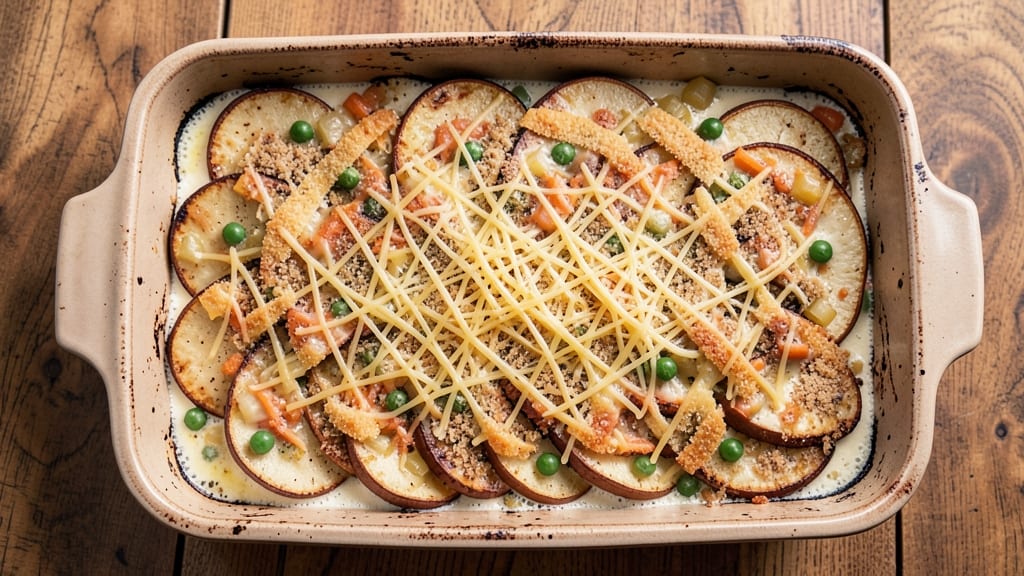
This Latter-Day Saints potato casserole recipe brings comfort and tradition to your table with its signature cheesy, crispy cornmeal topping and hidden vegetables that sneak in nutrition without sacrificing flavor.
Growing up, I learned how this dish became a staple in potlucks and holiday gatherings, where it fed families and neighbors alike with its hearty, satisfying nature. The secret lies in the cornmeal mixture that creates that perfect golden crust while keeping the potatoes tender beneath.
The beauty of this recipe is its simplicity—just a handful of ingredients come together to create a dish that feels both homestyle and special. With a baking time of 45–50 minutes at 350°F, it’s designed to feed a crowd while requiring minimal effort.
The combination of cheddar cheese and cornmeal on top delivers that crispy texture everyone loves, while the creamy potato layer beneath ensures every bite is rich and satisfying.
What makes this casserole truly stand out is how it balances tradition with practicality—hidden vegetables like peas or carrots add nutrients without altering the familiar taste. Perfect for Sunday dinners, potlucks, or holiday meals, it’s a dish that brings people together, just like the communities it was born to serve.
Here’s how to make it shine in your own kitchen.
Once you try this version, you’ll understand why it’s a favorite in Latter-day Saint households. The crispy topping holds up beautifully, and the creamy filling stays moist, making it a crowd-pleaser every time.
Whether you’re serving it at a gathering or simply enjoying a comforting meal at home, this recipe delivers on both tradition and taste.
Ingredients for latter-day saints potato casserole
Just twelve ingredients transform simple potatoes into a crowd-pleasing tradition.
| Ingredient | Amount | Notes |
|---|---|---|
| Russet Potatoes 🥔 | 3 lb | Peeled, thinly sliced for even cooking |
| Yellow Onion 🧅 | 1 whole | Finely chopped, sweet variety preferred |
| Carrots 🥕 | 1 lb | Peeled, grated for hidden veggie texture |
| Frozen Peas 🌱 | 1 cup | Thawed, for subtle sweetness and color |
| Cornmeal 🌾 | 1 cup | Fine grind for crispy topping |
| Sharp Cheddar Cheese 🧀 | 2 cups | Shredded, aged for best flavor |
| Milk 🥛 | 1 ½ cups | Whole milk for creaminess |
| Butter 🧈 | ½ cup | Unsalted, melted for richness |
| Salt 🧂 | 1 ½ tsp | Diamond Crystal preferred |
| Black Pepper 🌶️ | ½ tsp | Freshly ground for best flavor |
| Garlic Powder 🧄 | ½ tsp | For subtle depth of flavor |
| All-Purpose Flour 🌾 | ½ cup | For crispy topping texture |
The potatoes are the foundation—Russets hold up best to slicing and baking, but Yukons work too if you prefer creamier texture. Costco or Walmart usually have the best prices on 3-pound bags, and I always grab extra for mashed potatoes. For the hidden veggies, frozen peas are perfect—they stay bright and don't turn mushy. Green Giant or Birds Eye work great, but whatever's in your freezer will do. The carrots? Organic baby carrots from the store's pre-cut section save time, but regular carrots work just as well when grated.
No sharp cheddar? Colby Jack or Monterey Jack melts beautifully too—just expect slightly less tang. The cornmeal is non-negotiable for that signature crispy topping, but if you're out, crushed cornflakes work in a pinch. For the milk, whole milk is key—it makes the topping extra rich, but 2% works if that's all you've got. The butter? Don't use margarine—it changes the flavor completely. And if you're watching salt, reduce the Diamond Crystal to 1 teaspoon and add a pinch of garlic salt instead.
This casserole reheats beautifully—just cover it with foil and bake at 350°F for 20 minutes. The topping stays crispy if you reheat it uncovered for the last 5 minutes. Keeps in the fridge for 4-5 days and freezes for 3 months if you portion it into individual servings. I always make a double batch for potlucks—it disappears fast, and leftovers make great lunches. The crispy bits are the best part, so don't skip the extra 5 minutes under the broiler if you want that golden finish.
Why You'll Love This Recipe
- One-Pan Magic: I swear by this—just slice the potatoes, toss in the onions and carrots, then sprinkle that cornmeal on top. No pots, no pans, no stress. The oven does all the work while I sip my coffee.
- Golden Crisp Edge: That crispy cornmeal crust? Absolute perfection. It’s like a hug for your taste buds—creamy potatoes underneath, crunchy top, and the peas adding that little pop of sweetness. (Yes, even my picky husband goes back for seconds.)
- Sunday Dinner Hero: It’s my go-to for family gatherings, potlucks, or when I need to feed a crowd without breaking a sweat. The carrots and peas add color, the cornmeal gives it that classic texture, and honestly? It’s the kind of dish that makes people ask for the recipe.
- Budget-Friendly Leftovers: Russets are cheap, frozen peas are a steal, and this casserole reheats like a dream. I make a big batch, and by Wednesday, I’m still eating it—because it’s just that good. No sad, dry leftovers here.
Step-by-step instructions for latter-day saints potato casserole
Here's how to create a golden, crispy topping that hides nutritious veggies while delivering that perfect cheesy texture everyone loves.
Prepare the Vegetable Mixture
In a large mixing bowl, combine the peeled and thinly sliced 3 lb russet potatoes with the finely chopped 1 whole yellow onion, grated 1 lb carrots, and thawed 1 cup frozen peas. This combination creates a hearty base while keeping the dish nutritious without sacrificing flavor. I like to use my hands to gently mix everything—it helps distribute the vegetables evenly throughout the potatoes.
In a separate small bowl, whisk together the 1.5 cups milk, 0.5 cup melted butter, 1.5 tsp salt, 0.5 tsp black pepper, and 0.5 tsp garlic powder. Pour this creamy mixture over the potato-vegetable blend and stir until every slice is coated. The milk and butter will begin to soften the potatoes slightly, but they'll firm up during baking. Let this mixture sit for 10 minutes at room temperature while you prepare the topping—this ensures even cooking later.
Assemble the Cheesy Layer
Preheat your oven to 375°F and grease a 9x13-inch baking dish with a little butter or cooking spray. This prevents sticking and makes cleanup effortless. Spread the potato-vegetable mixture evenly into the prepared baking dish, pressing down gently to create a compact layer. The goal is to eliminate air pockets—this ensures even cooking and a consistent texture throughout.
In another bowl, combine the 2 cups shredded sharp cheddar cheese with the 0.5 cup all-purpose flour and 1 cup cornmeal. I use my fingers to break up any cheese clumps, ensuring a smooth, even topping. Sprinkle this mixture evenly over the potato layer, pressing down lightly with the back of a spoon. The cornmeal will create that signature crispy texture, while the flour adds structure to the topping. Don't worry if it looks like too much—it's designed to crisp up beautifully during baking.
Bake Until Golden and Bubbling
Transfer the baking dish to the preheated oven and bake for 45 minutes. Here's where the magic happens: after 30 minutes, I like to give the casserole a gentle shake to redistribute any cheese that might have sunk into the potato layer. This creates a more even topping and prevents dry spots. The casserole is done when the edges are deep golden brown and the center is bubbling vigorously.
For the final 10 minutes, increase the oven temperature to 400°F to intensify the browning and crispiness of the topping. You'll know it's perfect when the top is crispy enough to crack slightly when pressed with a wooden spoon. If it browns too quickly, tent loosely with aluminum foil to prevent over-browning while still allowing the top to crisp.
Rest and Serve
Remove the casserole from the oven and let it rest for 10-15 minutes before serving. This resting period is crucial—it allows the juices to redistribute throughout the potatoes, ensuring every bite is moist and flavorful. The contrast between the crispy, golden topping and the creamy, cheesy potato layer is what makes this dish so special.
Slice into 6 equal portions and serve warm. The crispy cornmeal topping should hold its shape while still being tender enough to break apart slightly. Each bite delivers a perfect balance of creamy potatoes, hidden vegetables, and that irresistible cheesy crunch. I always pair this with a simple green salad or steamed broccoli to round out the meal—it's comforting, satisfying, and perfect for sharing.
Pro Tips For Making Latter-Day Saints Potato Casserole
- Boil Potatoes Whole First: I learned this the hard way—peeling and slicing raw potatoes before boiling makes them turn to mush. Instead, boil whole Russets in salted water for 10-12 minutes until fork-tender, then drain and slice. The starch stays intact, giving you those perfect, hold-together shreds for the casserole.
- Sauté Onions Low and Slow: This isn’t the prettiest method, but it’s the tastiest: caramelize the yellow onion over medium-low heat for 8-10 minutes until deep golden, not brown. Rushed onions taste raw—trust the process, even if you’re impatient like me.
- Skip the Overmixing: I was skeptical until I tried it: toss the sliced potatoes, peas, and carrots with the cornmeal mixture just until combined. Overmixing breaks down the potatoes and turns the casserole gluey. A few streaks of cornmeal? Doesn’t matter—it’ll blend in when baked.
- Bake Covered First, Then Uncovered: Start with foil over the casserole for the first 30 minutes to steam the potatoes and lock in moisture. Then remove the foil and crank the oven to 400°F for the last 15-20 minutes to get that crispy, golden top. Your future self will thank you—no soggy middle here.
Essential equipment for perfect results
Must-Have Baking Dish
For this casserole, a 9x13-inch baking dish is non-negotiable—it provides the perfect surface area for even cooking and crispy edges. I recommend using a glass or ceramic dish (like Pyrex) because they distribute heat more evenly than metal.
If you only have a metal pan, avoid dark-colored ones—they can cause uneven browning. Pro tip: Grease your dish with butter or olive oil before adding the mixture to prevent sticking. 🧈
Precision Thermometer
A digital oven thermometer (like the Thermoworks Oven Thermometer) is worth its weight in gold for this recipe. Many home ovens run hot or cold, and maintaining 375°F is critical for the perfect texture.
I place mine near the casserole while baking to monitor temperature fluctuations. If your oven runs hot, reduce the temperature by 25°F to prevent over-browning.
Sharp Cheese Grater
Invest in a high-quality cheese grater (I love the Microplane) for the sharp cheddar topping. Pre-shredded cheese contains anti-caking agents that prevent proper melting, resulting in a grainy texture.
Grating your own cheese also ensures you get the right amount—2 cups of freshly shredded cheese makes all the difference in that crispy, gooey topping. 🧀
Mixing Bowls
Use a large mixing bowl (at least 8-quart capacity) for combining the potatoes and vegetables, and a medium bowl (about 4-quart) for the topping mixture. I prefer stainless steel or glass bowls because they’re easy to clean and don’t retain odors.
Avoid plastic if you’re baking at high temperatures—it can warp or melt. A wooden spoon helps distribute the mixture evenly without scratching your bowls.
Measuring Tools
Accurate measurements are key for this recipe, so use dry measuring cups for the cornmeal and flour, and a liquid measuring cup for the milk and melted butter. A kitchen scale (like the OXO Good Grips) is ideal for the cheese—weighing 2 cups of shredded cheddar ensures consistency.
For the potatoes, a mandoline slicer (with a 2mm blade) gives you even slices, but a sharp knife works too if you’re careful. 🥔
Broiler Pan Accessory
If your oven has a broiler, a wire cooling rack placed on a baking sheet comes in handy for the final crisping step. After baking at 375°F, transfer the casserole to the broiler for 2-3 minutes to achieve that extra-crispy topping.
Just watch it closely—cornmeal burns quickly! For ovens without broilers, increase the final 10 minutes at 400°F to get the same effect.
Nutrition facts
Frequently asked questions
Why does this potato casserole have hidden vegetables?
Traditional Latter-day Saint potato casseroles often include hidden veggies like carrots and peas to sneak in nutrition without compromising on flavor. The recipe balances hearty comfort with practicality—perfect for family gatherings where everyone enjoys the cheesy, crispy topping while getting a serving of vegetables.
Can I make this casserole ahead of time?
This dish reheats beautifully. Assemble it the night before and refrigerate uncovered to let the flavors meld. Bake directly from the fridge at 350°F for 50-55 minutes, adding 5-10 extra minutes if the topping needs more crispiness. For freezer prep, assemble and bake, then cool completely before wrapping tightly—it keeps for 3 months.
What makes the topping so crispy?
The secret lies in the cornmeal-to-flour ratio combined with proper baking technique. The 1 cup cornmeal creates that signature crunch, while the 0.5 cup flour adds structure. Baking at 375°F for 45 minutes then finishing at 400°F for the last 10 minutes ensures maximum crispiness without burning.
Is there a way to make this dish vegetarian?
This recipe is already vegetarian! The original version uses potatoes, cheese, and vegetables without any meat. For added protein, you could stir in 1 cup cooked lentils or 1 cup crumbled feta into the potato layer. The dish maintains its comforting, family-friendly nature while being completely plant-based.
How do I prevent a soggy topping?
Soggy toppings happen when moisture escapes from the potatoes too quickly. To avoid this: Pat sliced potatoes dry before mixing, press the topping firmly into place, and bake at 375°F for 45 minutes before increasing heat. If your oven runs hot, reduce the initial temperature by 25°F to maintain crispiness.