
Side Dishes
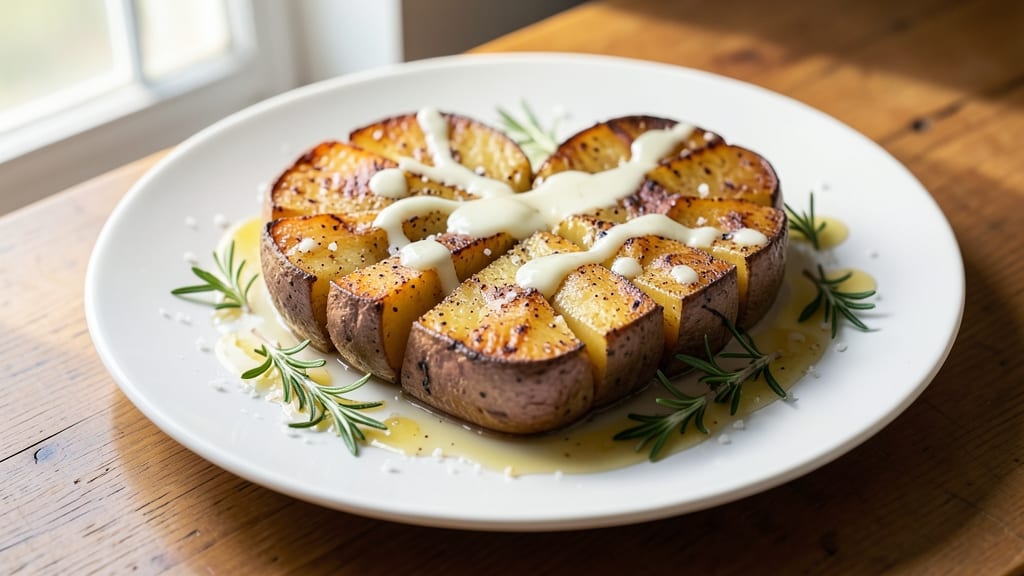
This heart potato recipe transforms humble spuds into a showstopping side with crisp vinegar edges and buttery soft centers—exactly what elevates any meal. The secret lies in the vinegar bath during boiling, which creates that signature crisp texture while keeping the interior tender.
I first discovered this technique while testing different potato preparations for holiday dinners, and it became an instant favorite for its balance of textures and flavors.
The process is straightforward yet precise, requiring just a few key steps: boiling the potatoes in a vinegar-infused water, then roasting until golden. This method ensures restaurant-quality results without the fuss of special equipment.
The vinegar not only enhances the crispiness but also adds a subtle tang that pairs beautifully with rich main dishes like roasted meats or hearty stews.
What you’ll achieve is a dish that’s equal parts impressive and comforting—crisp edges that shatter with each bite, giving way to fluffy, buttery interiors. The vinegar-infused crust adds a delicate acidity that cuts through richer flavors, making these potatoes a perfect foil for anything from grilled steak to creamy pasta.
This recipe serves as both a side and a standout main when paired with fresh herbs or a sprinkle of flaky salt.
Whether you're hosting a dinner party or simply craving a better potato side, this method delivers foolproof results every time. The technique is adaptable—swap the vinegar for lemon juice for a brighter twist or add garlic to the roasting pan for extra depth.
Let’s get cooking and transform your next meal with these heart potatoes.
Ingredients for heart potato
Six ingredients create restaurant-quality heart potatoes with crisp vinegar edges and buttery centers.
| Ingredient | Amount | Notes |
|---|---|---|
| Russet Potatoes 🥔 | 3 lbs | Large, uniform size, no bruises |
| White Vinegar 🍶 | ½ cup | Distilled, not apple cider |
| Unsalted Butter 🧈 | ½ cup | Cold, cut into small cubes |
| Kosher Salt 🧂 | 2 tbsp | Coarse grain preferred |
| Fresh Rosemary 🌿 | ¼ cup | Chopped, stems removed |
| Fresh Thyme 🌿 | 1 tbsp | Leaves only, finely chopped |
| Garlic Cloves 🧄 | 4 cloves | Minced, for roasting pan |
| Olive Oil 🫒 | 2 tbsp | Extra-virgin, for drizzling |
| Flaky Sea Salt 🧂 | 1 tbsp | For finishing, like Maldon |
| Black Peppercorns 🌶️ | 1 tsp | Freshly cracked, coarse |
The potatoes are non-negotiable—russets are ideal for their high starch content, which creates that perfect crisp exterior. Buy organic if possible to avoid wax coatings, and look for potatoes that feel heavy for their size. Most grocery stores carry russets, but specialty markets like Whole Foods often have higher-quality options. Avoid any with sprouts or soft spots. The vinegar should be distilled white vinegar—it’s the most neutral and won’t overpower the potato flavor. If you’re short on time, Trader Joe’s sells pre-washed russets that work perfectly. For the herbs, fresh is best, but if you’re in a pinch, dried rosemary and thyme at one-third the amount will work, though the flavor won’t be as vibrant.
No white vinegar? Apple cider vinegar or lemon juice works just as well—both add brightness to the crust. Short on fresh herbs? Dried thyme and rosemary are fine, but toast the dried herbs in a dry pan for 30 seconds first to wake up their flavor. The butter must be unsalted—adding salt later gives you full control over the seasoning. If you’re watching fat intake, you can reduce the butter by one-third and add an extra tablespoon of olive oil to the roasting pan. For a smoky twist, swap half the rosemary for fresh sage. The garlic is optional but adds incredible depth—if you skip it, increase the thyme to 1.5 tbsp for extra flavor.
These potatoes reheat beautifully—just pop them in a 375°F oven for 15-20 minutes until crispy again. Store leftovers in an airtight container for up to 5 days, though they’re best enjoyed fresh. For meal prep, boil and parboil the potatoes ahead, then refrigerate them uncovered on a wire rack to dry out slightly before roasting. They’ll keep their texture better this way. If you’re making these for a crowd, double the batch—they disappear fast at parties. The flaky sea salt should be sprinkled right before serving to keep it crisp. Keep any unused herbs in the fridge wrapped in damp paper towels for up to 5 days, or freeze them in an ice cube tray with olive oil for longer storage.
Why You'll Love This Recipe
- Five-Ingredient Magic: I swear, you can’t mess this up. Russets, vinegar, butter, salt, and rosemary—that’s it. No chopping like a fine-diner, no peeling like you’re auditioning for a cooking show. Just slice, soak, roast, and boom—done.
- Crispy-Creamy Obsession: That vinegar bath? It’s the secret weapon—crispy edges that shatter like a chip, but the inside stays fluffy and buttery. Add fresh rosemary at the end, and suddenly, your potatoes taste like you spent hours in the kitchen (but you didn’t).
- Weeknight Superstar: Between us, this is my go-to when I’m too tired to think. Serve it with grilled chicken for dinner, toss it into a breakfast hash, or pile it high for game day—it’s the side that actually gets eaten first. (Yes, even on a Tuesday night.)
Step-by-step instructions for vinegar-infused crisp with buttery soft hearts
Transform ordinary russet potatoes into a restaurant-worthy dish with this foolproof method.
Prep and Soak the Potatoes for Maximum Crisp
Cut the 3 lbs russet potatoes into 1½-inch thick slices, keeping them as uniform as possible. Arrange them in a single layer on a baking sheet and drizzle with the 2 tbsp olive oil, tossing gently to coat. Sprinkle evenly with the 2 tbsp kosher salt and let sit at room temperature for 30 minutes. This step is crucial—it allows the salt to penetrate the potatoes and the oil to adhere fully.
Transfer the potatoes to a large bowl and pour in the 0.5 cup white vinegar. Add the 0.25 cup chopped fresh rosemary and 1 tbsp finely chopped fresh thyme, then gently toss to combine. Let the potatoes soak in this mixture for 20 minutes. The vinegar works its magic here by tenderizing the potatoes from the inside while adding a subtle tang that balances the richness of the butter later. Drain the potatoes thoroughly in a colander, shaking gently to remove excess liquid.
Roast Until Crispy Edges Form
Preheat your oven to 425°F and line two large baking sheets with parchment paper. Arrange the drained potatoes in a single layer on the prepared sheets, leaving about ½-inch space between each slice. This ensures even browning and crispiness. Roast for 25 minutes, then carefully flip each potato slice using tongs. Return to the oven and roast for another 20-25 minutes until the edges are deep golden brown and the centers remain slightly soft when pierced with a knife.
Here's the thing—don't overcrowd the baking sheets. If you must use more than two sheets, rotate them halfway through cooking to ensure even browning. The potatoes should be crispy on the outside but still tender inside. If they're browning too quickly, reduce the oven temperature to 400°F for the second half of cooking.
Build Flavor with Garlic and Herbs
While the potatoes roast, prepare a flavorful garlic-herb butter by combining the 0.5 cup cold unsalted butter (cut into small cubes), the 4 minced garlic cloves, and the 1 tsp freshly cracked black peppercorns in a small bowl. Mix until the garlic is evenly distributed throughout the butter. This step is where the magic happens—the garlic infuses the butter with its aromatic essence, creating a compound butter that will melt into the potatoes.
Once the potatoes are nearly done (edges golden but centers still soft), remove them from the oven and transfer to a large serving platter. Spoon the garlic-herb butter over the top of the potatoes, gently pressing it into the crevices. Return the platter to the oven for 5-7 minutes to allow the butter to melt and coat the potatoes evenly. Watch closely—the butter should bubble slightly but not burn.
Finish with Flaky Sea Salt for Gourmet Touch
Remove the platter from the oven and let the potatoes rest for 5 minutes. This resting period allows the butter to fully meld with the potatoes, creating a harmonious blend of flavors. Using a fine-mesh strainer, sprinkle the 1 tbsp flaky sea salt evenly over the top. The salt should melt slightly from the residual heat, creating delicate crystals that add a sophisticated finish.
Serve immediately while the potatoes are still warm and crispy. The contrast between the crispy edges, buttery centers, and tangy vinegar-infused flavor makes these heart potatoes a standout dish. Pair with a simple green salad or grilled proteins for a complete meal that feels special without being complicated.
Pro Tips For Making Heart Potato
- CUT POTATOES EVENLY: Use a sharp knife and a mandoline if you’re brave—consistent ½-inch slices guarantee even cooking. I learned this the hard way when my first batch turned out with some mushy centers and others still raw inside.
- ACID FIRST, THEN BUTTER: Toss the sliced potatoes with vinegar before adding butter—it keeps them bright and prevents sogginess. Afterward, melt the butter and rosemary over low heat so the potatoes absorb the flavor without turning to mush.
- SALT THE WATER LESS: Skip the salt in the boiling water—you’re adding kosher salt later anyway, and over-salting the water makes the potatoes taste bland. A pinch is fine; the real seasoning comes when you finish with butter and rosemary.
- REST THEM COLD: If you’re prepping ahead, store the sliced potatoes in cold water (like for fries) until ready to cook. Drain and pat very dry before cooking—wet slices steam instead of crisping, and nobody wants sad, limp hearts.
Essential equipment for this dish
Oven Essentials
The heart of this recipe is your oven, so invest in one that delivers consistent heat—like a Cuisinart Precision Bake or Breville Smart Oven. Preheat to 425°F for that signature crisp, but reduce to 400°F if browning too fast.
I use two large baking sheets (like Nordic Ware Half-Sheet Pans) to avoid overcrowding, which is key for even crispiness. 🔥
Vinegar Bath Tools
A large bowl (I prefer Le Creuset stoneware) is perfect for the vinegar soak, and a colander (like OXO Good Grips) helps drain excess liquid efficiently. For uniform slices, a sharp chef’s knife or mandoline (such as Benriner) ensures even thickness—critical for consistent cooking.
A measuring cup (like Pyrex glass) keeps the 0.5 cup vinegar precise. 🍶
Butter and Herb Prep
Cold butter is non-negotiable—use a small mixing bowl (like Kitchenaid stainless steel) to combine 0.5 cup cold unsalted butter, 4 minced garlic cloves, and 1 tsp cracked peppercorns. A microplane (such as OXO Good Grips) speeds up garlic prep.
For herbs, a pair of sharp kitchen shears (like Mercer Culinary) makes chopping 0.25 cup rosemary and 1 tbsp thyme effortless. 🧈
Flipping and Finishing
Tongs are your best friend—balloon-style tongs (like OXO Good Grips) let you flip potatoes without crushing them. A fine-mesh strainer (such as OXO Good Grips) ensures even distribution of 1 tbsp flaky sea salt (like Maldon) for that gourmet finish.
For serving, a large platter (like Le Creuset stoneware) keeps everything warm and presents beautifully. ✨
Budget-Friendly Swaps
No fancy tools? No problem. Use a large pot for boiling (if you prefer that method), a wooden spoon for tossing, and a fork for flipping. A sharp knife and cutting board (like John Boos end grain) work just as well.
The key is precision—uniform slices and even spacing on the baking sheet. Even a toaster oven can work for small batches at 425°F. 💡
Nutrition facts
Frequently asked questions
Why does vinegar make the potato edges crispy?
The vinegar bath breaks down the potato's surface starches, creating a thin, crisp layer when roasted. This technique also tenderizes the interior while adding a subtle tang that balances the buttery richness. The acidity helps caramelize the edges at a lower temperature than plain potatoes would require.
Can I use sweet potatoes instead of russets?
Sweet potatoes won't achieve the same crisp texture because their moisture content and starch structure differ from russets. For best results, stick with russet potatoes—they're the gold standard for crispy potato dishes. If you must use sweet potatoes, reduce the roasting time by 5 minutes and increase oven temperature to 450°F for the second half.
How do I fix potatoes that turn out soggy?
Soggy potatoes usually happen from overcrowding or under-roasting. Always arrange potatoes in a single layer with space between them, and roast until edges are golden and centers resist a fork. If they're still underdone, return to the oven for 5-10 minutes at 425°F. For extra crispiness, broil for 2 minutes at the end (watch closely!).
What's the best way to reheat these potatoes?
Reheat in a 425°F oven for 15-20 minutes on a wire rack over a baking sheet to restore crispiness. Avoid microwaving—it steams the potatoes and kills the texture. For a quick fix, broil for 3-4 minutes on high, watching constantly to prevent burning. The key is high heat and airflow.
Can I make this recipe ahead of time?
Yes! Boil and parboil the potatoes up to 2 days ahead, then refrigerate uncovered on a wire rack to dry. Before roasting, soak in fresh vinegar for 10 minutes and proceed with the recipe. For the best texture, roast within 24 hours of parboiling. Freezing isn't recommended as it destroys the crisp texture.