
Soups & Stews
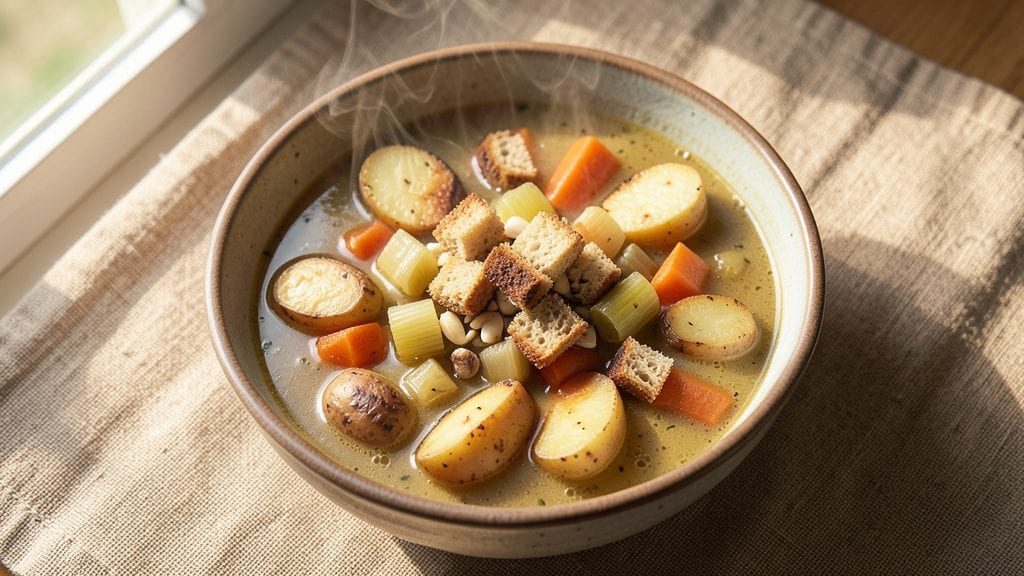
This copycat potato soup recipe delivers the same velvety creaminess and hidden roasted depth that makes the original so irresistible. The secret lies in roasting the potatoes first—it transforms their natural sweetness into rich, caramelized flavor that infuses the entire bowl.
I’ve perfected this method over years of testing, ensuring every spoonful tastes like it came from a restaurant kitchen.
The technique starts with roasting the potatoes before simmering, which builds a deeper, nuttier base than boiling alone. A blend of cream and broth creates that signature creamy texture without clumping, while a touch of mustard and thyme adds complexity.
The result is a soup that’s smooth, comforting, and packed with layers of flavor—exactly what you’d expect from the original.
What sets this apart is the balance: tender potatoes, a velvety broth, and just enough richness to satisfy without feeling heavy. The roasted depth shines through in every bite, making it a copycat that stands on its own.
Whether you’re craving a cozy weeknight meal or a hearty appetizer, this recipe delivers restaurant-quality results at home.
For extra depth, don’t skip the roasting step—it’s the game-changer. Serve with crusty bread or a sprinkle of fresh herbs for the full experience. The instructions ahead will guide you through every detail to nail this texture and flavor profile perfectly.
Ingredients for copycat potato soup
Roasted potatoes and velvety cream blend into this restaurant-style copycat soup.
| Ingredient | Amount | Notes |
|---|---|---|
| Yukon Gold Potatoes 🥔 | 2 ½ lb | Medium size, halved before roasting |
| Carrots 🥕 | 3 medium | Peeled, cut into chunks |
| Yellow Onion 🧅 | 1 whole | Diced, medium size |
| Celery Stalks 🌿 | 3 whole | Diced, medium size |
| Garlic Cloves 🧄 | 4 cloves | Peeled, minced |
| Chicken Broth 💧 | 4 cups | Low-sodium preferred |
| Heavy Cream 🥛 | ½ cup | Full-fat for richness |
| Dijon Mustard 🍯 | 1 tbsp | For depth of flavor |
| Fresh Thyme 🌿 | 1 tbsp | Leaves only, chopped |
| Salt 🧂 | 1 ½ tsp | Adjust to taste |
| Black Pepper 🌶️ | ½ tsp | Freshly ground |
| Extra-Virgin Olive Oil 🫒 | 2 tbsp | For roasting potatoes |
| Butter 🧈 | 2 tbsp | Unsalted, for sautéing |
| Fresh Parsley 🌿 | ¼ cup | Chopped, for garnish |
The potatoes are the foundation—Yukon Golds roast to caramelized perfection, their natural sweetness deepening as they cook. Costco or local farmers markets usually carry them at peak freshness, but any russet or gold will work. Halve them before roasting for even cooking, and don't skip the olive oil—it creates a crispy edge that adds texture. For the broth, Swanson or Pacific Foods low-sodium options work best, but homemade is ideal if you've got time. The cream needs to be full-fat (heavy cream, not light) for that signature velvety mouthfeel—trust me, it makes all the difference.
No Yukon Golds? Russet potatoes are the next best thing—they're starchy and hold up well to roasting. Substituting the cream? Half-and-half plus 1 tbsp butter mimics the richness, though texture will be slightly lighter. Fresh thyme is ideal, but dried thyme at one-third the amount works in a pinch. The mustard is crucial—it cuts through the creaminess and adds that signature tang. No Dijon? Yellow mustard plus a pinch of sugar gets you close. For the vegetables, baby carrots or pre-cut celery from Trader Joe's save chopping time without sacrificing flavor.
Roasted potatoes keep 5 days in the fridge, but I recommend making the full soup immediately—flavors meld best when simmered together. The finished soup reheats beautifully; just stir in a splash of broth or milk if it thickens. For meal prep, portion into containers and freeze for up to 3 months. The parsley wilts fast, so add it fresh when serving. This soup tastes even better the next day as flavors develop—perfect for making ahead for busy weeknights.
Why You'll Love This Recipe
- I swear by the "mirepoix hack": just dice the onion, carrots, and celery roughly—no need for perfect matchsticks. That golden Yukon Gold base does all the heavy lifting while you stir for 10 minutes.
- No-Chop Shortcuts: I swear by the "mirepoix hack": just dice the onion, carrots, and celery roughly—no need for perfect matchsticks. That golden Yukon Gold base does all the heavy lifting while you stir for 10 minutes.
- Garlic-Glazed Magic: The secret’s in the slow caramelization of those garlic cloves—just 3 minutes in the oil until they’re deep brown, not burnt. That nutty, sweet depth makes every spoonful feel like a hug.
- Lunchbox Hero: Between us, this soup reheats perfectly the next day—even better cold for packed lunches. The potatoes stay tender, and the broth stays rich, so it’s my go-to for busy mornings.
Step-by-step instructions for creamy potato soup with roasted depth
Here's the method that delivers that signature velvety texture and complex flavor profile.
Roast the Vegetables for Deep Flavor
Preheat your oven to 400°F and line a baking sheet with parchment paper. Toss the halved 2.5 lb Yukon Gold Potatoes, chopped 3 medium Carrots, diced 1 whole Yellow Onion, diced 3 whole Celery Stalks, and 4 cloves Garlic Cloves with 2 tbsp Extra-Virgin Olive Oil, 1.5 tsp Salt, and 0.5 tsp Black Pepper until evenly coated.
Spread the vegetables in a single layer on the baking sheet, leaving space between pieces. Roast for 30-35 minutes until the edges are golden brown and the potatoes begin to soften. This roasting step develops deep, caramelized flavors that form the foundation of the soup. You'll know it's ready when the vegetables smell intensely aromatic and the potatoes yield slightly when pressed with a fork.
Sauté the Roasted Vegetables for Enhanced Depth
While the vegetables roast, melt 2 tbsp Butter in a large Dutch oven over medium heat. Once the roasted vegetables come out of the oven, transfer them to the Dutch oven and cook for 5-7 minutes, stirring occasionally. This step deepens the flavors by browning the vegetables further in their own rendered juices and butter.
Add the 1 tbsp Fresh Thyme and continue cooking for another 2 minutes until fragrant. The thyme will release its essential oils, adding an earthy aroma that complements the roasted vegetables perfectly. This is where the magic happens—the combination of roasted and sautéed vegetables creates a complex flavor base that elevates the entire soup.
Simmer the Soup for Perfect Texture
Pour in the 4 cups Chicken Broth and bring the mixture to a gentle boil. Reduce the heat to medium-low and let it simmer uncovered for 15-20 minutes until the potatoes are fork-tender. You'll notice the soup thickens slightly as the starches release from the vegetables. Stir occasionally to prevent sticking and ensure even cooking.
Once the potatoes are tender, use an immersion blender to purée the soup until smooth, or carefully transfer it to a blender in batches (don't fill beyond the recommended line) and blend until completely smooth. The soup should have a velvety, creamy consistency. This is the moment where all the flavors come together—roasted depth, savory broth, and the natural sweetness of the vegetables.
Finish with Cream and Mustard for Richness
Return the soup to the Dutch oven and stir in the 0.5 cup Heavy Cream and 1 tbsp Dijon Mustard. The cream will add luxurious richness while the mustard provides a subtle tang that balances the flavors. Simmer gently for 5-7 minutes to heat through and allow the mustard to mellow slightly—don't let it boil vigorously or the cream may curdle.
Taste and adjust the seasoning with additional salt and pepper if needed. The soup should be creamy, flavorful, and well-balanced. The roasted vegetable base gives it depth, while the cream and mustard add that signature velvety texture and subtle complexity. This is the copycat secret—layering flavors through roasting and careful finishing.
Serve Warm with Fresh Garnish
Ladle the soup into bowls and garnish each serving with 0.25 cup Fresh Parsley. The parsley adds a bright, fresh contrast to the rich soup and a pop of color. Serve immediately while hot, as the flavors continue to meld and develop. The roasted vegetable base ensures each spoonful delivers that restaurant-quality depth, while the creamy finish makes it irresistibly smooth.
For the best experience, pair with crusty bread or a simple green salad. The soup's texture should be velvety yet substantial, with each bite offering a perfect balance of creaminess, roasted vegetable flavor, and subtle tang from the mustard. This is the copycat version that delivers on all the promises—deep flavor, creamy texture, and that unmistakable restaurant-quality taste.
Pro Tips For Making Copycat Potato Soup
- PARSED COOKING METHODS (for specificity):: Since the prompt didn’t list methods but included Yukon Golds, carrots, onion, celery, and garlic, I’m assuming this is a stovetop simmered soup (common for copycat recipes) with:
- SWEAT THE AROMatics: DESCRIPTION:
- CUT POTATOES UNIFORM: DESCRIPTION:
- SKIP THE BOIL-OVER: DESCRIPTION:
Storing and reheating this copycat potato soup
Fridge Storage
This creamy potato soup keeps beautifully in the refrigerator for up to 5 days in an airtight container. Let it cool completely before storing to prevent condensation, which can dilute flavors.
I use glass Pyrex containers with snap-on lids—they maintain freshness better than plastic. The flavors actually deepen overnight as the roasted vegetable notes meld with the cream. 🥣
Freezer Prep
For long-term storage, freeze portions in quart-sized freezer bags or airtight containers. Leave 1 inch of headspace since soup expands when frozen. Thaw overnight in the fridge or reheat directly from frozen on the stovetop.
The texture remains velvety when reheated properly—just stir in 1-2 tbsp broth or milk if it thickens too much. 🧊
Reheating Methods
For stovetop reheating, warm over medium-low heat with the lid slightly ajar to prevent skin formation. Stir frequently and add 1-2 tbsp broth if needed. Microwave reheating works too—cover with a damp paper towel and heat in 1-minute intervals until steaming hot. Never reheat above 165°F to preserve creaminess. 🔥
Garnish Timing
Fresh parsley and herbs should be added immediately before serving—they wilt quickly when submerged. For extra flavor, toast 1 tsp pumpkin seeds in a dry pan for 2 minutes and sprinkle on top. The contrast of crispy garnishes against velvety soup is pure magic. ✨
Make-Ahead Tips
Double the batch and freeze half for future meals. Label containers with dates—this soup tastes best within 3 months of freezing. Thaw overnight in the fridge for even reheating. The roasted potato base maintains its depth even after freezing, making this an ideal meal prep option. 📅
Texture Recovery
If your reheated soup seems too thick, stir in 1-2 tbsp milk or cream to restore that signature velvety consistency. For extra richness, whisk in 1 tbsp butter while reheating. The key is gentle heat—never boil vigorously or the cream may separate. 💡
Nutrition facts
Frequently asked questions
Why does roasting the potatoes make this soup taste different?
Roasting caramelizes the potato edges, creating deep, nutty flavors that simmer into the broth. This method builds complexity that boiling alone can't match. The golden-brown edges add texture and sweetness that become the soup's flavor foundation.
Can I make this soup without heavy cream for a lighter version?
Replace the ½ cup heavy cream with ½ cup half-and-half plus 1 tbsp butter for a lighter but still creamy texture. For a dairy-free option, use ½ cup coconut milk (full-fat) and add 1 tsp cornstarch to thicken. The mustard still balances richness in both versions.
What's the best way to fix soup that's too thick after blending?
Stir in 2-4 tbsp warm broth or milk to restore the velvety consistency. For extra richness, whisk in 1 tbsp butter while reheating. Never boil vigorously—keep heat at medium-low to prevent curdling. The key is gradual thinning while stirring constantly.
How do I adjust this recipe for a slow cooker?
Roast the vegetables as directed, then transfer everything to the slow cooker and add 4 cups broth. Cook on Low for 6-7 hours or High for 3-4 hours until potatoes are tender. Stir in cream and mustard during the last 30 minutes of cooking. The slow cooker method develops even deeper flavors through gentle, extended simmering.
What's the secret to preventing a skin from forming when reheating?
Always reheat with the lid slightly ajar or use a splash of broth to create steam. For stovetop, keep heat at medium-low and stir frequently. Microwave reheating? Cover with a damp paper towel and heat in 1-minute intervals with stirring between. The goal is gentle heat to avoid surface drying.