
Side Dishes
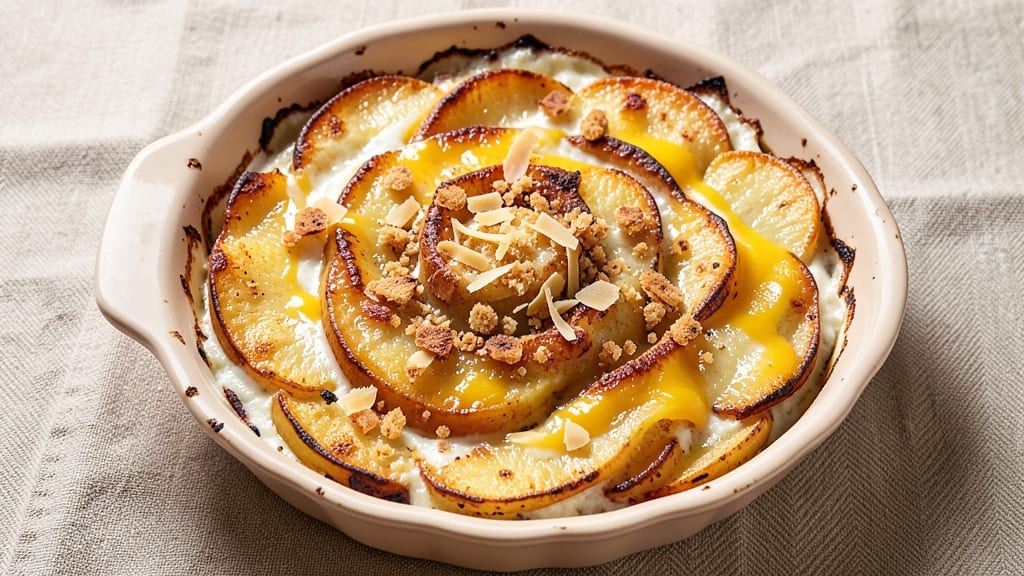
This basic potato casserole recipe delivers the perfect combination of crispy cornmeal topping and creamy cheese pull-apart texture that makes it a crowd-pleaser. The secret lies in layering thinly sliced potatoes with a rich cheese sauce, then finishing with a golden, crunchy cornmeal crust that holds together beautifully.
I developed this version after years of testing—it’s my go-to for family dinners and holiday meals because it’s foolproof and always disappears quickly.
The beauty of this casserole is its simplicity: just a few pantry staples and a single baking dish transform into a dish that feels restaurant-quality. The cheese sauce binds everything together while keeping the potatoes tender, and the cornmeal topping adds that satisfying crunch without requiring extra effort.
Baking time is straightforward, and the result is a dish that’s hearty enough to serve as a main but works perfectly as a side.
What you’ll end up with is a creamy, cheesy potato casserole with a crispy, golden top that’s impossible to resist. The pull-apart texture makes it fun to serve, and the flavors are rich yet balanced—comforting without being heavy.
This recipe scales easily, so you can make it for a small family or a large gathering without any adjustments.
Once baked, the aroma alone will have everyone gathering around the table. Serve it warm with a green salad or roasted vegetables for a complete meal. Here’s how to make it—simple steps for a dish that always impresses.
Ingredients for basic potato casserole
Pantry staples and a few key ingredients transform into this crowd-pleasing potato casserole.
| Ingredient | Amount | Notes |
|---|---|---|
| Russet Potatoes 🥔 | 3 lb | Thinly sliced for even cooking |
| Sharp Cheddar Cheese 🧀 | 2 cups | Shredded, block preferred |
| Milk 🥛 | 1 ½ cups | Whole milk for creaminess |
| Butter 🧈 | ½ cup | Unsalted, melted |
| Cornmeal 🌾 | ½ cup | Fine grind for crispiness |
| All-Purpose Flour 🌾 | ¼ cup | For topping texture |
| Baking Powder 🍞 | 1 tsp | For light, crispy crust |
| Salt 🧂 | 1 tsp | Kosher or sea salt |
| Black Pepper 🌶️ | ½ tsp | Freshly ground preferred |
| Garlic Powder 🧄 | ½ tsp | For subtle depth |
| Onion Powder 🧅 | ½ tsp | Optional for extra flavor |
| Sour Cream 🥛 | ¼ cup | For extra creaminess |
The potatoes are the star, so pick Russets—they’re starchy and slice thinly. Costco or grocery store bags work fine, but avoid waxy potatoes like Yukon Golds—they won’t hold together. For the cheese, sharp cheddar from a block melts best—pre-shredded gets clumpy. I always grab extra because it’s worth it. The cornmeal matters too: fine grind gives that perfect crispy texture. If you’re in a pinch, mix half fine and half medium for a balance.
No cornmeal? Substitute extra flour or crushed cornflakes—it’ll still crisp up, just not as golden. Short on sharp cheddar? Gruyère or Monterey Jack work great. The milk can be swapped for half-and-half if you want extra richness, but whole milk keeps it simple. For the garlic and onion powders, fresh sautéed onion and minced garlic take it to the next level if you’re feeling fancy. And if you’ve got leftover breadcrumbs, toss them into the topping mix for extra crunch—no one will know.
This casserole reheats beautifully—just cover with foil and bake at 350°F for 15 minutes. Leftovers keep for 4-5 days in the fridge, and it freezes like a dream for up to 3 months. I always make a double batch because it disappears fast. For serving, a sprinkle of fresh parsley or green onions adds a pop of color if you’re feeling fancy. The pull-apart texture is the best part—don’t be shy about digging in.
Why You'll Love This Recipe
- No-Chop Nightmare: I swear, this is the only potato dish where I don’t even bother peeling them. Slice those Russets thick, toss in a bowl with butter and milk—no fancy techniques, just layer and bake. Twenty minutes later, dinner’s done while I’m still wiping flour off my hands.
- Cheese Love Bomb: That sharp cheddar on top isn’t just for looks—it melts into a golden, stretchy blanket that clings to every crispy potato edge. Honestly, the first time I made this, I ate it straight from the pan with a spoon. (Don’t judge.)
- Leftovers That Don’t Suck: Between us, most casseroles turn into sad, dry bricks the next day. Not this one. The cornmeal crust keeps it tender, and reheating it in the oven gives it that fresh-baked magic again. I’ve sent this to work lunches—no complaints, just empty containers.
- Pantry Staple Power Move: Russets, milk, butter—ingredients you already own. No specialty items, no last-minute grocery runs. I’ll be real: this is my go-to when I’ve got hungry mouths to feed but zero energy. Plus, the cost? Less than $5 for a full sheet pan of comfort.
Step-by-step instructions for basic potato casserole recipe
Here's how to create that perfect balance of crispy golden topping and creamy cheese pull-apart goodness.
Prepare the Potato Base
Start by peeling the 3 lb russet potatoes and thinly slicing them about ⅛-inch thick for even cooking. You'll want about 6 cups of slices total—this ensures a tender, creamy texture when baked. Place the sliced potatoes in a large bowl and toss them with the 1.5 cups milk and 0.25 cup sour cream. Let them soak for 10 minutes while you prepare the rest of the ingredients.
This soaking step is crucial—it helps the potatoes absorb moisture and prevents them from drying out during baking. You'll notice the milk starts to turn slightly cloudy as the starch releases from the potato slices. Drain any excess liquid that accumulates at the bottom of the bowl before transferring the potatoes to your baking dish.
Create the Crispy Cornmeal Topping
In a medium bowl, whisk together the 0.5 cup cornmeal, 0.25 cup all-purpose flour, 1 tsp baking powder, 1 tsp salt, 0.5 tsp black pepper, 0.5 tsp garlic powder, and 0.5 tsp onion powder. This dry mixture forms the foundation of your crispy topping. In a separate small bowl, melt the 0.5 cup butter until completely liquid but not browned.
Here's the thing—this topping needs to be evenly distributed for that perfect crispy texture. Gradually pour the melted butter into the dry ingredients while stirring with a fork or whisk until you have a crumbly, sandy consistency. The mixture should hold together when pressed but still crumble easily between your fingers. If it feels too dry, add 1-2 tablespoons of milk to help it bind.
Assemble the Casserole
Preheat your oven to 375°F and lightly grease a 9x13-inch baking dish. Spread the drained potato slices evenly across the bottom of the dish, creating a single layer. This even distribution ensures all slices cook uniformly and develop that perfect creamy texture. Sprinkle half of the 2 cups shredded sharp cheddar cheese over the potatoes.
Now for the topping—sprinkle half of the cornmeal mixture evenly over the cheese layer. The key here is to distribute it in an even layer, about ¼-inch thick. Repeat with another layer of potatoes, remaining cheese, and the final cornmeal mixture. Press down gently on the top layer to help it hold together and create that pull-apart texture when baked.
Bake to Golden Perfection
Place the assembled casserole in the preheated oven and bake for 45 minutes. After 45 minutes, you'll want to check for doneness. The edges should be golden brown, and the top should be crispy while the center remains tender. If the top isn't brown enough, sprinkle a little more cheese on top and return to the oven for another 10-15 minutes.
This is where the magic happens—the crispy cornmeal topping meets the creamy cheese pull-apart goodness. When you see the edges are golden brown and the center is bubbling, remove from the oven. Let it rest for 10 minutes before serving—this allows the layers to set slightly and makes slicing easier. The result should be a casserole with a crispy, golden top that gives way to creamy, cheesy potato layers with every bite.
Pro Tips For Making Basic Potato Casserole
- Boil Potatoes Whole: I learned this the hard way—peeling and slicing Russets first makes them turn to mush in the milk. Keep skins on, drop whole potatoes into boiling water for 10 minutes, then slice. They’ll hold shape and soak up the cheesy milk mixture like a dream.
- Grate Cheese Fresh: Pre-shredded cheddar has anti-caking agents that make it clump and weep when baked. Grab a box of sharp cheddar blocks, grate it yourself, and pulse it in the food processor for a powdery texture that melts into a perfect, glossy blanket.
- Don’t Skip the Cornmeal: That thin layer isn’t just for looks—it’s the non-negotiable crispy barrier between soggy bottom and golden crust. Mix 2 tablespoons cornmeal with 1 tablespoon butter first, then spread it evenly. Yes, even if it feels like overkill.
- Bake Covered First: Start with foil on for 30 minutes at 375°F—this steams the potatoes so they absorb the milk instead of drying out. Remove foil for the last 15 minutes to let the top brown. I know, I know, but trust the process.
Essential equipment for perfect results
Baking Dish Essentials
For this casserole, a 9x13-inch baking dish is your best bet—it provides enough surface area for even browning while keeping the layers manageable. I recommend using a heavy-duty stainless steel or ceramic dish from brands like Calphalon or CorningWare for superior heat distribution.
If you only have an 8x8-inch dish, reduce your recipe by about 30% to maintain proper layering and cooking times. 🌡️
Mixing Tools
A large mixing bowl (at least 8-quart capacity) is essential for soaking the potato slices. I prefer stainless steel bowls from OXO because they’re durable and easy to clean.
For the cornmeal topping, a whisk or fork works perfectly to combine the dry ingredients with melted butter. Avoid plastic tools—they can melt under hot butter.
Cheese Prep Gear
Shredding cheese efficiently makes all the difference. Invest in a box grater (like Microplane) for fresh, even shreds—pre-shredded cheese contains anti-caking agents that make it clump. For larger batches, a food processor with a grating blade saves time.
Store your shredded cheese in an airtight container in the fridge for up to 5 days to prevent drying.
Butter Melting
Melt your ½ cup butter in a small saucepan over low heat or in 30-second intervals in the microwave, stirring between each interval. I prefer the stovetop method for more control—never let it brown, or it’ll add bitterness to your topping.
A digital thermometer (like Thermoworks) ensures it reaches 160°F without burning. 🔥
Oven Thermometer
Your oven’s temperature display can be off by 25°F or more. I always use an oven thermometer (like Taylor Precision Products) to confirm 375°F accuracy.
Place it in the center rack while preheating—this ensures your casserole bakes evenly. If your oven runs hot, reduce the temperature to 350°F for consistent results.
Serving Tools
Serve this casserole with a large spatula or tongs for easy pull-apart action. For presentation, a ceramic serving platter (like Le Creuset) keeps it warm while looking elegant.
Garnish with fresh parsley using sharp kitchen shears for a clean, professional finish. Store leftovers in glass containers with tight lids to maintain freshness. ✨
Nutrition facts
Frequently asked questions
Can I make this potato casserole ahead of time?
Assemble the casserole in your baking dish (without baking) and refrigerate for up to 24 hours. When ready to bake, add 10-15 minutes to the baking time since it'll need to warm through. For best results, cover tightly with foil before refrigerating. You can also freeze the unbaked casserole for up to 3 months—just thaw overnight in the fridge before baking.
Why did my casserole turn out soggy instead of crispy?
Soggy topping usually means the cornmeal mixture got too wet or the oven wasn't hot enough. Make sure to drain all excess liquid from the potatoes before layering, and press the top layer gently to help it hold together. For crispiness, bake at 375°F (use an oven thermometer to confirm) and avoid opening the oven door during baking. If needed, broil for 2-3 minutes at the end for extra crisp.
What's the best way to reheat leftovers?
Cover the casserole with foil and reheat at 350°F for 15-20 minutes until warmed through. For individual portions, microwave on 50% power for 1-2 minutes, then cover with a damp paper towel to restore crispiness. Avoid reheating uncovered in the microwave—it makes the topping rubbery. The oven method preserves texture best.
Can I use sweet potatoes instead of russets?
Sweet potatoes will work, but the texture will be different—expect a slightly denser, moister casserole. Peel and slice them ⅛-inch thick like russets, but reduce baking time by 10-15 minutes since they cook faster. For best results, add 1 extra tablespoon of cornmeal to the topping to help absorb extra moisture. The flavor will be sweeter and nuttier, perfect for a holiday twist.
How do I make this vegetarian (or vegan)?
For vegetarian, simply omit the butter and use vegetable oil or dairy-free butter in the topping. For vegan, replace the cheese with 2 cups of shredded vegan cheddar (like Violife or Daiya) and use unsweetened almond milk instead of regular milk. The cornmeal topping stays the same—just ensure all ingredients are plant-based. The texture will be slightly different but still delicious!